Posted on

Soldiers test new unmanned aerial tech with recon, chemical detection capabilities

Soldiers test new unmanned aerial tech with recon, chemical detection capabilities_EPE.truted to protect

Soldiers test new unmanned aerial tech with recon, chemical detection capabilities_EPE.truted to protect


In the fields of Grafenwoehr, Germany, service members from the U.S., the U.K. and other U.S. Department of Defense entities watched as several new unmanned aerial tools were explained and demonstrated during a multinational joint equipment training brief April 2, 2018.

Led by a group of civilians from the U.S. Army Tank Automotive Research, Development and Engineering Center, the training brief served as a precursor to a scheduled Robotic Complex Breach Concept demonstration later this week. That demonstration will see the use of new air and ground equipment for the first time by Soldiers.

The unmanned aerial capabilities on display included the Lethal Miniature Ariel Missile System, Puma, and Instant Eye, which provided Soldiers the ability to evaluate and detect hazards in the training area from a safe distance.

“The aviation assets are invaluable,” said Staff Sgt. Brian Logan, a Chemical, Biological, Radiological and Nuclear Specialist. “One of the aviation systems, the Instant Eye, can actually detect hazardous exposure such as chemical or biological threats. The best way to prevent a CBRN injury is avoidance, and that’s what these assets allow us to do, avoid unnecessary exposure.”

Another aerial asset, the Puma system, is a small unmanned aircraft that gives Soldiers the ability to reconnoiter an area, capture photos and other mission enhancing abilities, without placing individuals in harm’s way.

Read full  here: https://www.army.mil

Article Shared here: https://www.linkedin.com

Posted on

U.S. Marine Corps Procures the New InstantEye Mk-3 GEN5-D1 SUAS System

USA Marine Corps Procures the New InstantEye Mk-3 GEN5-D1 SUAS System_EPE.Trusted To Protect


InstantEye Robotics is pleased to announce it has secured a contract with the Defense Logistics Agency (DLA) in support of PMA-263, the Navy and Marine Corps Small Tactical Unmanned Aircraft Systems (SUAS) Program Office, to field 32 InstantEye Mk-3 GEN5-D1 SUAS systems (64 aircraft).

This procurement is being executed in support of a United States Marine Corps urgent needs request for field user evaluation. The new InstantEye Mk-3 GEN5-D1 platform expands mission scope and provides additional Reconnaissance, Surveillance, and Target Acquisition capability to the individual Marine or Sailor.

“We are very excited to start fielding the first system in our new InstantEye Mk-3 line of products, which is designed to further strengthen the security of our SUAS products as well as expand the capabilities and features of our systems,” said Tom Vaneck, Vice President of InstantEye Robotics. “The Marines have been great supporters of the InstantEye systems, and we think the InstantEye Mk-3 GEN5 system will greatly complement their existing portfolio and enhance force protection while reducing operational risk.”

The InstantEye Mk-3 GEN5-D1 is the smallest (~250g) in the InstantEye family of combat-proven, high-performance, affordable systems. It is an encrypted, all-digital system with superb real-time video and still imagery. Due to its small size, it has low audible and visual signatures, enabling it to operate undetected in close proximity to targets of interest. The system requires only a single operator and goes from a stowed configuration to fully operational in approximately one minute. With an ability to operate in all weather and locations, it is an unmatched tactical enabler with operational effects.

InstantEye Robotics is a division of Physical Sciences Inc., both located in Andover Massachusetts. InstantEye Robotics is a global leader in tactical unmanned aircraft systems. When customers need a reliable, portfolio-manageable, multi-mission system, they choose InstantEye.

Posted on

EPE presenting next-gen of C-IED Robot and Mesmer C-UAS At Autonomous Warrior 2018

EPE presentingnext-gen of C-IED Robot and Mesmer C-UAS At Autonomous Warrior 2018

Autonomous Warrior 2018 at HMAS Cresswell provides a forum to demonstrate the potential for autonomous systems to support future Defence operations. EPE has been at the forefront of delivering protective equipment and unmanned systems to ADF to keep our soldiers at a safe distance from explosive hazards for 2 decades. As unmanned and autonomous systems develop rapidly, we are providing innovative solutions for Protected Route Clearance and Neutralisation to protect our soldiers from IED’s. Our medium term plan is focused on enhancing our recent capabilities developed through the Defence Innovation Hub and further developing our Australian Industry Capability through advanced manufacturing of some of these capabilities.

At Autonomous Warrior 2018 (AW18), EPE demonstrated the Armtrac 20T Robot for conventional demining, Explosive Ordnance operations and Counter-IED operations. The platform is flexible and scalable and provides forces with improved mobility. The system is sufficiently robust and agile enough to move across country and provide a surrogate scout for dismounted foot patrols; in this role it would enhance situational awareness and stand-off detection of threats. However, in mechanised operations, it could equally be transported on a standard 3.5 tonne trailer and be prepared for operations within minutes of identifying a potential threat for survey, investigation or render safe.

EPE also displayed the MESMER™ Counter Drone solution at AW18. MESMER™ uses Protocol Manipulation to detect, identify and mitigate drones. Unlike other systems that employ kinetic effects or radio jamming, which can have indiscriminate secondary effects, MESMER™ is a low power system, operating below 1 watt and within ACMA regulatory constraints. It only affects targeted drones without impacting other nearby communications systems. The MESMER™ counter drone system is currently installed at a sensitive and confidential critical infrastructure site in Australia.

Posted on

Minister Steven Ciobo attends Royal Australian Navy Testing of Stand Off Detection prototype

Minister for Defence Industry, Steven Ciobo attends Royal Australian Navy Testing of Stand Off Detection prototype


Minister for Defence Industry, Steven Ciobo attends Royal Australian Navy Testing of Stand Off Detection prototype

The Royal Australian Navy has been testing EPE’s Maritime Portable Raman Improvised Explosive Detector (PRIED) system in Darwin this week. This project, awarded under the Defence Innovation Hub to the value of approximately $1 million, involves EPE working with Navy to develop a portable dangerous substance and explosives detector suitable for maritime operations.

EPE Project Manager, David Rye onsite in Darwin said, ‘Testing the prototype with Navy this week, we have achieved all Test Performance Measures beyond expectation.’

The function of the unit is to provide stand-off detection of narcotics, explosives, homemade explosives (HME), chemical warfare agents, toxic industrial chemicals, toxic industrial materials and related chemical precursors. The PRIED is man portable and can rapidly scan from 10m-40m with the ability to scan in excess of 40m (depending on the material) and day/night conditions. It uses a “next generation” eye safe raman spectroscopy sensor that utilizes deep-ultraviolet (DUV) illumination without detonating explosive material.

Warwick Penrose, Managing Director of EPE, a small Australian business based in Brisbane, is proud to be working closely with Defence to develop this next generation force protection capability for those members of the Royal Australian Navy who engage in boarding operations.

“The PRIED project recognises EPE’s long term commitment and investment in building and developing sovereign Force Protection capabilities that help take Australian servicemen out of the danger zone. Our team delivers a broad spectrum of innovative Force Protection capabilities that are in service today with the ADF, NZDF as well as local and federal police and first responders” Warwick said.

This Defence Innovation Hub project funded by the Federal Government gives EPE the opportunity to further develop this technology which has been deployed for force protection on Land, and modify it to meet the unique requirements of maritime application both in Australia, New Zealand and the Asia Pacific region.

Posted on

Cutting Edge Standoff explosives and hazardous chemicals detection protecting our soldiers

Portable Raman IED Detection Systems (PRIED) provides stand-off detection of Explosives, Narcotics and Chemicals and removes the operator from the threat area allowing them to detect from a distance. The video looks at the cutting edge work being achieved by DARPA (Defence Advanced Research Projects Agency) working with Alakai to reduce the size of the system from man-packable to handheld. EPE has been funded 950k by the Australian Defence Innovation Hub to deliver a Prototype for our Maritime boarding parties in support of our Navy’s Counter Narcotic program in the gulf.  PRIED was designed primarily for employment in the land domain and has not been built with consideration for salt water ingress. The Maritime PRIED project will deliver a PRIED prototype that has been optimised for maritime operations with the intent of providing enhanced protection to RAN boarding parties. This project is scheduled for completion in Nov 2018.

Posted on

EPE, Thales and D13 collaborating to integrate C-UAS capability into Bushmasters

EPE, Thales and D13 collaborating to integrate C-UAS capability into Bushmasters

EPE, Thales and D13 collaborating to integrate C-UAS capability into Bushmasters
From left to right: Warwick Penrose – Managing Director at EPE, Robi Sen – Chief Technology Officer at Department 13, Sam Keayes – VP Transport and Security at Thales Australia.

EPE, Thales Australia and Department 13 signed a Memorandum of Understanding at Land Forces today in Adelaide following successful rapid integration of MESMER™ Counter Drone capability into the Thales Bushmaster.

  • MOU with Thales Australia, EPE and D13 to develop and integrate a commercialised version of MESMER™operating through the Thales ICS.
  • Mobile prototype of MESMER™ integrated into a globally proven military platform, the Bushmaster.

Adelaide, South Australia – This morning at Land Forces EPE, Thales and Department 13 signed a Memorandum of Understanding (MOU) following successful integration of the MESMER™ Counter Drone solution into the Bushmaster. The MOU outlines the intent for this solution to provide an interim cyber capability for the vehicle platform.

Drones have become a persistent and pervasive threat to deployed members of the Australian Defence Force (ADF), with insurgents using cheap commercial drones to survey defensive positions, assess the disposition of troops as well as deliver munitions and IED’s with disturbing ease and accuracy. Troops deploying from Forward Operating Bases (FOBs) need the ability to deny enemies the use of Unmanned Aerial Systems (UAS) without impacting friendly radio frequencies (RF). This has prompted EPE, Department 13 and Thales to integrate the MESMER™ Counter UAS (C-UAS) capability into the Bushmaster as an innovative prototype being displayed at the Land Forces Conference in Adelaide.

The Thales Bushmaster is combat proven, offering high protection and mobility. It has been successfully deployed by three armies on operations in the Middle East, Africa and Pacific. On-going design enhancements, a wide range of user selectable mission equipment and mature through life support have ensured that Bushmaster continues to offer leading capability to meet emerging threats and evolving customer requirements. The Thales Integral Computing System (ICS) is an example of this, implementing a network-based architecture to centrally host all applications in the vehicle and enable the integration of new technologies to combat evolving threats.

Warwick Penrose, EPE Director said ‘The integration of the MESMER Counter Drone capability into the Bushmaster completed in 3 weeks demonstrates that EPE and Thales can successfully work together to meet tight deadlines. The success of this prototype further supports our short-term plans to establish an advanced manufacturing capacity in Australia to deliver sovereign capability.’

MESMER employs protocol manipulation techniques to manage a single or swarm of UAS. It detects and identifies drone signals using Radio Frequency (RF) protocol signatures. Protocol manipulation then enables MESMER to take advantage of weaknesses inherent in digital radio systems allowing safe mitigation of threats. This low power, surgical approach has several advantages over kinetic energy or jamming techniques, both of which can have collateral impacts on untargeted nearby assets and friendly RF systems. MESMER’s software defined architecture allows it to be constantly updated in response to evolutions in current UAS threats and emerging capabilities. This flexible software defined architecture also enables it to be seamlessly integrated into the Thales ICS.

The MESMER capability is on display at Land Forces at the EPE Stand 1N29 and on the Bushmaster at the Thales Stand 1F15.

ABOUT EPE.

EPE provides innovative solutions to protect Military and Emergency Response personnel from current and emerging threats. We are force protection specialists with real world operational experience. Our solutions include Counter Drone, Counter IED (Improvised Explosive Devices, including Radio Controlled Devices), and Chemical, Biological, Radiological and Nuclear Defence (CBRND). EPE balances global reach with local innovation and is establishing advanced manufacturing capacity in Australia to deliver sovereign capability.

ABOUT THALES AUSTRALIA
Thales in Australia is a trusted partner of the Australian Defence Force and is also present in commercial sectors ranging from air traffic management and ground transport systems to security systems and services. Employing around 3,600 people, Thales in Australia recorded revenues of more than A $1.2 billion in 2017 and export revenue of over A$1.6 billion in the past 10 years.

Thales Australia has a history of patient investment to build advanced in-country capability across manufacturing, critical systems and services. Close collaborative relationships with local customers, Australian SME suppliers and research institutions combined with technology transfer from our global business enables Thales to tailor high quality solutions for Australian and export markets.

For more information:
contact Narelle Hoffman, Marketing and Communications +61 (07) 3308 9300 or email:

Other Press Releases mentioning the new partnership between EPE, D13 and Thales:
Defence Connect
ItNews

Posted on

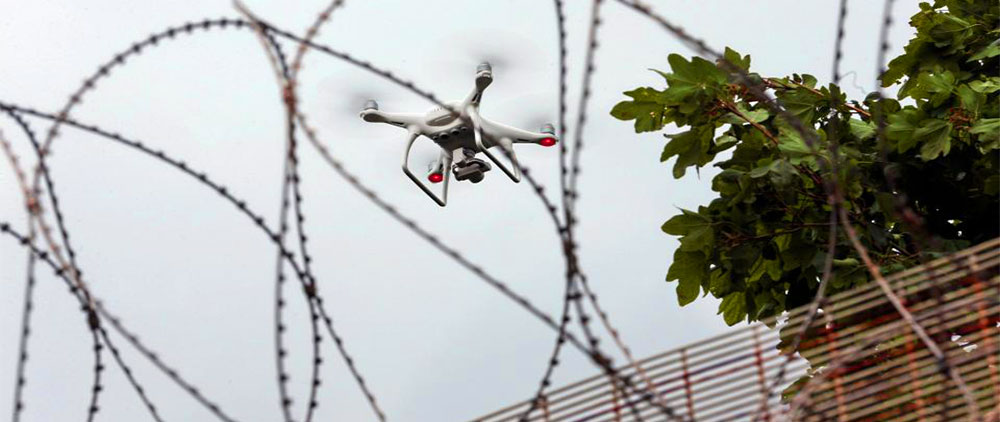
Four Queensland prisons in lockdown as drones fly overhead

counter drone technology / counter rpas technology

Counter-Drone-Solutions_-Jail

Four high-security Queensland prisons went into lockdown on Sunday night after drones were illegally flown overhead.

Queensland Corrective Services Commissioner Peter Martin said the drone use over Brisbane Correctional Centre, Brisbane Women’s Correctional Centre, Wolston Correctional Centre and Arthur Gorrie Correctional Centre was “irresponsible”.
Queensland Police is investigating the illegal drone use.
The four prisons returned to normal on Monday morning after a search of each property to ensure no contraband had been dropped off.

“The safety and security of our prisoners and staff is of upmost importance, which was put at risk by this ill-conceived stunt,” Commissioner Martin said.

“Drones are a real threat when used to introduce contraband into our prison system or to aid in the escape of prisoners, which is why the Queensland government introduced legislation earlier this year to make such actions illegal.”

A trial at Woodford Correctional Centre was begun this month to detect drones, intercepting communications through radio waves to identify the drone’s source.
The trial will continue for four weeks to test its use across all Queensland prisons.
Drone laws prohibit the use of drones over restricted areas and over areas where emergency operations are under way, and require drones to only be flown at during the day and within line of sight of the operator.

Read Original Article Here

Posted on

Greenpeace ‘crash’ Superman drone into French nuclear facility

Greenpeace ‘crash’ Superman drone into French nuclear facility

Greenpeace activists say they have crashed a drone into a French nuclear site, posting footage of the flight on the groups Facebook page.

The group said the stunt was to highlight the lack of security around the facility, adding that “at no time was the drone intercepted or even worried about”. The drone, which was decked out to resemble a tiny Superman, slammed into the tower in Bugey, about 30 kilometres from Lyon, according to the video released Tuesday. The environmental activist group says the drone was harmless but showed the lack of security in nuclear installations in France, which is heavily dependent on atomic power. 

“This action has once again demonstrated the extreme vulnerability of French nuclear installations, designed for the most part in the 1970s and unprepared for external attacks,” the post read.

France generates 75 per cent of its electricity from nuclear power in 19 nuclear plants operated by state-controlled EDF. EDF said that two drones had flown over the Bugey site, of which one had been intercepted by French police.

Read Full Article Here >

Posted on

QLD Ministers and EPE Director announced Defence CRC Trusted Autonomous Systems

Defence Cooperative Research Centre for Trusted Autonomous Systems in QLD_02

The Queensland Government welcomed the Federal Government decision to back Queensland’s bid to host the Defence Cooperative Research Centre (CRC) for Trusted Autonomous Systems (TAS). A $50 million centre to develop drone and robotics technology for the Defence Force will be headquartered in Queensland. It will be a national facility that develops technology like drones and robotics for the Army, Navy and Air Force.

EPE Managing Director, Warwick Penrose joined Innovation Minister Kate Jones and State Development Minister Cameron Dick speaking at the Queensland Announcement at QUT welcoming the Federal Government decision to back Queensland’s bid to host the Centre. QUT’s Professor Arun Sharma and the State’s Chief Entrepreneur, Steve Baxter also addressed the media at the announcement.

Innovation Minister Kate Jones said the location of this Centre in Queensland was a vote of confidence in the state’s world-leading innovation and technology capability. “This centre will draw together industry, researchers and local businesses to work with Defence to develop new technologies for drones and other unmanned vehicles,” she said.  “This will develop critical mass in key technologies like artificial intelligence, robotics, and autonomous vehicles and will position Queensland as a global leader in these areas.”

State Development Minister Cameron Dick said the Palaszczuk Government recognised that defence was a critical industry for the state, employing approximately 6,500 workers.

He said an important feature of the proposal would be to develop sites for testing, trials and evaluation of drones.  “We will invest in test facilities, including large drone zones in regional Queensland — both aerial and marine —as part of the CRC.’’

Both Ministers recognised the capability that global companies like Boeing, and small companies like EPE and Nova Systems, contribute to Queensland’s leading technology in this area.

EPE Managing Director, Warwick Penrose said his ‘company is a family run business that creates autonomous systems to enable our soldiers to get in, do the job safely and get home again’.

Queensland will contribute a Brisbane-based headquarters for the CRC, world-class testing ranges, support research and technology projects, support industry to develop standards for autonomous systems and the development of platform technologies for unmanned aerial systems.

Information from : Minister for State Development, Manufacturing, Infrastructure and Planning, The Honourable Cameron Dick / Minister for Innovation and Tourism Industry Development and Minister for the Commonwealth Games, The Honourable Kate Jones

Posted on

Contraband seized following drone drop

Contraband seized following drone drop

Contraband seized following drone drop
Photo courtesy of The Daily Telegraph

MINISTER for Corrections David Elliott has thanked Corrective Services officers who seized steroid capsules smuggled into Lithgow Correctional Centre with the apparent use of a drone.

It is the first time that CCTV has captured a drone that appears to be dumping contraband in a NSW prison.

A member of the public first alerted the prison to the presence of the drone around the centre on Monday evening.

“I thank the member of the public and staff for their prompt response and the recovery of this contraband,” Mr Elliott said.

To read full article, please Click Here, Coutesy of The Dayly Telegraph

Posted on

Drones present a threat to cities, expert warns Brisbane conference

Drones present a threat to cities, expert warns Brisbane conference

Drones present a threat to cities, expert warns Brisbane conference
Courtesy of The Sydney Morning Herald http://www.smh.com.au

Drones have been recognised as a very real threat to Australian cities, as the use of the technology by terrorist organisations increases.

Defence contractor EPE manager Keith Mollison, who had 25 years’ experience in the British Army including a stint as deputy director of intelligence, spoke at the annual Safe Cities conference about the threat of drones on Wednesday.

Drones can inadvertently cause significant hazards to public safety,” he said at the Brisbane conference.

“The spectrum of improper and illegal use of drones, even inadvertently, ranges from mischief to mayhem to protest, even acts of terror. They are used for many purposes – for recreation, for journalism or commerce and a lot of legal uses as well. Even drones used for legal purposes have the potential to cause significant disruption.”

To read full Article please click following : http://www.smh.com.au/drones-present-a-threat-to-cities

Posted on

ADF donates ECM to the Australian War Memorial

ADF donates ECM to the Australian War Memorial

ADF donates ECM to the Australian War Memorial
From left to right: Grant Phillips (EPE), Bill Lawrence (ISREW-L SPO), Stephen Court (ISREW-L SPO), COL Joanne Whittacker (AHQ), Nick Fletcher (Head Military Heraldry & Technology AWM), Warwick Penrose (EPE), Seamus O’Brien (EPE). Photograph taken by Steve Burton.  

ADF has donated  Force Protection Electronic Countermeasures equipment that was fitted to Up-Armoured SUV’s (UA SUV) in Afghanistan to the Australian War Memorial (AWM). This will now complete the vehicle which is displayed in the AWM Afghanistan collection.  EPE delivered these vehicles integrated with vehicle mounted ECM and vehicle tracking to ADF for deployment in Afghanistan, so was very pleased to be involved in the handover to the AWM.

Posted on

EPE’s Maintenance Manager Grant Phillips graduates from MBA

Graduation_Grant_01


Grant Philips, Maintenance Manager, EPE Team

EPE’s Maintenance Manager Grant Phillips graduates with MBA being awarded for Academic Excellence for his high Grade Point Average.

Grant started his Masters of Business Administration (MBA) in January 2015 and completed the final subject in March 2017 (27 months). Studying through Southern Cross University allowed him to complete most course work via correspondence due to frequent work travel commitments , including a deployment to Afghanistan with the Australian Defence Force.  Grant’s unique combination of hands on technical experience gained in service with ADF, coupled with management strategies and tools developed through his post graduate university studies, have put him in a strong position to build a highly effective maintenance team delivering cost saving solutions to our customers.

Posted on

Talon Explosive Ordnance Disposal Robot at Australia’s main operating base in Middle East

Talon Explosive Ordnance Disposal Robot at Australia's main operating base in Middle East Warrant-Officer-(WOFF)-Rodney-Amos_Talon-Robot_01

Talon Explosive Ordnance Disposal Robot at Australia's main operating base in Middle East

Talon Explosive Ordnance Disposal Robot in the Middle East region.
Story and photos courtesy of Commonwealth of Australia, Department of Defence.

After 20 years of service in the Royal Australian Air Force, Warrant Officer (WOFF) Rodney Amos couldn’t help but stay on. Now in his 37th year of service, WOFF Amos is on his 6th Middle East deployment, working at Australia’s main operating base in the region, and aiming to hit 40 years before retiring. Whilst deployed, he is the Base Armaments Manager, Team Leader of the Counter Improvised Explosive Device Response Team and an Explosive Ordnance Disposal Technician.  He will be deployed over ANZAC Day this year.

Read full Article here

Posted on

Drones flying into prisons to be examined by police

Drone-Smuggling-Dro-into-Prison

The UK Prison Service and police are to pool intelligence to stop drones flying drugs and mobile phones to prison inmates in England and Wales. They will forensically examine captured drones to try to find out who was flying them. The invention of easy-to-fly, remote-controlled aircraft has caused a huge security headache for prisons. But critics have called the plan a “red herring” to distract people from “chaos and crisis” in prisons.

The national initiative will see police and prison officers share information about the quadcopters and methods used.

Prisons Minister Sam Gyimah said: “We are absolutely determined to tackle the illegal flow of drugs and mobile phones into our prisons and turn them into places of safety and reform.

“The threat posed by drones is clear but our dedicated staff are committed to winning the fight against those who are attempting to thwart progress by wreaking havoc in establishments all over the country.

“My message to those who involve themselves in this type of criminal activity is clear: we will find you and put you behind bars.”

Staff corruption

The Prison Service could not give details about how many officers would be involved, but reports suggested £3m would be spent on the new task force.

John Podmore, former head of the service’s anti-corruption unit, said whilst there was an issue with contraband in prisons, targeting this money at drones was a “PR stunt”.

“I have seen no evidence that there is a real problem with drones,” he told BBC Radio 4’s Today programme. “I think the number of incidents last year was 33.

“There are some 10,000 mobile phones found every year in prisons. My question to the Prison Service would be, how many of those were found hanging from drones?”

Instead, Mr Podmore thought the service should be looking the wider issue of contraband smuggling, including the “main route [of] staff corruption”.

Mike Rolfe, national chair of the Prison Officers Association, said prisoners had told him that they had seen two or three drones a night delivering packages over the walls.

However, he said he agreed with Mr Podmore that the initiative was an attempt to distract people from “the real issue [of] jails in complete chaos, in a crisis and flooded with drugs, mobile phones and weapons”.

Recent successes

BBC home affairs correspondent Daniel Sandford says prison walls are now not much of a barrier for those wanting to smuggle contraband into jails.

There have been some recent successes in finding and punishing those who are behind the drone flights, says the Ministry of Justice.

In December, Dean Rawley-Bell, 21, was jailed for four years and eight monthsafter he used a drone in attempts to smuggle drugs and mobile phones into Manchester Prison.

Renelle Carlisle, 23, was sentenced to three years and four months in October after he was caught outside Risley Prison in Warrington with a drone in his bag, trying to smuggle drugs inside.

In July, 37-year-old Daniel Kelly was jailed for 14 months for trying to supply contraband to offenders in Elmley and Swaleside Prison in Sheppey, Wandsworth Prison in London and the Mount Prison in Hemel Hempstead.

BBC News 17 April 2017

Posted on

Donation of EOD Protective Equipment to Australian War Memorial

War-Memorial-Donation-2017_05

Photos courtesy of The Australian War Memorial

The Australian War Memorial’s purpose is to commemorate the sacrifice of those Australians who have died in war. Its mission is to assist Australians to remember, interpret and understand the Australian experience of war and its enduring impact on Australian society.However, due to the recent nature of the War in Afghanistan, the Memorial has a technology gap from this War.  EPE and our partners Allen-Vanguard, Med-Eng and QinetiQ North America have been able to contribute equipment deployed in Afghanistan with Australian troops designed to protect troops from the danger of IEDs.  The equipment donated includes a PCM (Portable Counter Measures), EOD9 bombsuit and Talon IV Robot.

EPE would like to thank our partners Allen-Vanguard, Med-Eng and QinetiQ North America for their support to the ongoing commemoration of the contribution made by Australian troops in Afghanistan.

Posted on

Donation to the Australian War Memorial Afghanistan Exhibition

Australian-War-Memorial_2

EPE Managing Director, Warwick Penrose has presented a donation to Dr Brendan Nelson, Director of the Australian War Memorial for the Afghanistan Exhibition.

The Australian War Memorial’s purpose is to commemorate the sacrifice of those Australians who have died in war. Its mission is to assist Australians to remember, interpret and understand the Australian experience of war and its enduring impact on Australian society.However, due to the recent nature of the War in Afghanistan, the Memorial has a technology gap from this War.  EPE and our partners Allen-Vanguard, Med-Eng and QinetiQ North America have been able to contribute equipment deployed in Afghanistan with Australian troops designed to protect troops from the danger of IEDs.  The equipment donated includes a PCM (Portable Counter Measures), EOD9 bombsuit and Talon IV Robot.

Australia’s mission has evolved over the past decade in the Middle East Area of Operations (MEAO). From counter-insurgency, through reconstruction, to mentoring, Australians have been working to create a democratic and stable Afghan nation. This mission aims to assist the people of Afghanistan, but also to promote the security of the region, diminish the influence of terrorist groups, and create a safer global environment.

Some experiences from Afghanistan are told in this exhibition. Over time, the display will change and evolve as more veterans share their stories and more displays from Afghanistan are gathered.

EPE would like to thank our partners Allen-Vanguard, Med-Eng and QinetiQ North America for their support to the ongoing commemoration of the contribution made by Australian troops in Afghanistan.

Video acknowledgement: WIN News. Brisbane based company (EPE) donates equipment to the Australian War Memorial


Posted on

Drones could threaten crowds such as Inauguration Attendees

Drones-could-threaten-crowds-such-as-inauguration-attendees
   

The MESMER technology was highlighted on January 19 in a segment on The Today Show in the USA.
“Drones can easily fly over large crowds of people, and most radars can’t detect them. On the eve of Donald Trump’s inauguration, security experts are concerned that terror groups like ISIS could arm drones with bombs. NBC’s Kerry Sanders reports for TODAY”.

Click here to read full article.

Posted on

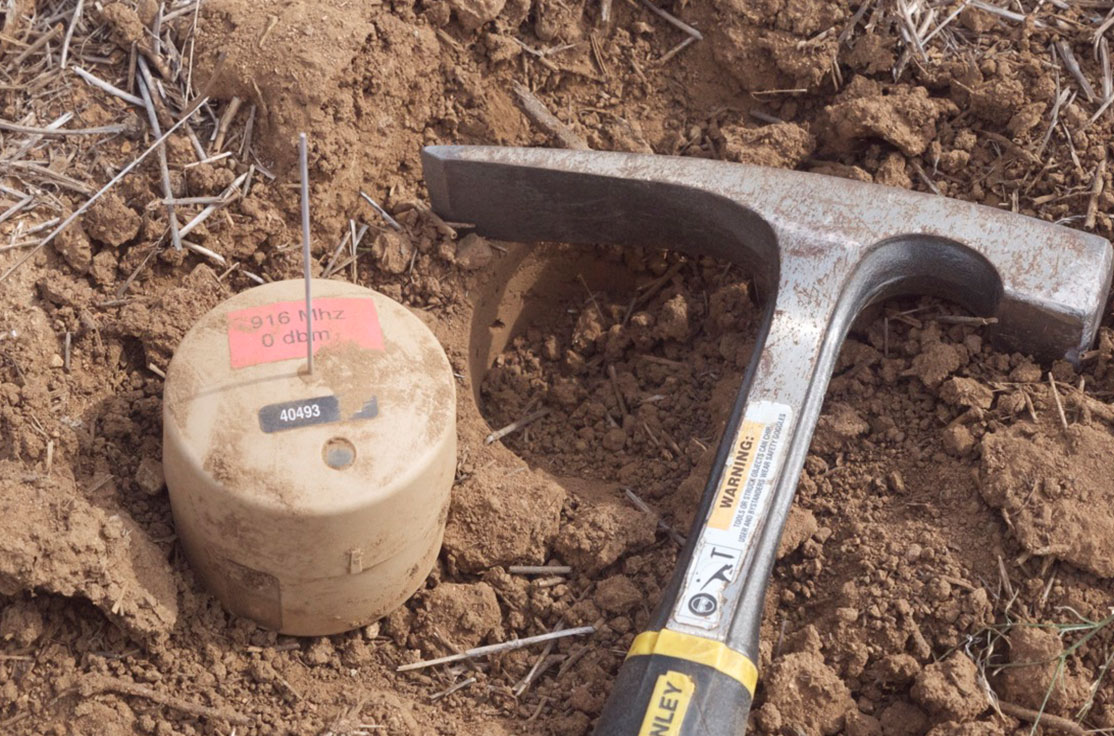
Unmanned Ground Sensor most cutting edge footstep sensor

Pathfinder Expendable Unattended Ground Sensors


Modern conflicts frequently require small regular forces to prevent intrusions or attacks by irregular forces that move stealthily at night or over remote terrain. Regular forces must simultaneously protect their own very vulnerable bases and monitor a huge area of possible infiltration.

[…]

In December 2014, Army Contracting Command, acting for PM Ground Sensors and the MCOE, requested information from industry on a better UGS. The Army wants a system of buried detectors, a receiver, soldier-carried display, cabling and antennas. The improved UGS would last at least four months doing 50 daily detections on off-the-shelf batteries. And the new UGS should detect low-flying aircraft and tunnel diggers along with personnel and vehicles. In addition, the Army wants sensors that weigh less than 10 ounces and cost less than $500.

Vendors have been active in improving a variety of UGSs.

For example, EPE distributes in Australia and New Zealand the next-generation of EUGS, Pathfinder, developed by the U.S.’s Applied Research Associates. ARA sells EUGS and Pathfinder directly to U.S. and other customers.

A seismic UGS to detect humans, Pathfinder incorporates lessons learned in Afghanistan and Iraq to be “the most cutting-edge footstep detection sensor on the market,” says EPE Intelligence, Surveillance and Reconnaissance Manager Dean Dickson. “Pathfinder is the world leader in expendable, affordable and undetectable security and protection.” The primary user of Pathfinder to date has been the U.S. Army.

Pathfinder sensors capture movement, and their effectiveness thus depends on how well users understand threats. The more users know about how threats operate, the more Pathfinder will help determine intent.

Pathfinder deprives threats of surprise and manoeuvers by covertly detecting, identifying and monitoring activities, movements, route networks and key locations. Users can then choose when and where to interdict threats, apparently by accident so adversaries do not know they have been observed.

Dickson says Pathfinder has been successful in military operations, border security, fighting narcotics trafficking and terrorism, protecting infrastructure, controlling refugees, private security, searches and rescues.

Pathfinder success in remote areas is partly due to radio communication that transmits information over ground up to 15 kilometers and in the air over 25km, packaging data to be undetectable to frequency-spectrum analyzers and similar equipment. And open architecture facilitates easy integration with ISR tools for slew-to-cue, fly-to-cue and cue-to-target functions.

The newest Pathfinder incorporates a number of improvements: miniature and extra-large variants; extended battery life, up to eight months for the mini and 24 months for the extra-large; machine-learning algorithms; better signal processing for better detection and fewer false alarms; and a micro-receiver for mobile, dismounted operations. This new micro-receiver can display all information on any Android or iOS device, including the Android Tactical Assault Kit and iPhone Tactical Assault Kit.

Users can scan Pathfinder sensors when emplaced to populate data such as GPS location and later access data such as sensor status, performance, detection, and distance to threats.

Dickson stresses that Pathfinder’s radio communication enables long-range transmission, even in non-line-of-sight and beyond-line-of-sight urban, rural and other conditions, without gateways or relays. Pathfinder is also quick and thus safe to emplace. And the device is both low cost and expendable, yet has an extended battery life.

ARA hopes to add more capabilities in the coming year. Programmable detection radii would allow users to push a button to tailor detection radii for mission requirements. ARA wants to improve machine-learning algorithms to make Pathfinder smarter. And it is working on algorithms to detect not just people, but vehicles such as all-terrain vehicles.

Digital Barriers offers the Remote Detection and Classification sensor. RDC is a battery-powered, wireless sensor for detecting both intrusions by people at distances from 20 and 70 meters and intrusions by vehicles up to 100 meters, and classifying the intrusion as one or the other. Marketing Director Maria Clutterbuck says RDC has high detection rates and low false-alarm rates, proven in many different environments for different applications.

Weighing less than half a kilogram, RDC is also, “highly portable, and quick to deploy and set up,” Clutterbuck notes. For communication, its self-forming, self-healing mesh network is field-proven over many years of operation and extremely reliable. It has a long battery life, four to six months on a single D cell, requires low power for radio communications and is designed to be very robust.

Distinctively, RDC uses an internal antenna that performs as well as an external antenna but is more robust and covert when deployed. “Nodes can be deployed just below ground level for complete concealment,” Clutterbuck says. And communication over an internal, rather than external, antenna eliminates vulnerability to wind, which can reduce detection and increase false alarms.

RDC’s sensor node also has a unique screw-thread design that secures the node in the ground, which reduces susceptibility to wind movements. And it makes unauthorized removal difficult. “A special tool is required to deploy and remove it,” Clutterbuck explains.

[…]

Read full article here: http://battle-updates.com/virtual-sentries-by-henry-canaday/#more-8097