Posted on

Local Issues: The Brisbane company working to get Australia to the moon

For our Local Issues segment, Feegs chats to Director of Innovation & Commercialisation Ben Sorensen from EPE – a robotics and defence company that is not just participating, but is leading the charge to get Australia on the moon. Ben shares the work that this QLD-based company does and his thoughts on why QLD is shaping up to be such a hub for tech innovation in Australia.

Posted on

Royal Malaysia Police host EPE’s demonstration on Avenger LT

Royal Malaysia Police host EPE's demonstration on Avenger LT

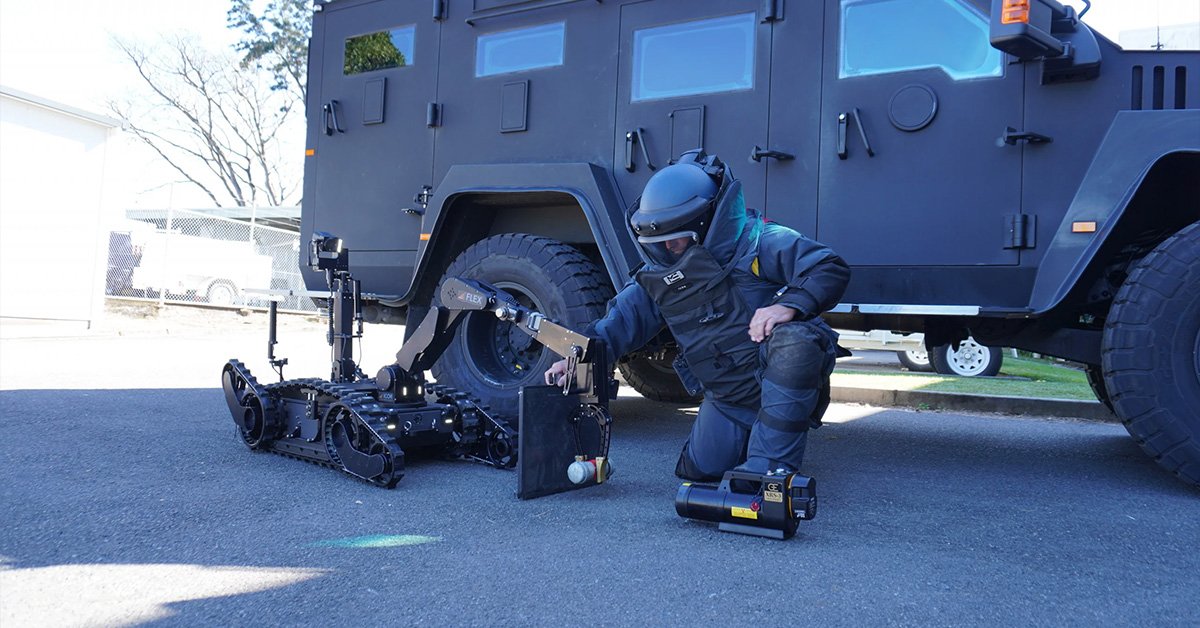
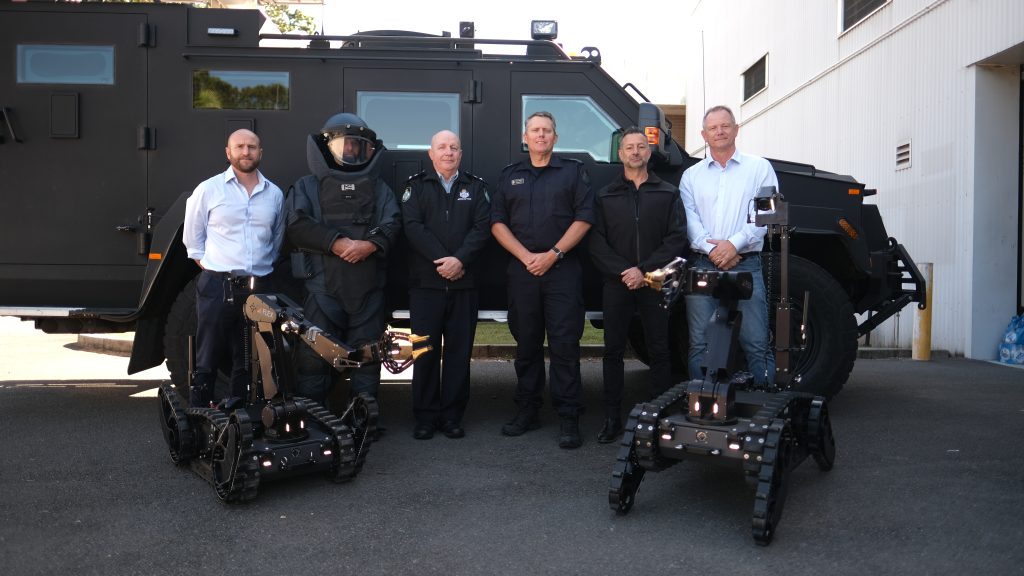
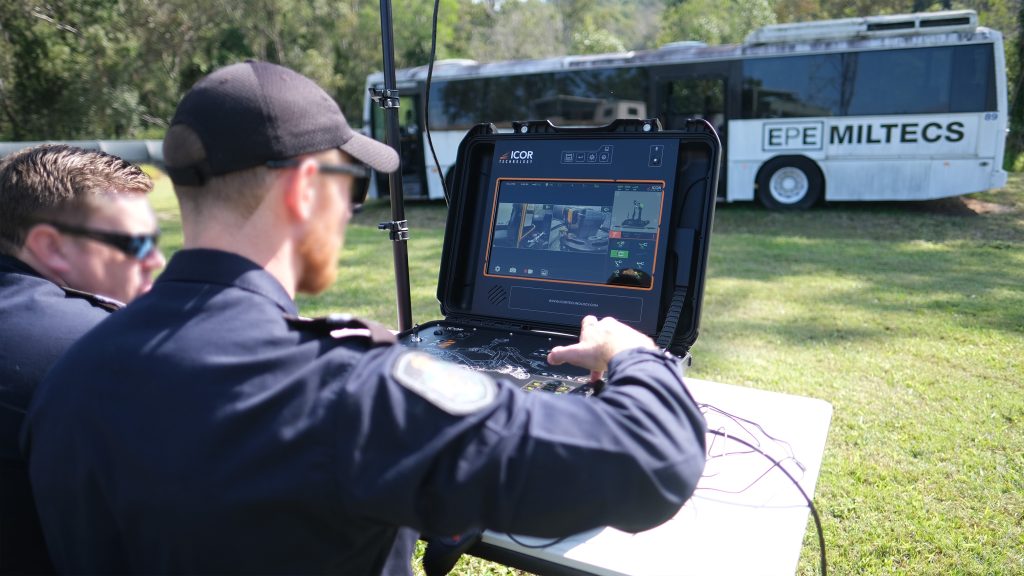
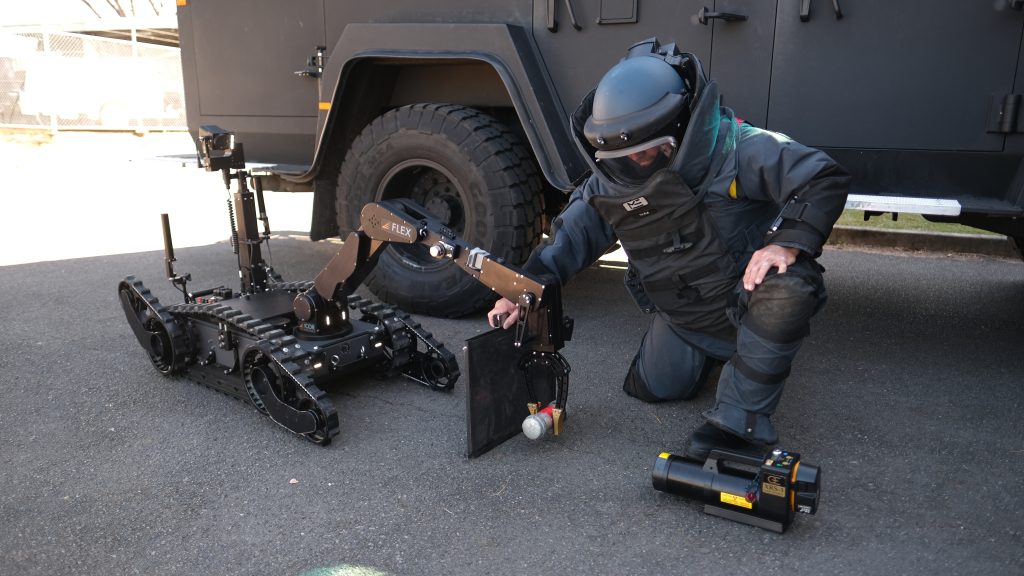
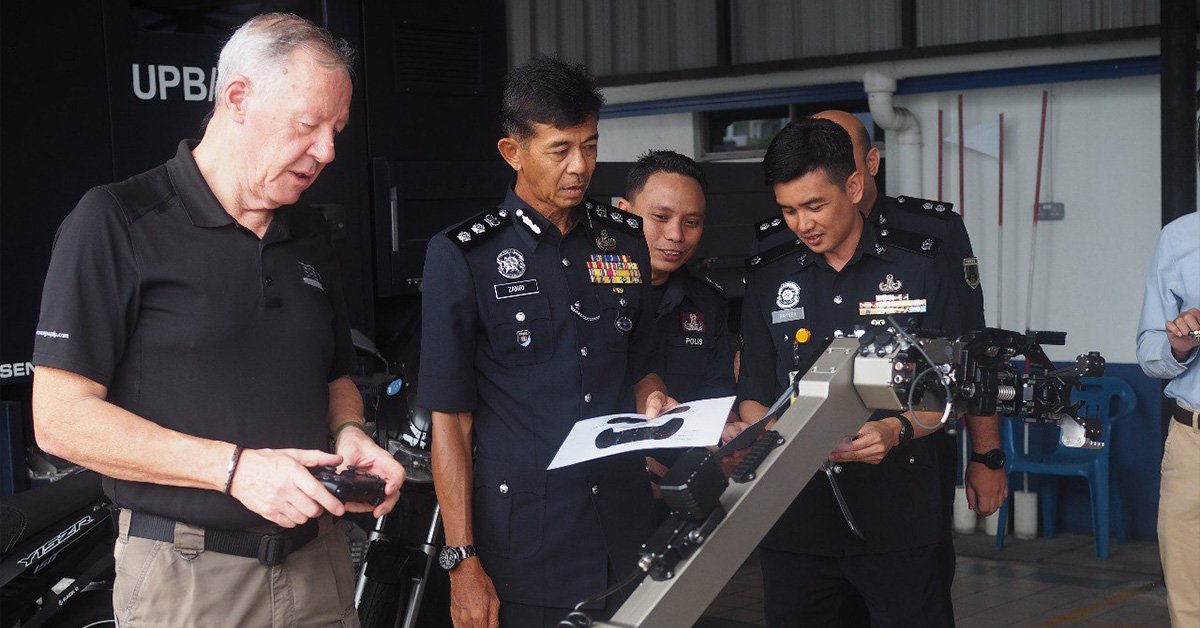
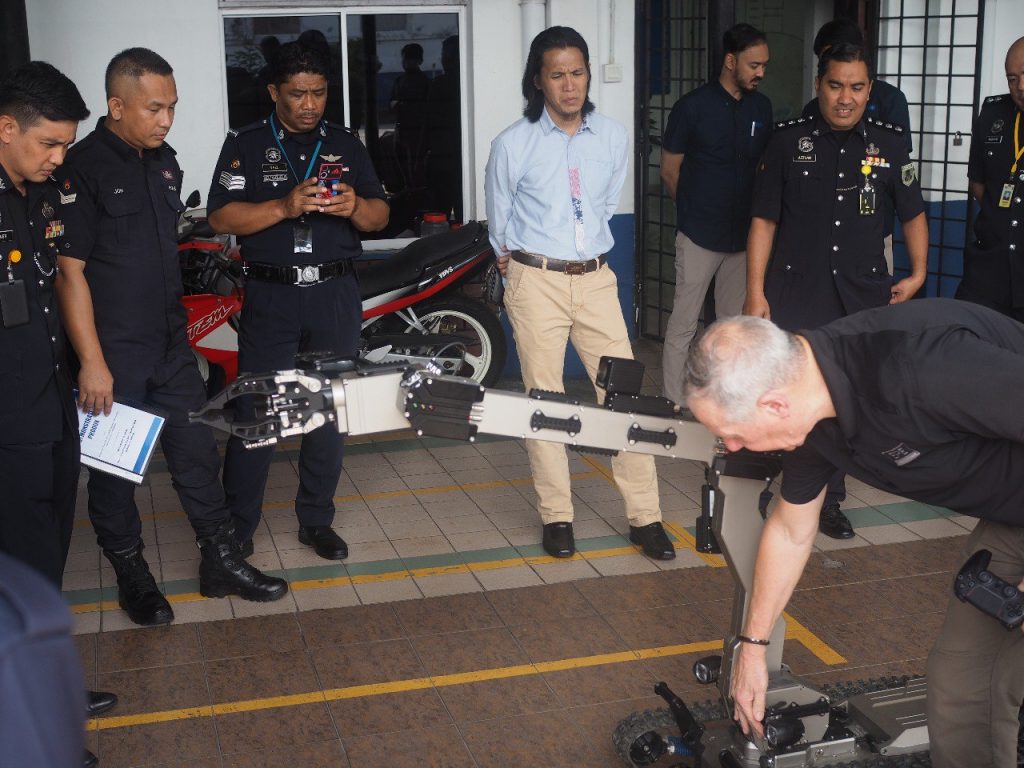
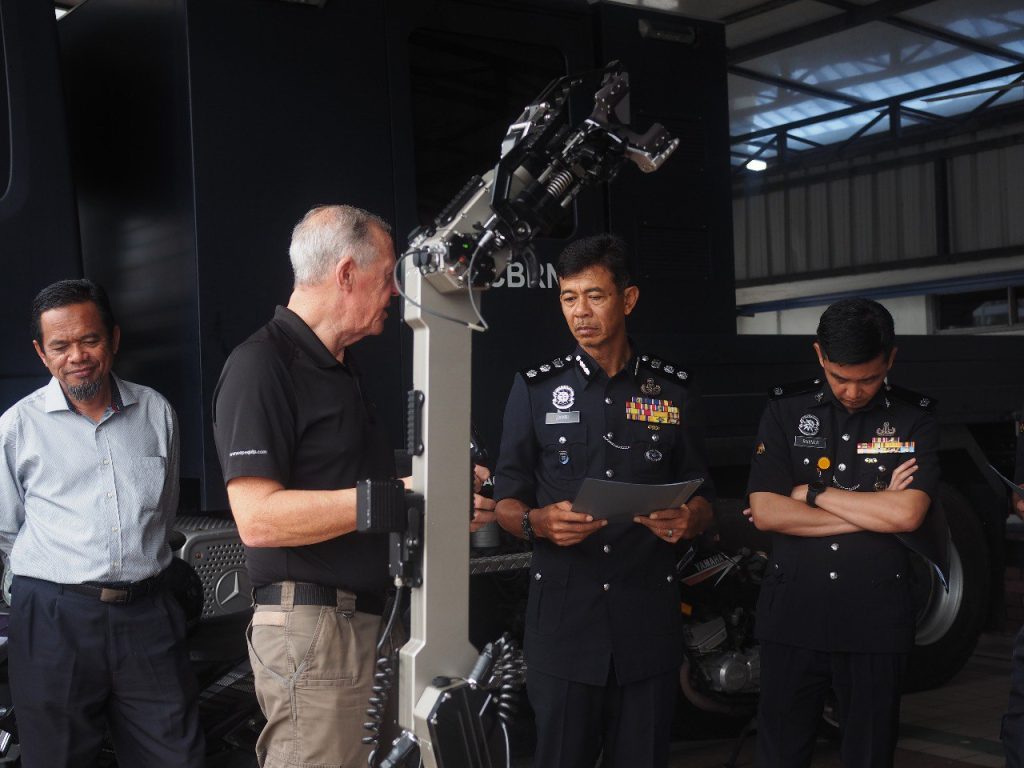
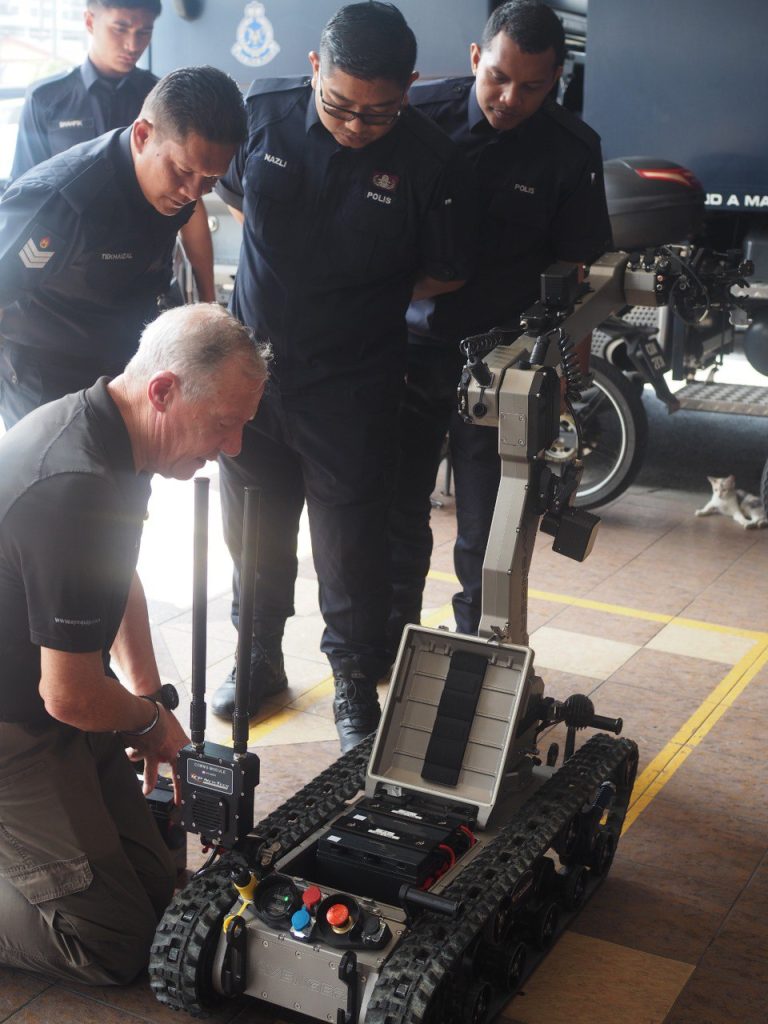
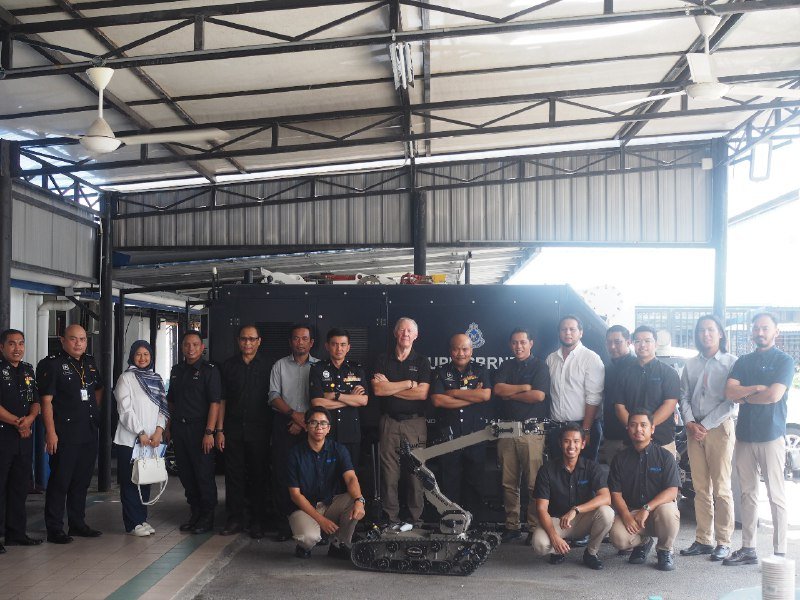
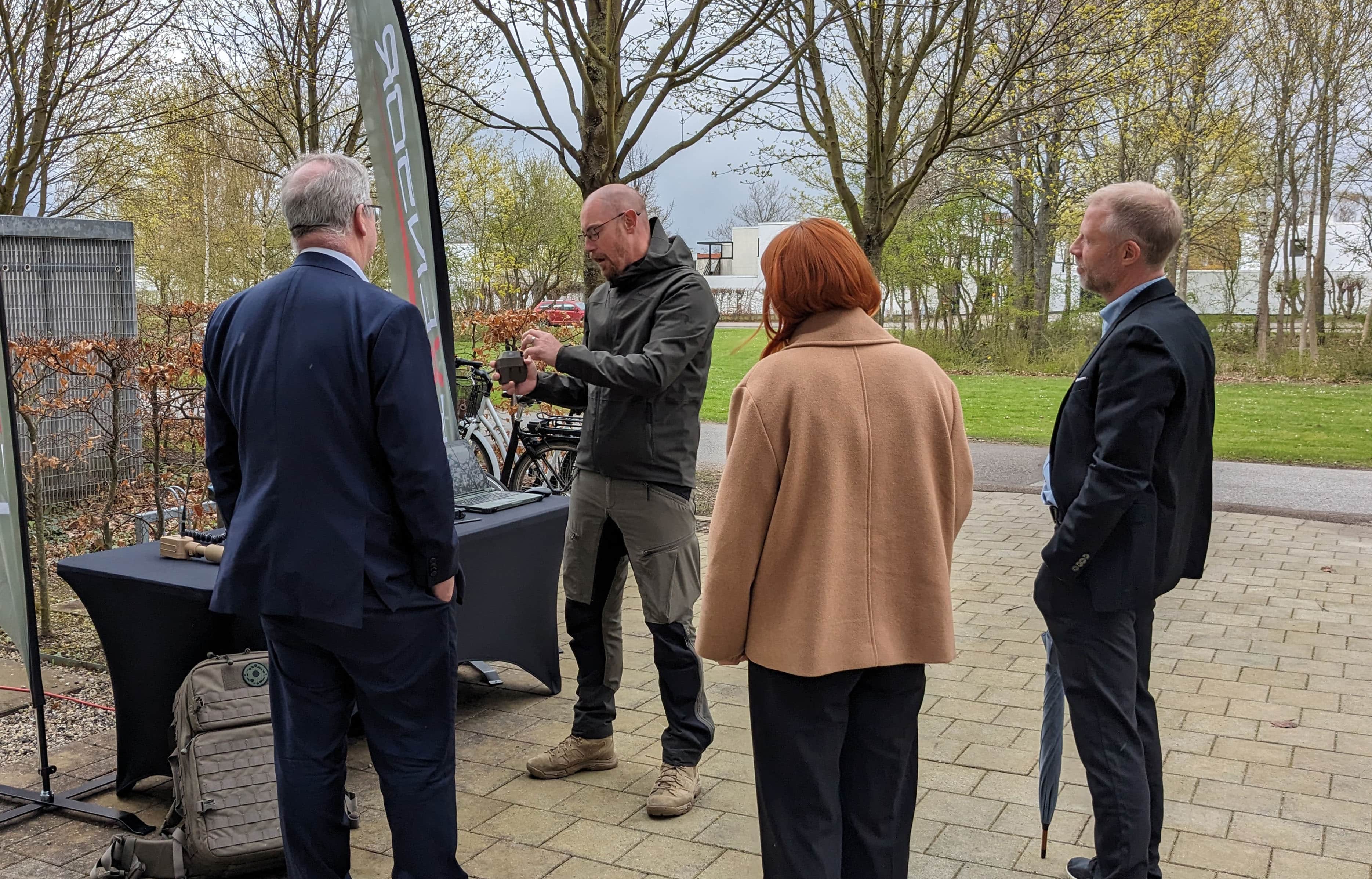
Royal Malaysia Police hosted EPE’s Account Manager Seamus O’Brien to demonstrate the ICP NewTech Avenger LT.

The unique capability combines high performance with ease of use, providing operators with a highly capable platform with a reduced training burden at a low cost.

Thank you to in-country agent KEMALAK System SDN. BHD. for enabling the demonstration.

Posted on

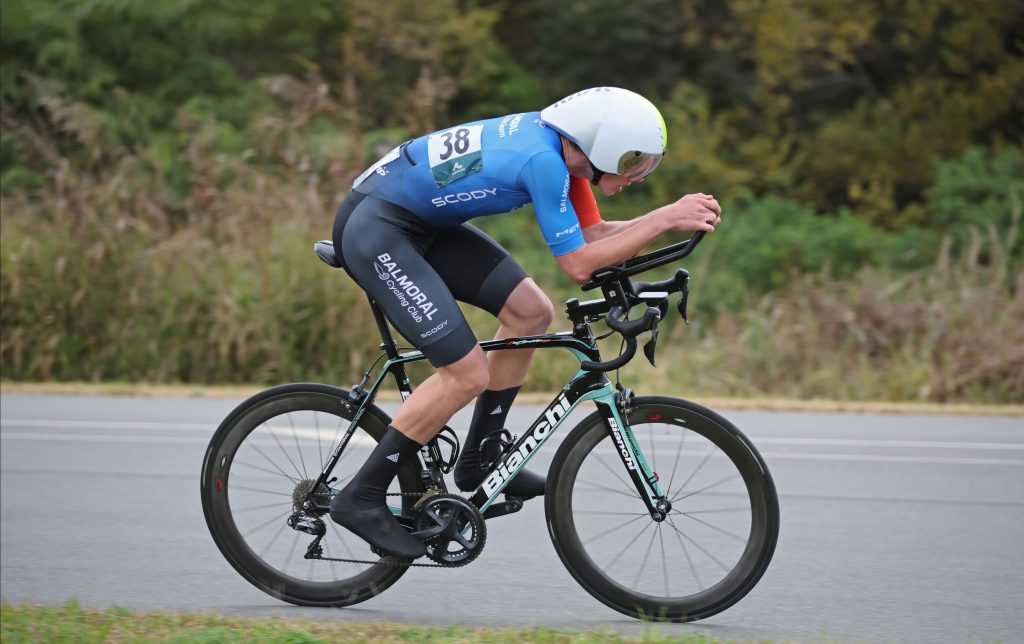
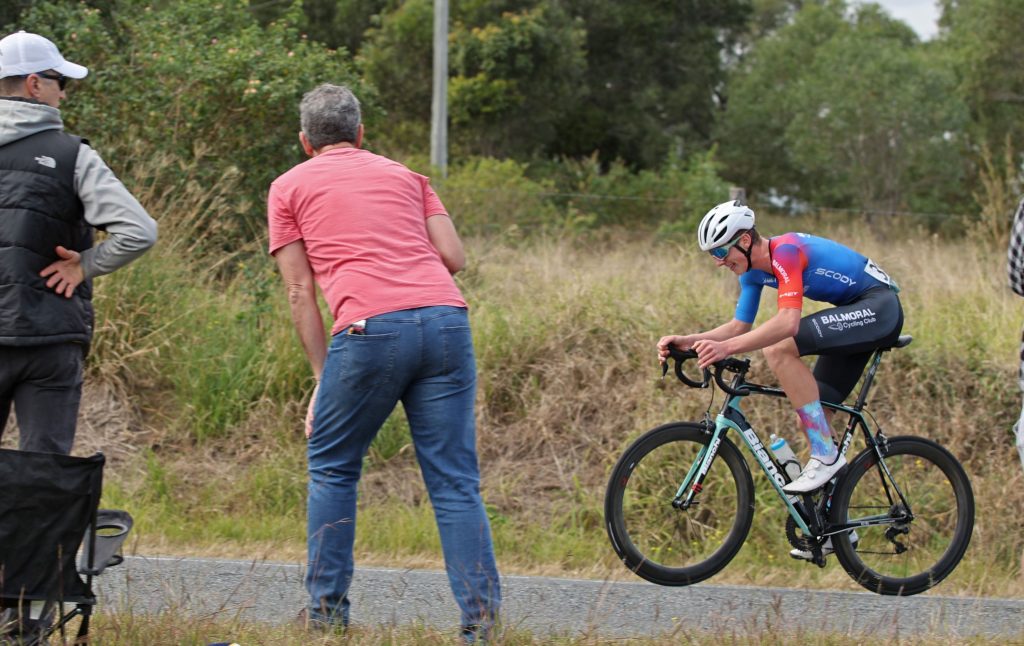
EPE-Sponsored Cyclist Toby Jones Takes Second at Balmoral Tour

EPE-Sponsored Cyclist Toby Jones Takes Second at Balmoral Tour_01

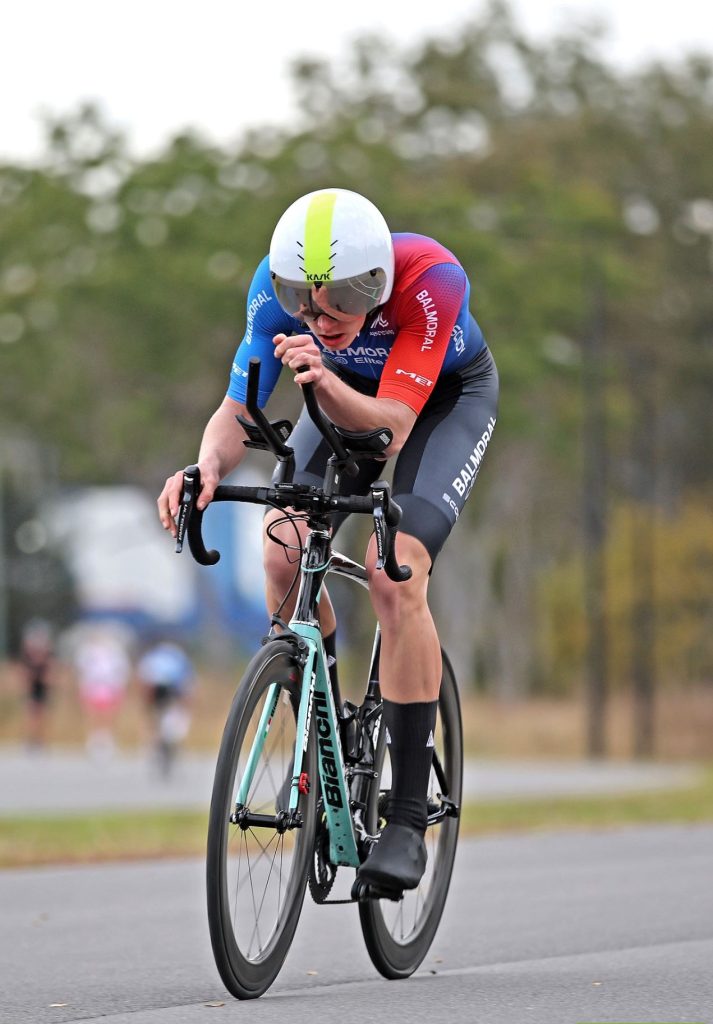
Congratulations to EPE-sponsored cyclist, Toby Jones, on finishing second in General Classification after the four stages of the Balmoral Junior and Women’s Tour in Brisbane last weekend. (Pictured in blue and red kit!)

The Balmoral Tour doubles as the second round of the 2024 Bikechain Junior 19 National Road Series and attracts riders from all around the country. With only eight weeks until the Junior Track World Championships in China, Toby is in good shape.

Photo acknowledgement: Mat Gilfedder Photography

Posted on

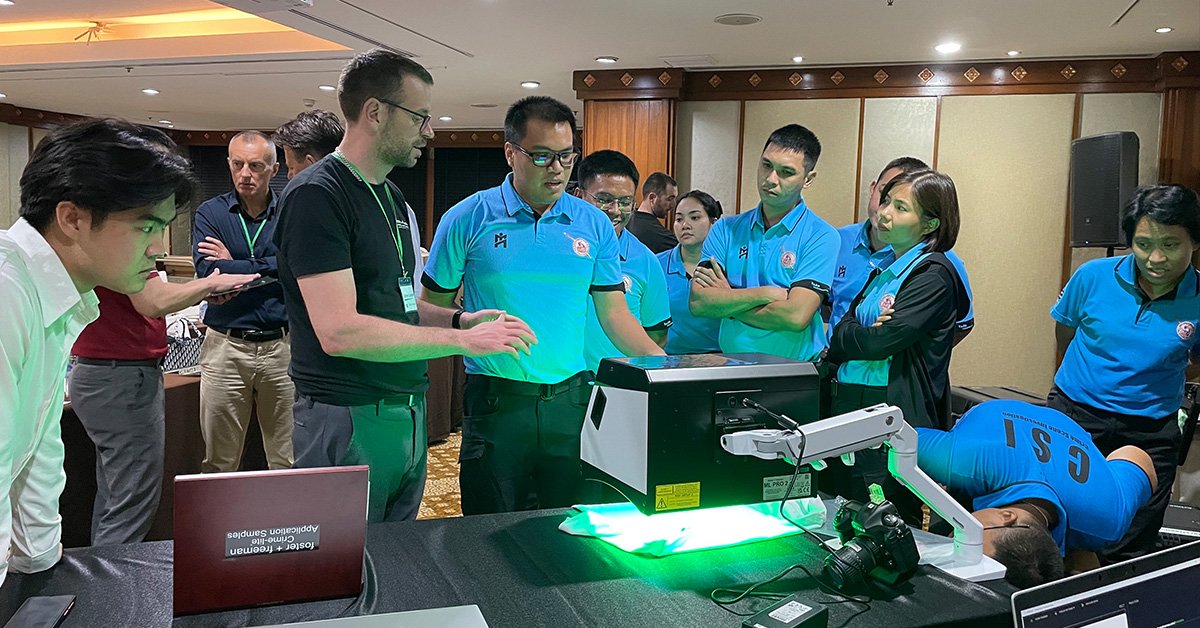
Foster and Freeman international distributor meeting

Foster and Freeman International meeting EPE News

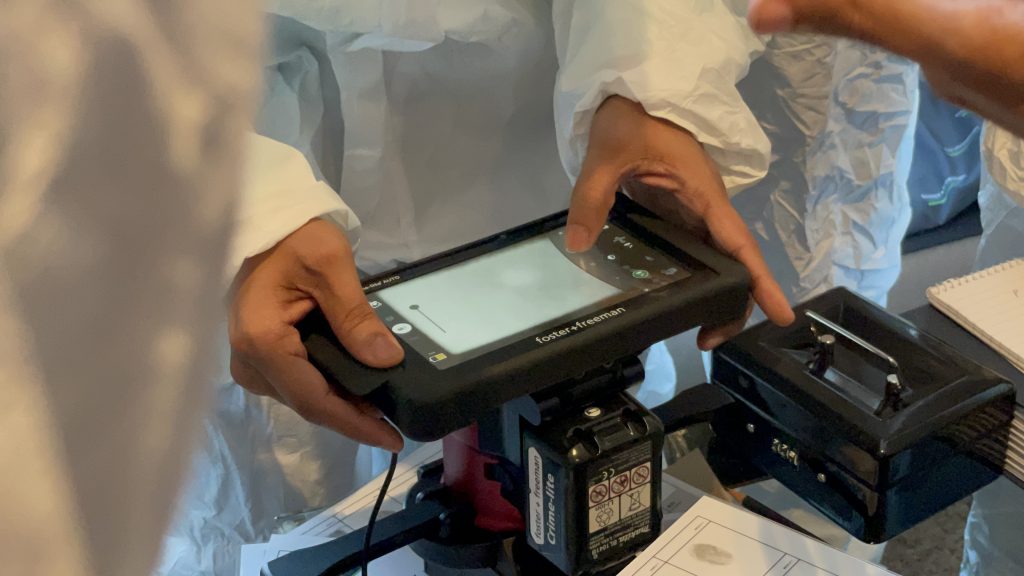
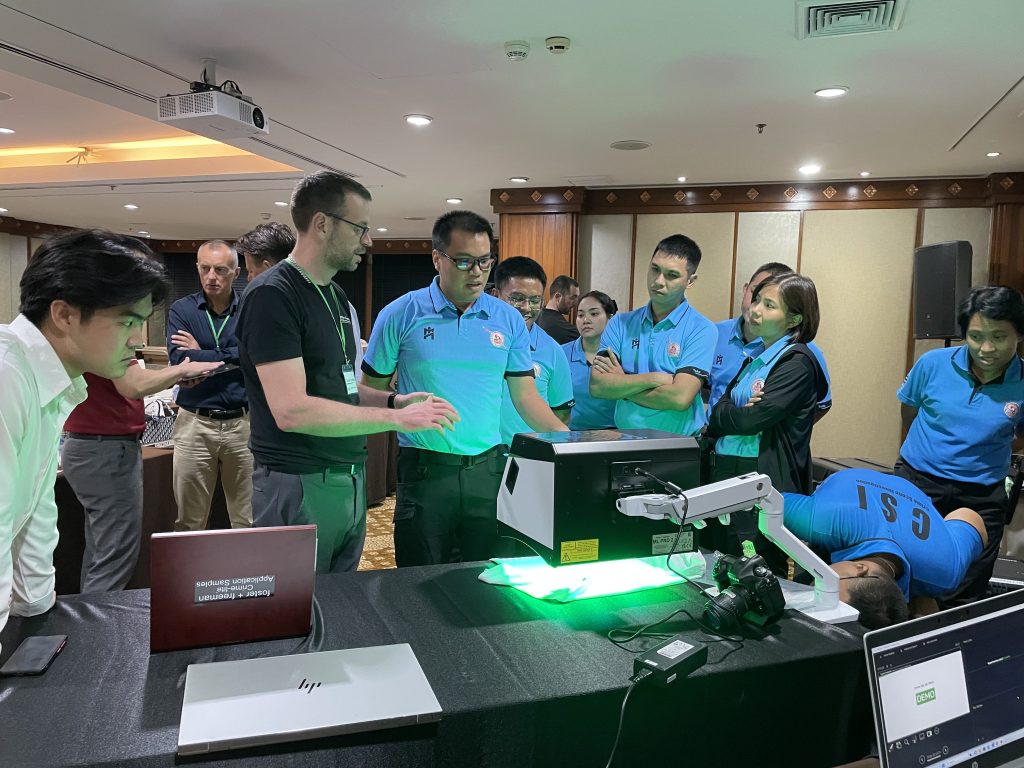
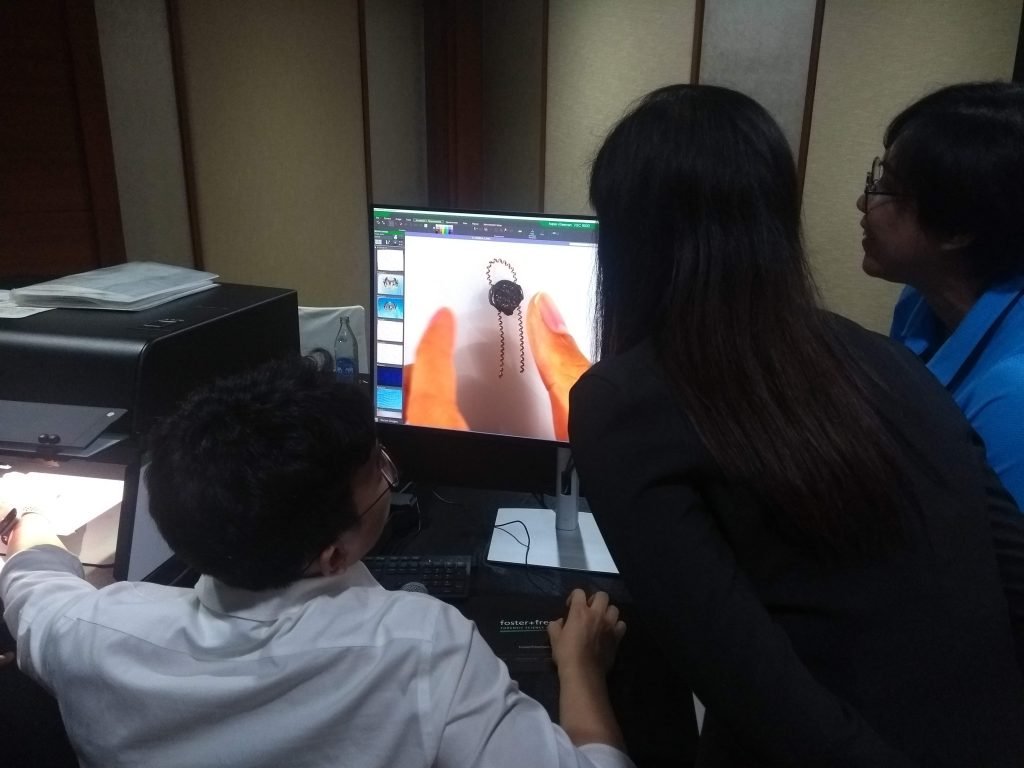
EPE. Trusted To Protect is a supplier of the Foster+Freeman Forensic Science Innovation range of forensics equipment supporting certain ongoing projects in the Asia-Pacific region. EPE’s International Accounts Manager for the region, Seamus O’Brien attended the Foster+Freeman (F+F) distributor meeting in Thailand. The meeting demonstrated the depth of specialist instruments for our crimescene and forensics labs customers.

The F+F team were the perfect hosts and put together an interactive package of activities. A highlight was an “Escape Room” scenario where teams solved a crime by applying F+F equipment to find “hidden clues”. F+F also delivered focused equipment training to CSI and forensics practitioners.

Posted on

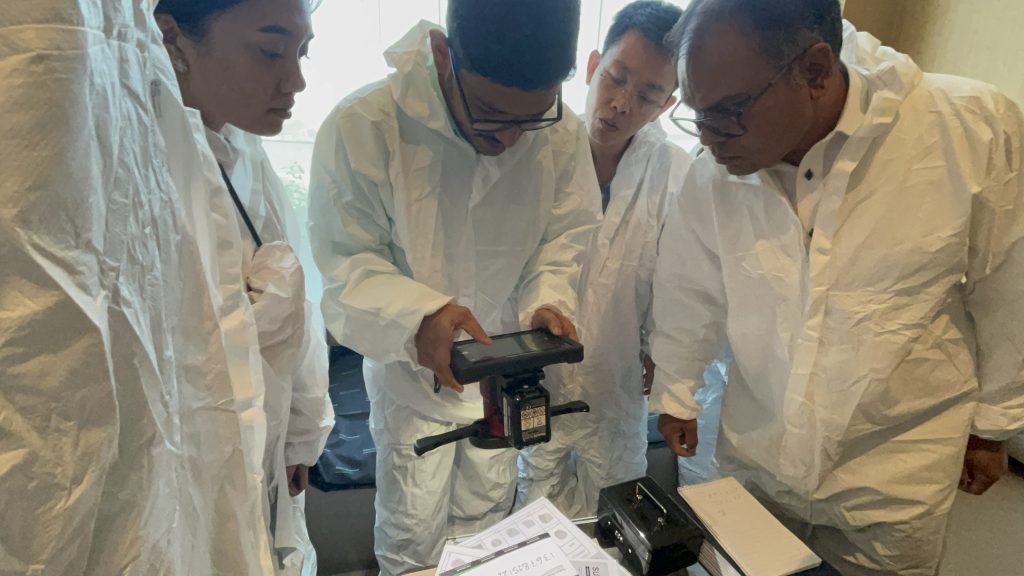
CBRN Training with the 20th EOD Squadron facilitated by EPE

20EOD Squadron CBRN Training facilitated by EPE_01

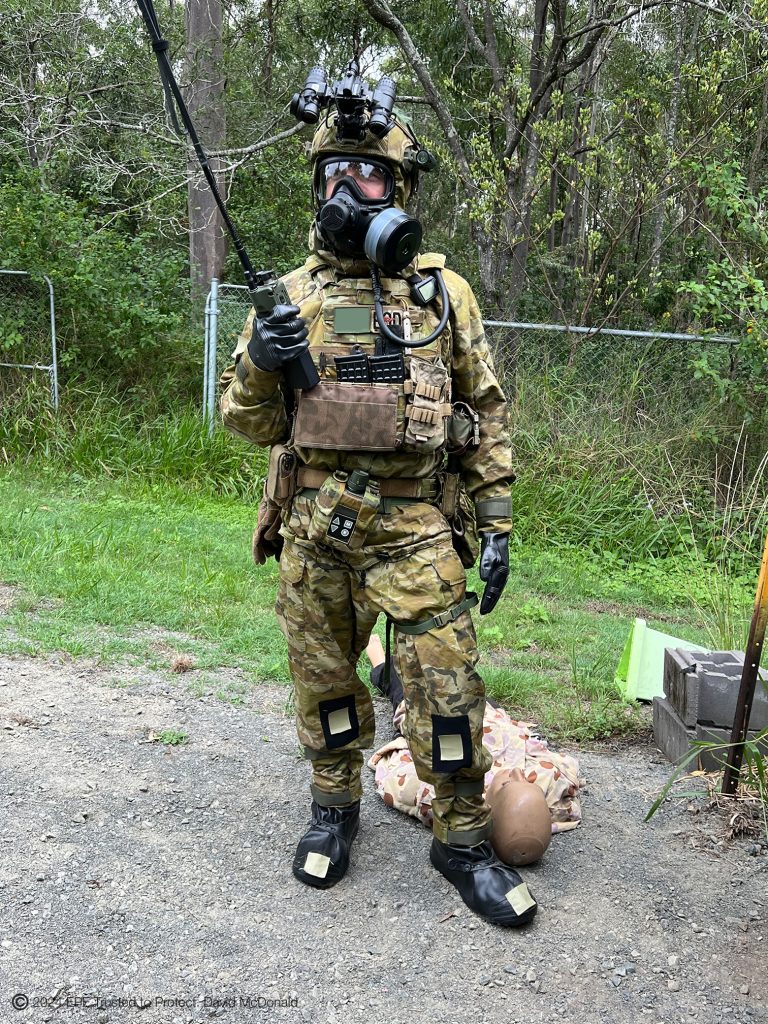
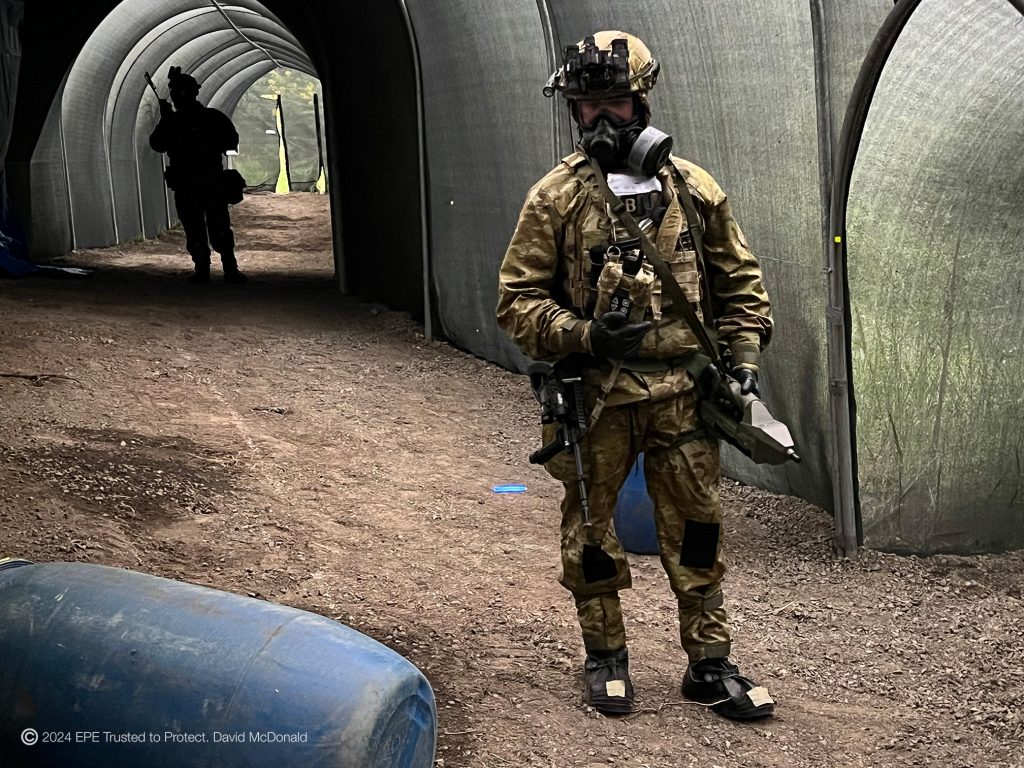
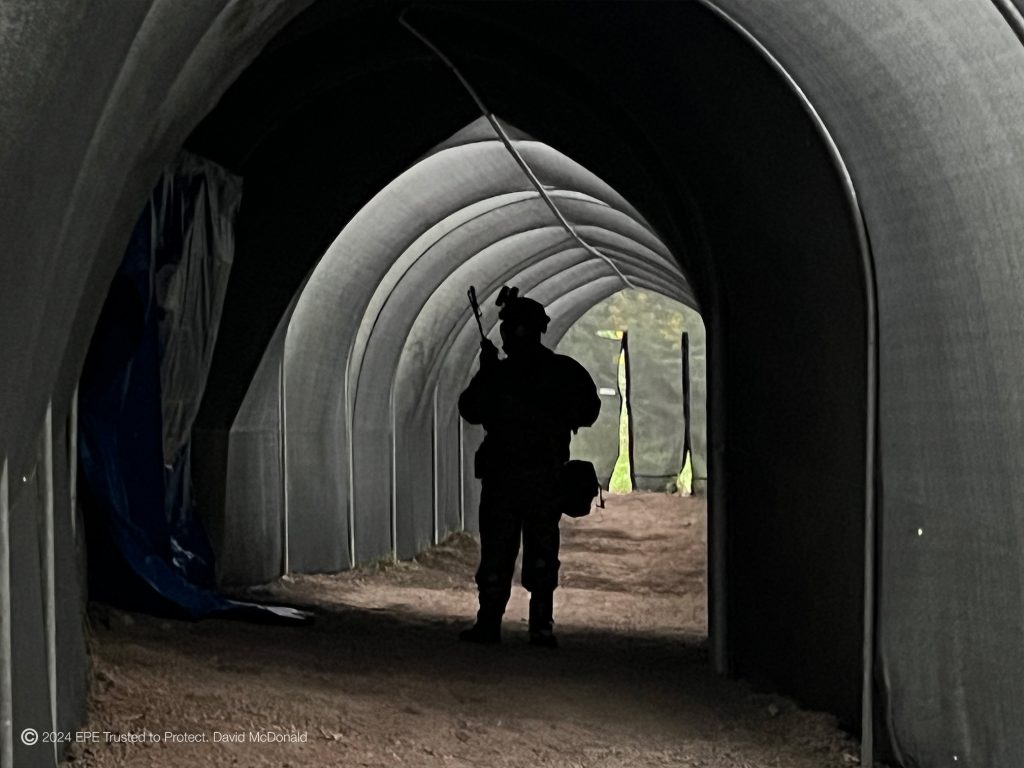
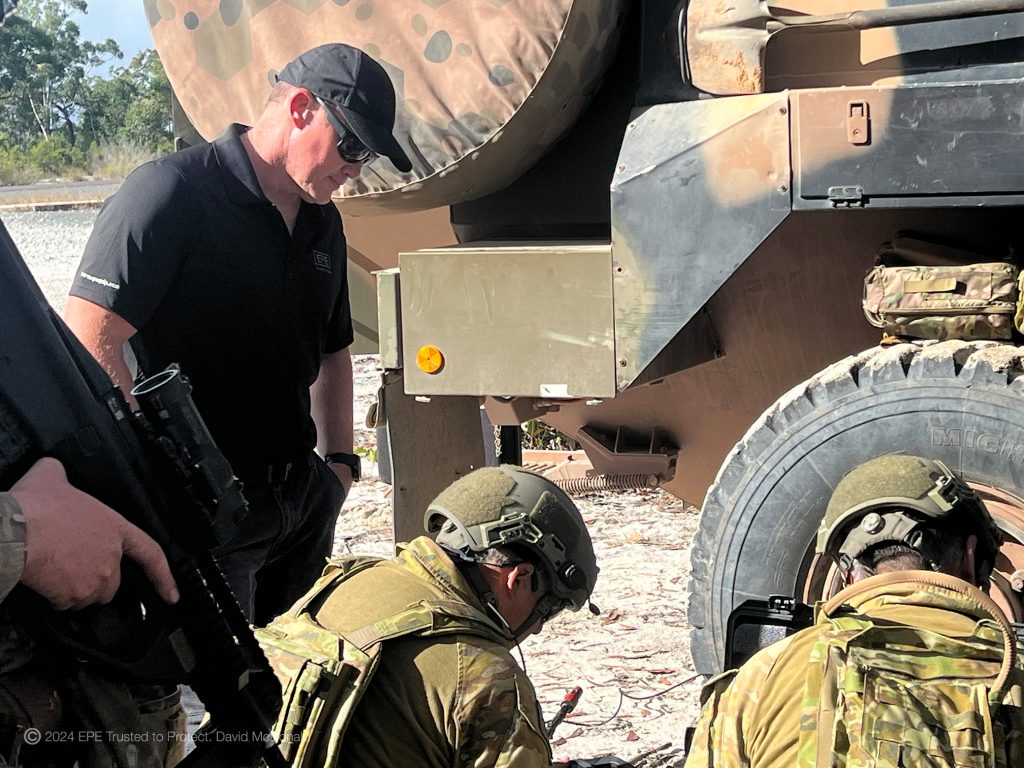
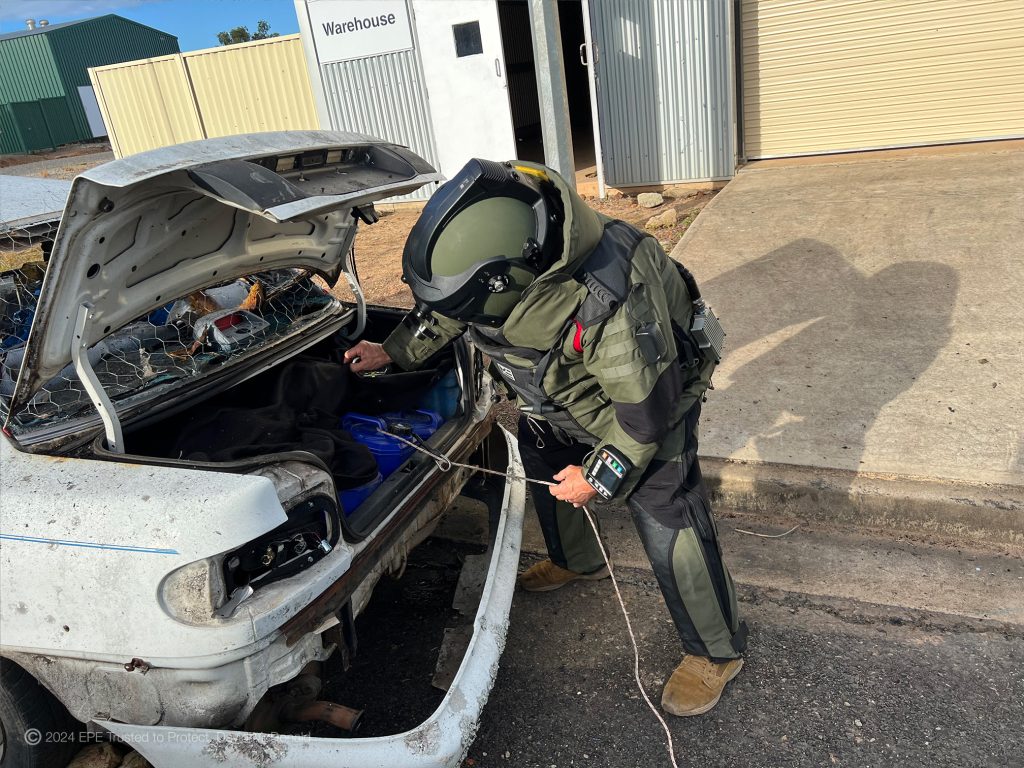
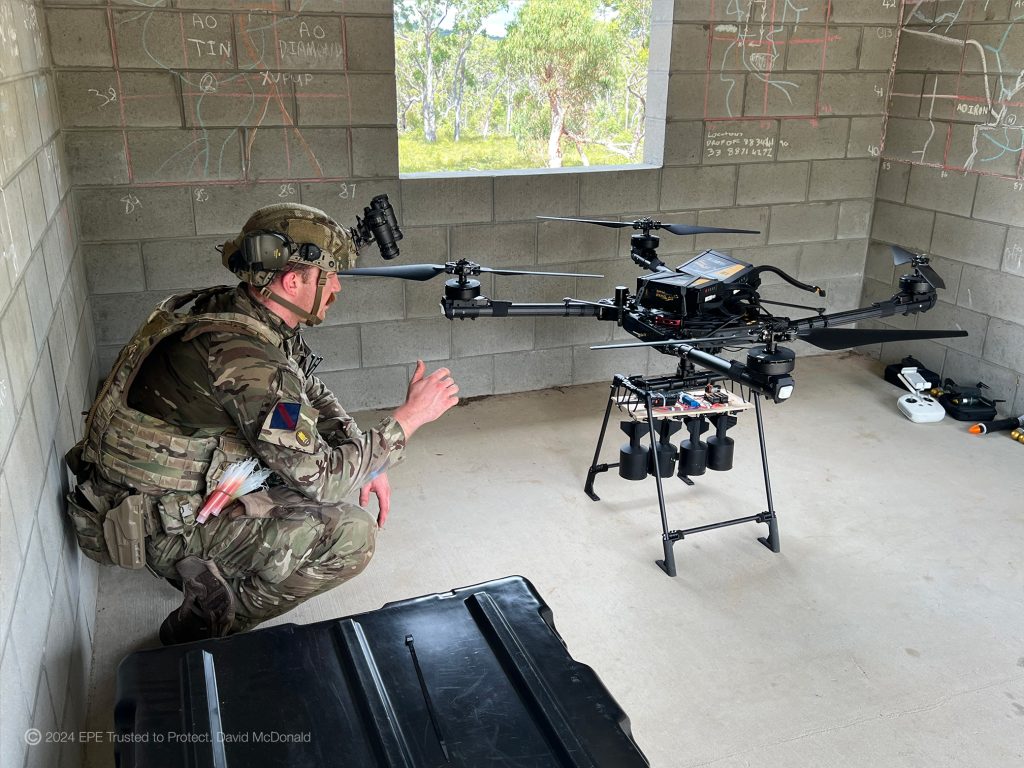
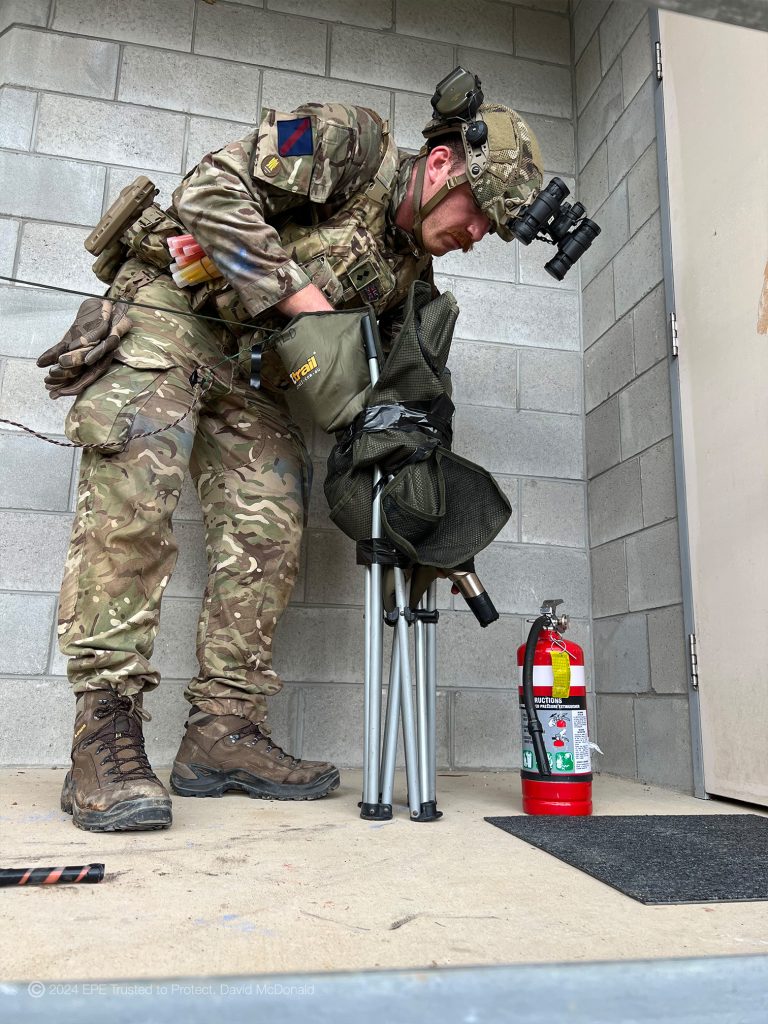
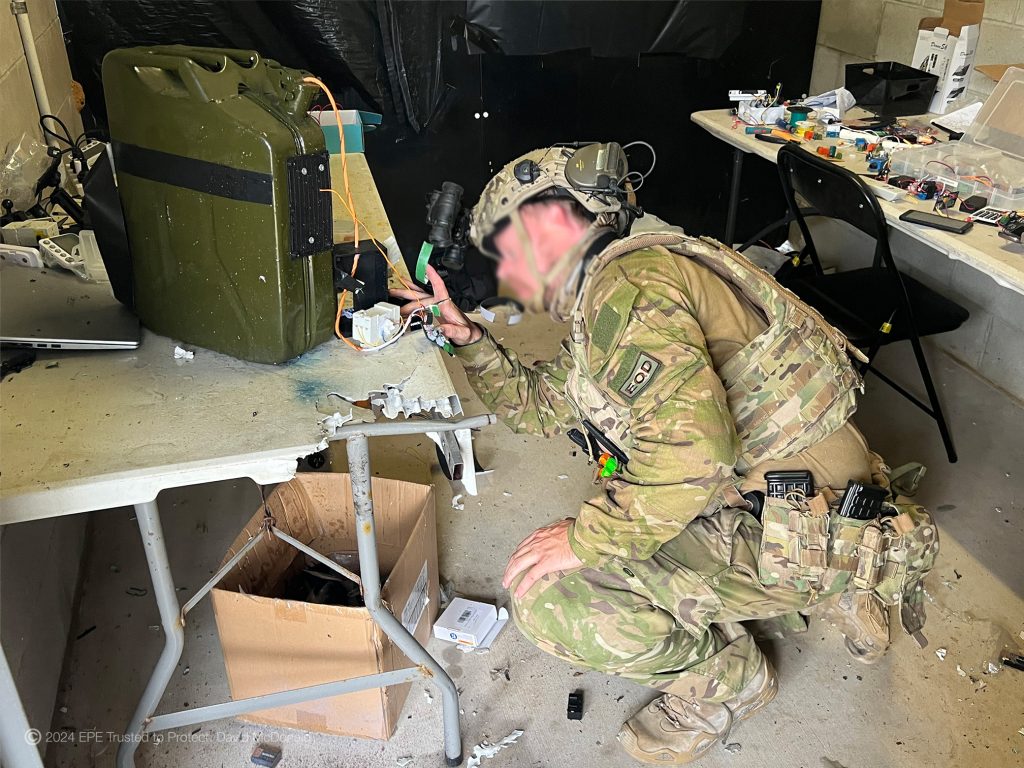
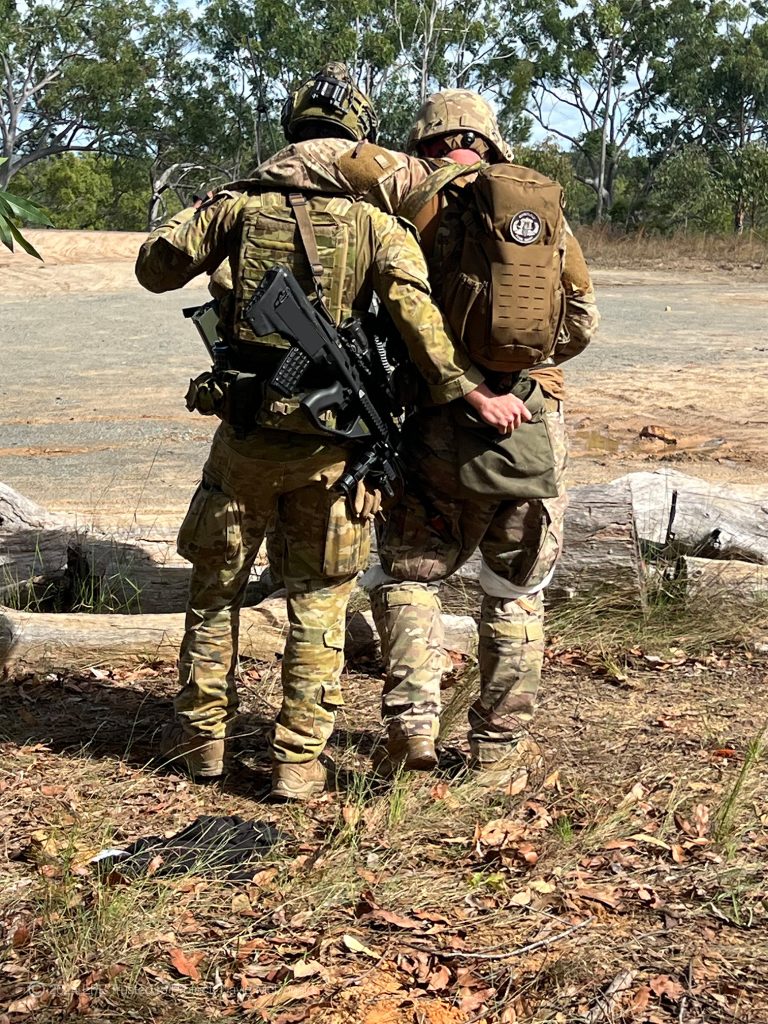
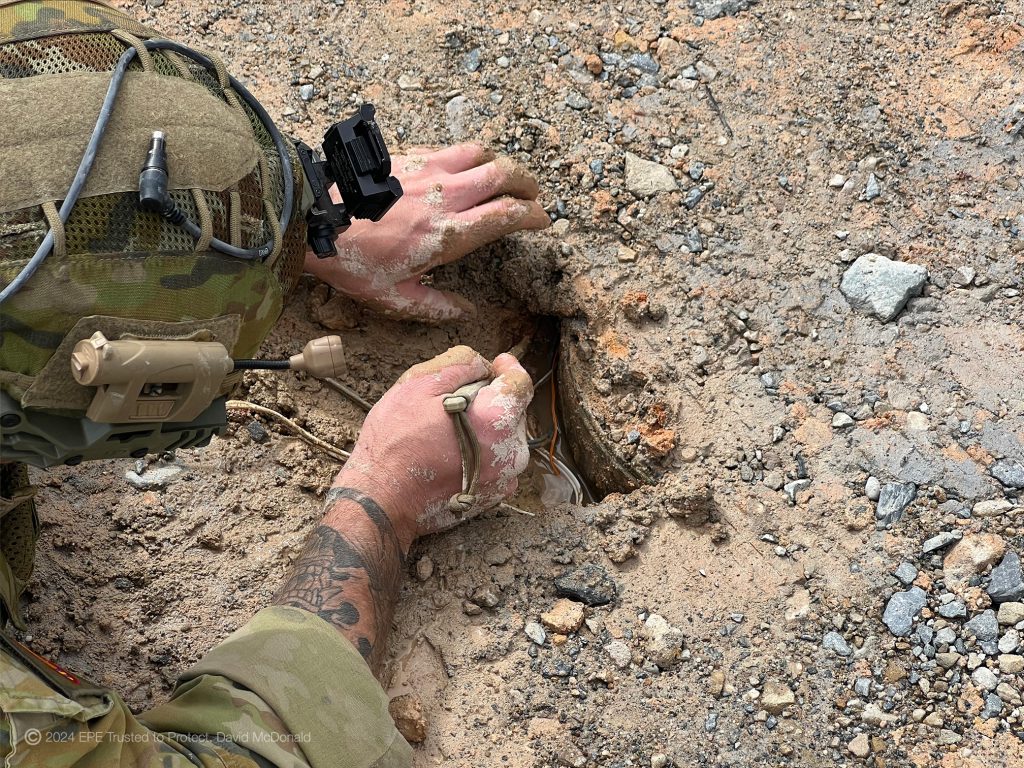
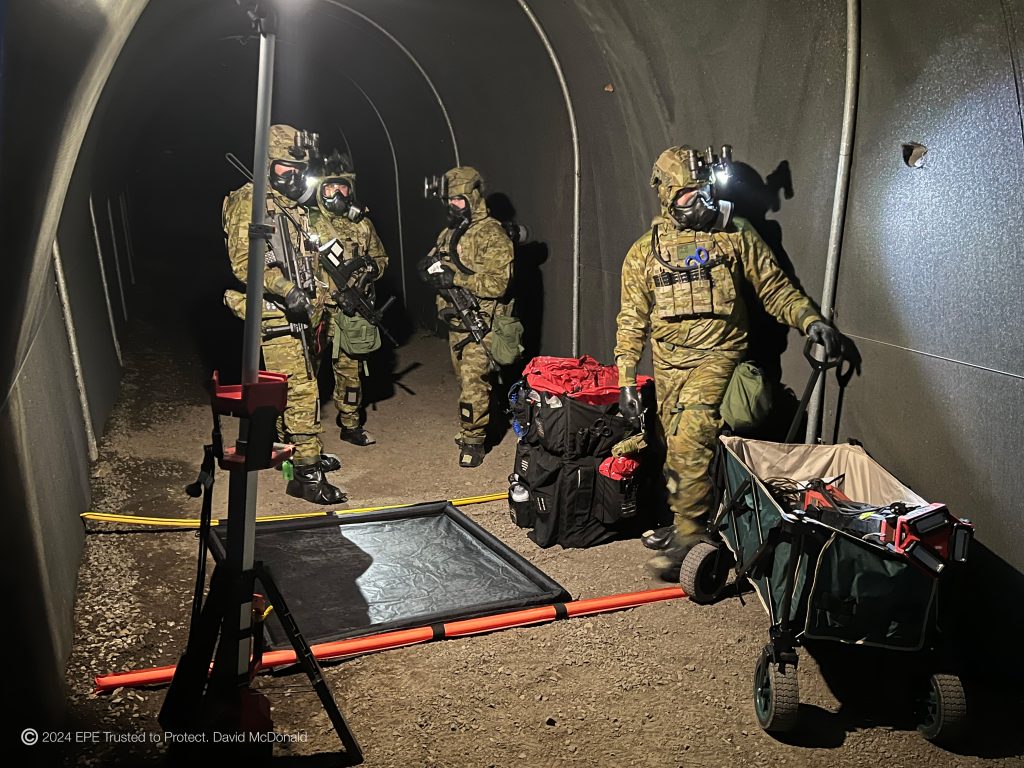
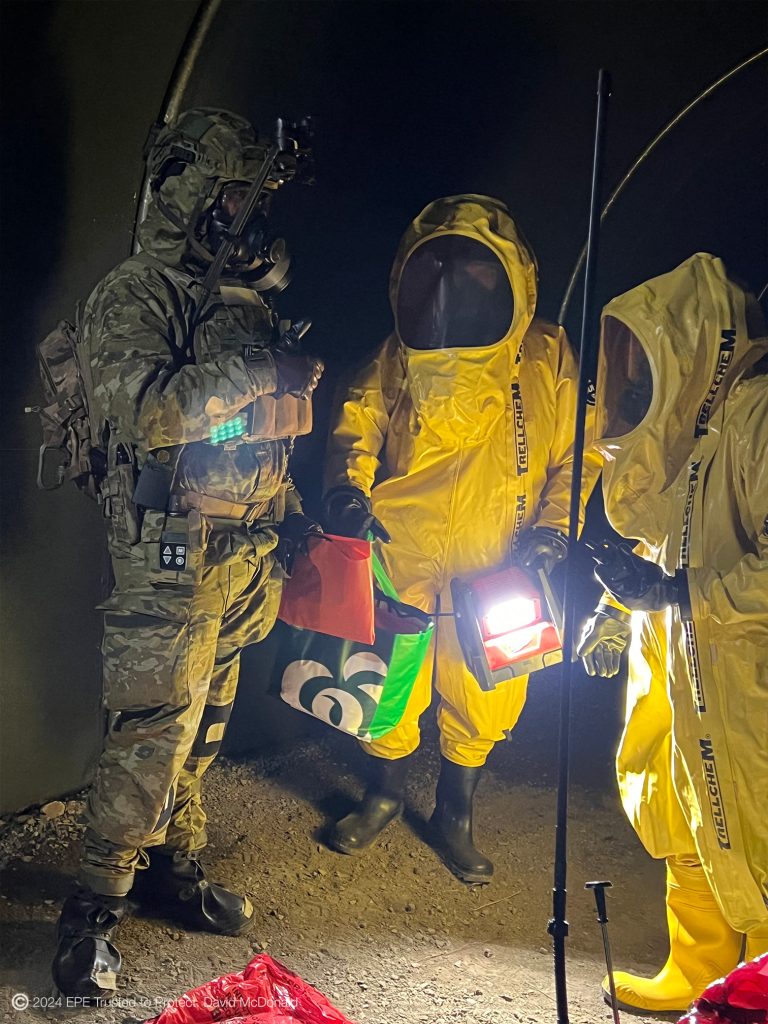
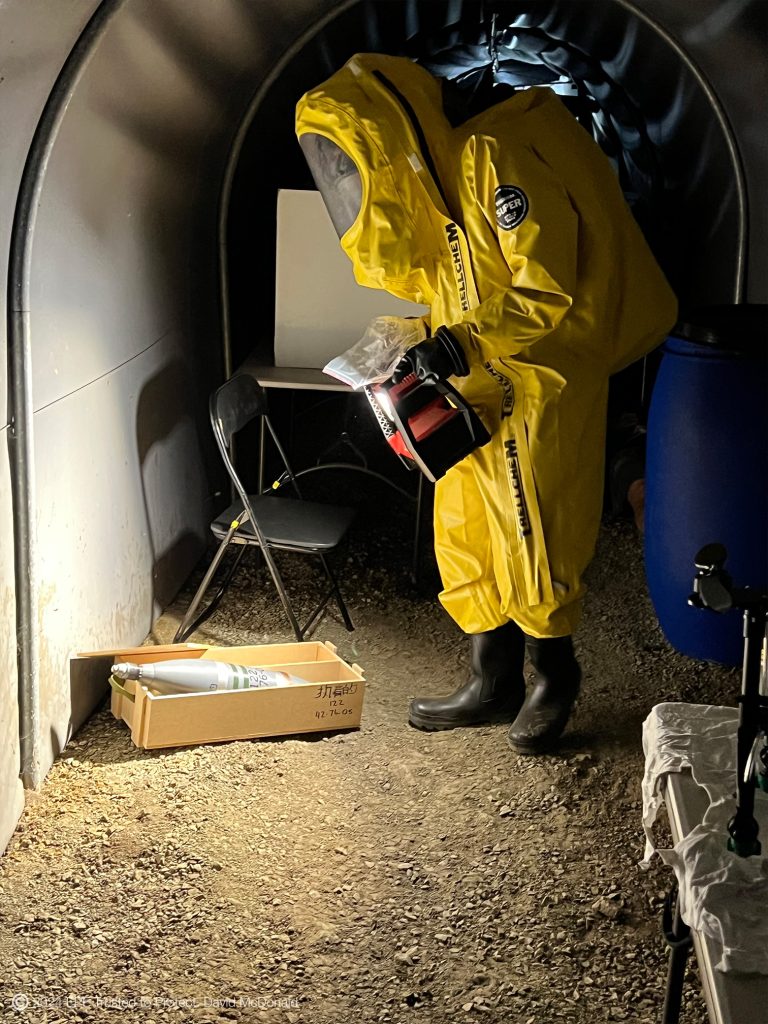
Australian Army‘s 20 EOD Squadron undertook training focused on enhancing CBRN (chemical, biological, radiological, and nuclear) threat readiness. Facilitated by our Training Manager David McDonald, the training was conducted at EPE’s MILTECS facility utilising the tunnels network. Dave’s ability to create the full mission profile supported by realistic scenarios and challenging working devices provides a uniquely customised experience that’s outside familiar parameters, ensuring participants are well-prepared for live CBRN threats.

This rigorous CBRN training enhances the operational readiness and effectiveness of our forces, equipping them with the skills and confidence needed to handle complex and dangerous situations in high threat environments. Thanks to 6ESR for the opportunity to be involved. We thank CSIRO for their support to run this training at MILTECS which is part of the CSIRO Pullenvale facility. Check out the awesome photos that highlight the realistic simulation environments.

Posted on

Canungra Combat Challenge 2024 with Team EPExpendables

Canungra Combat Challenge 2024 with Team EPExpendables_01

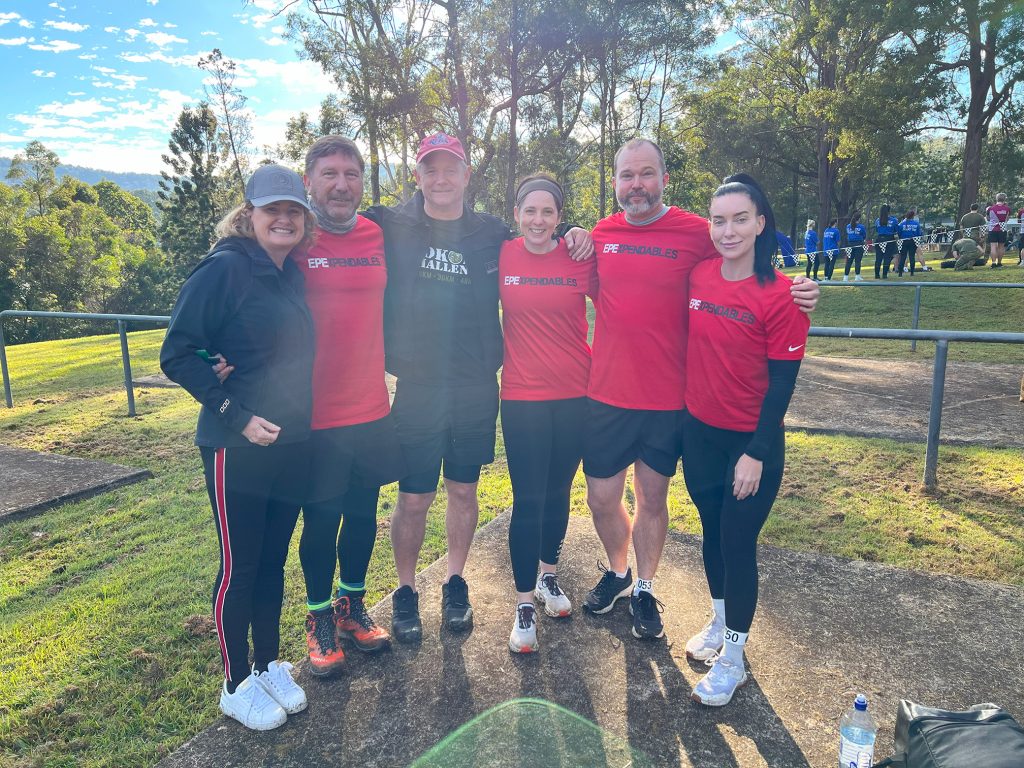
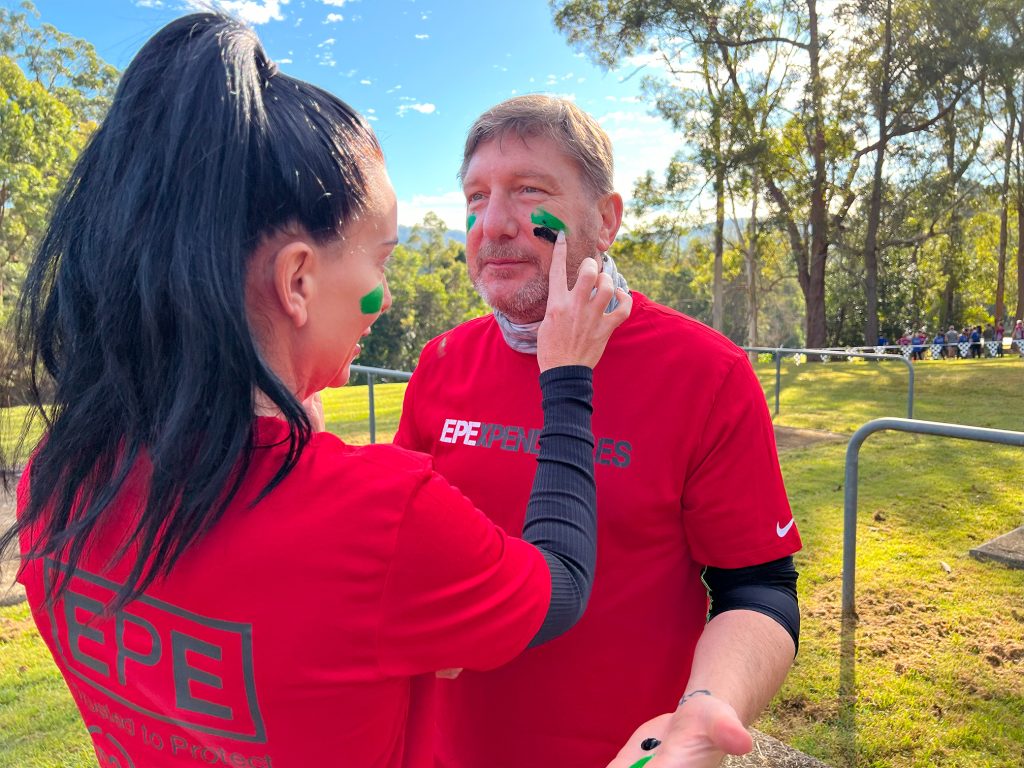
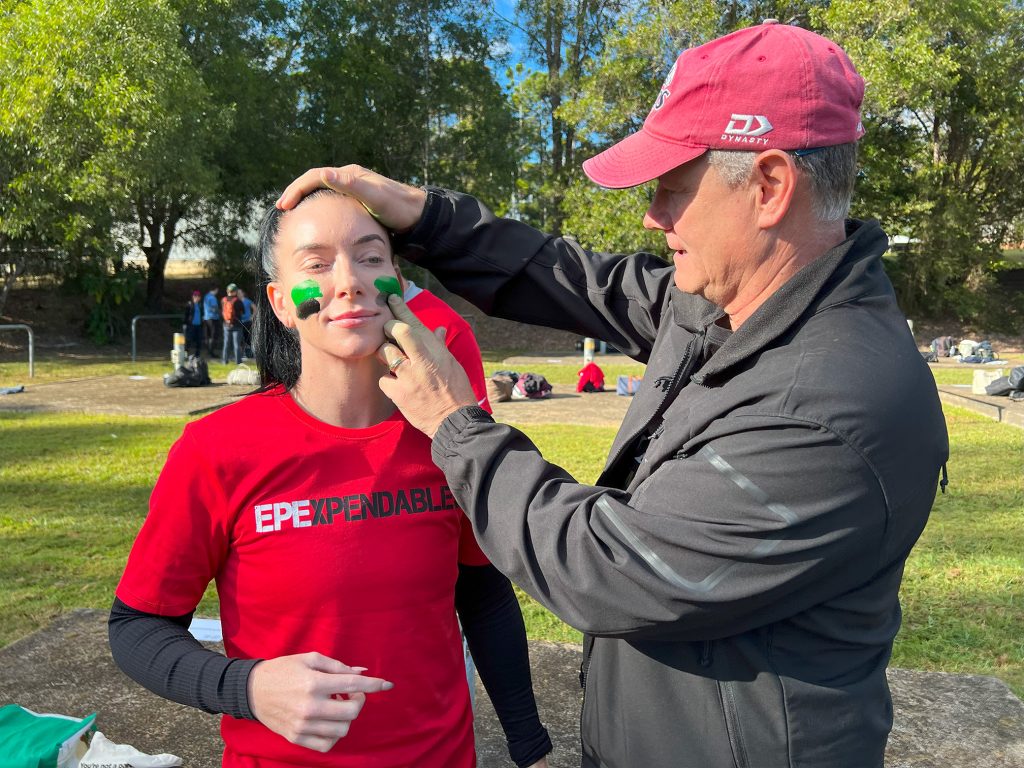
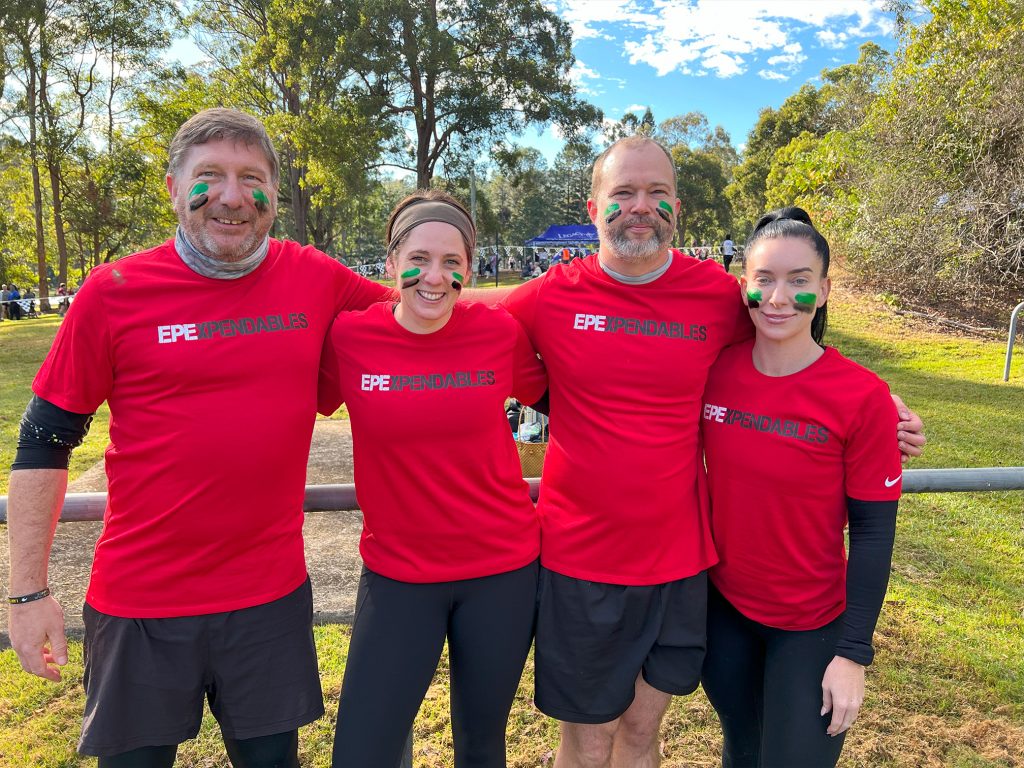
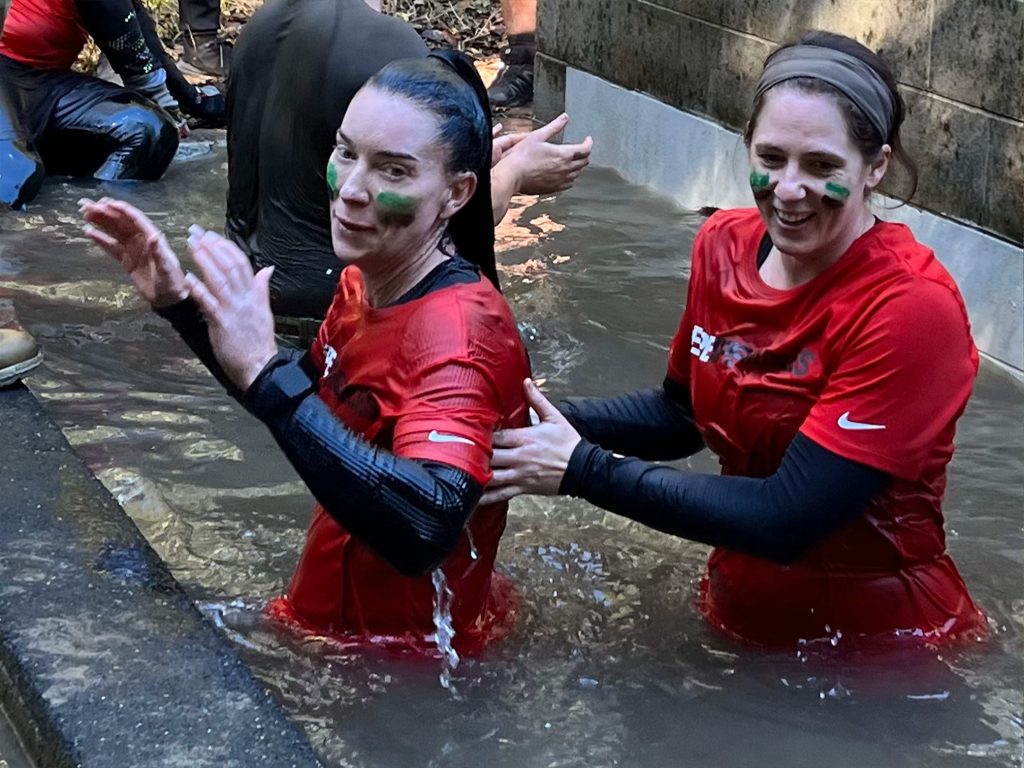
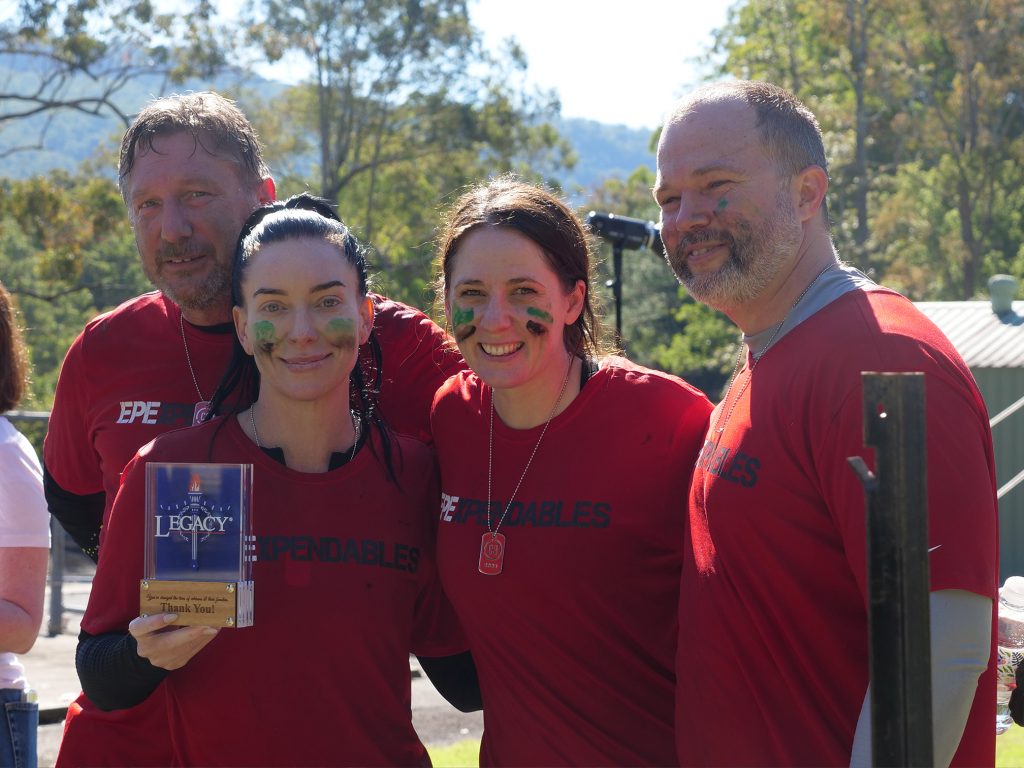
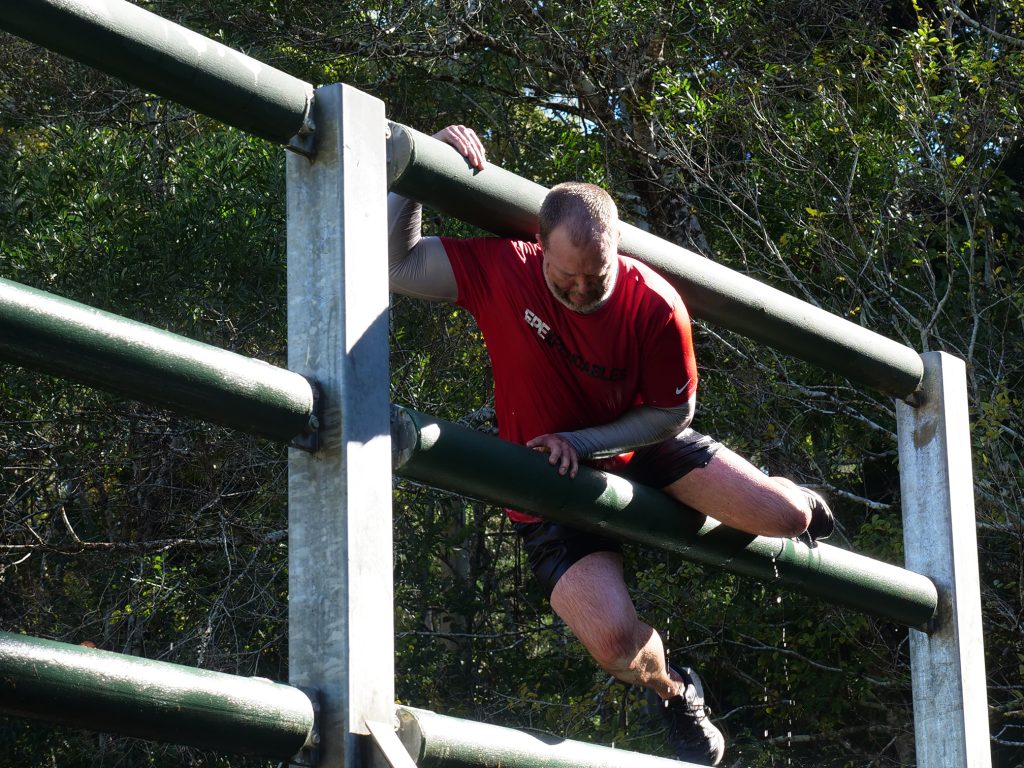
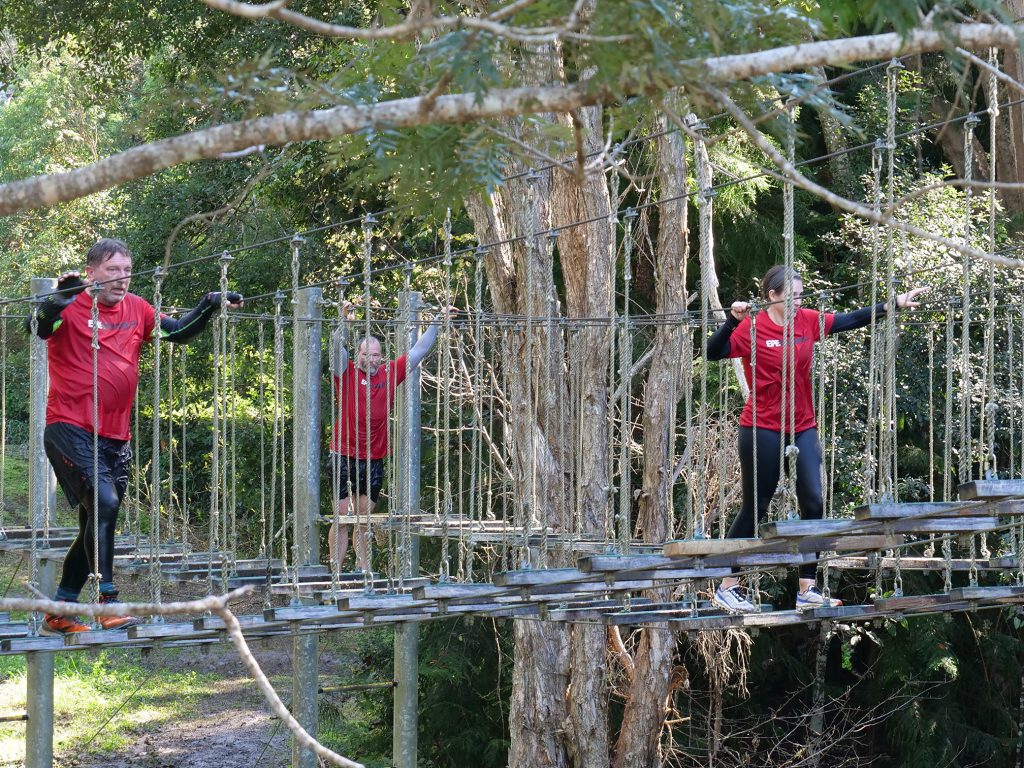
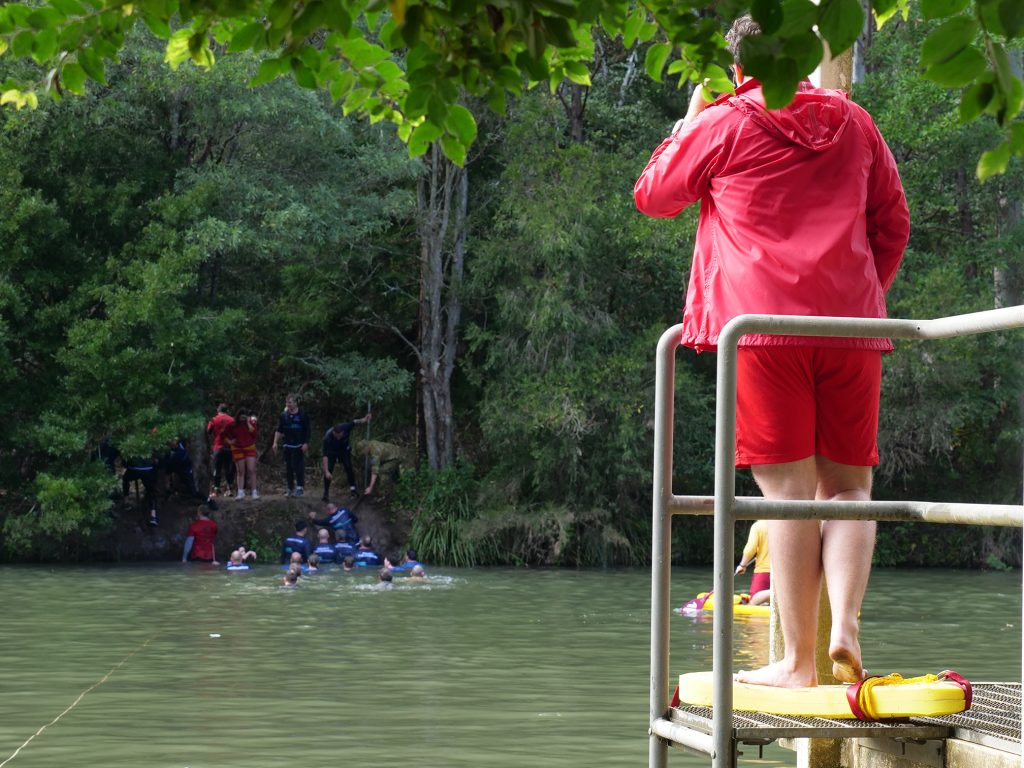
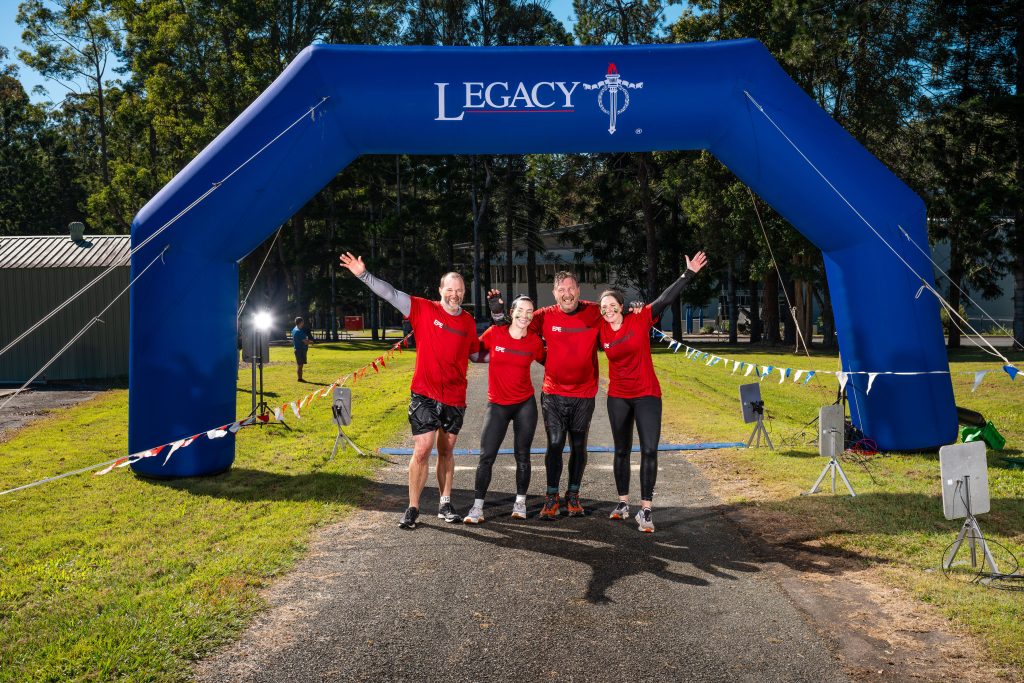
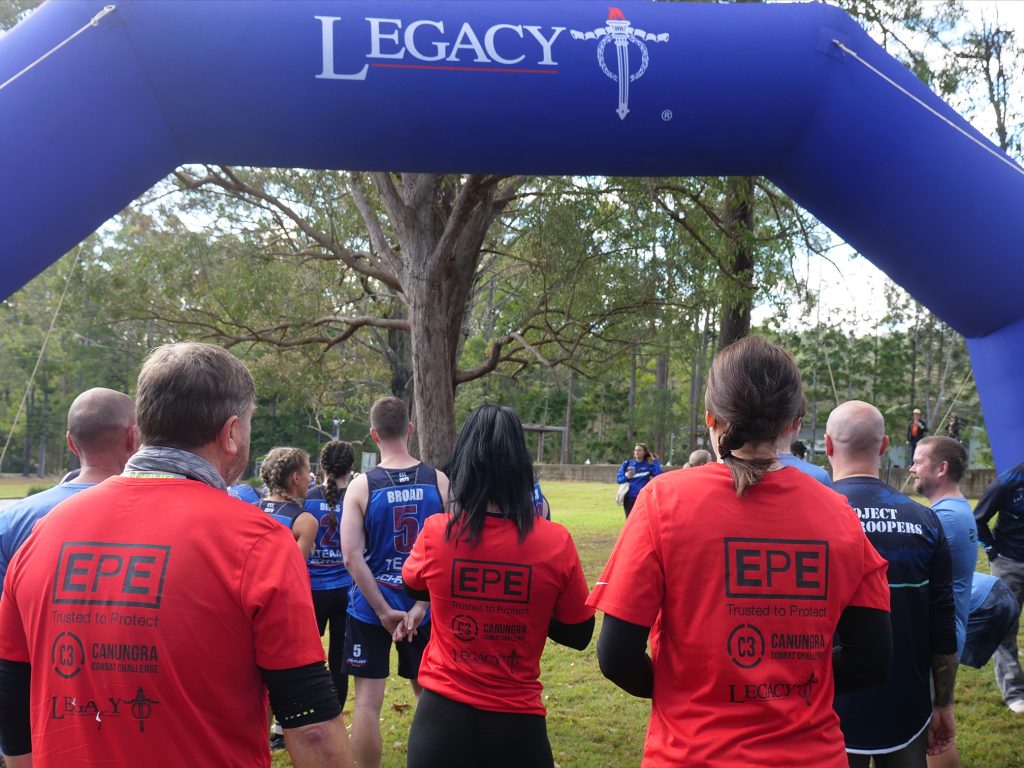
What an amazing display of teamwork, determination and awesome camaraderie across teams at 2024 Legacy Brisbane‘s Canungra Combat Challenge. Our team, the EPExpendables together conquered jungle trails, swan rivers, climbed walls, swam through tunnels full of water, carried 90kg mannequin on stretcher – all to help raise funds to enable Legacy to support veterans and their families.

Awesome fundraising effort Victoria Cheney, Michael Humphris, Rebecca Boreham, and Adam Modd as the second highest overall team fundraiser; and Adam Modd as highest individual fundraiser.

Fantastic event which aligns perfectly with EPE’s core values. We look forward to working closer with Legacy on other activities and be part of next year’s Canungra Combat Challenge.

Posted on

Royal Brunei Armed Forces’ Defence Industry Exhibition

EPE_NEWS_Royal_Brunei_Armed_Forces_00

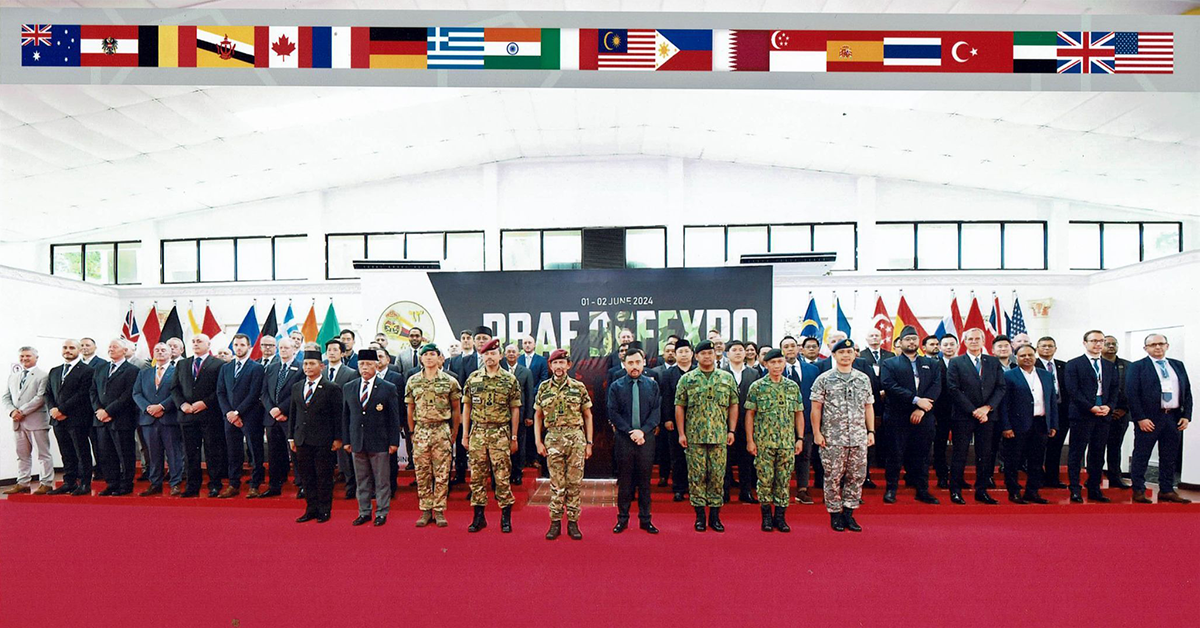
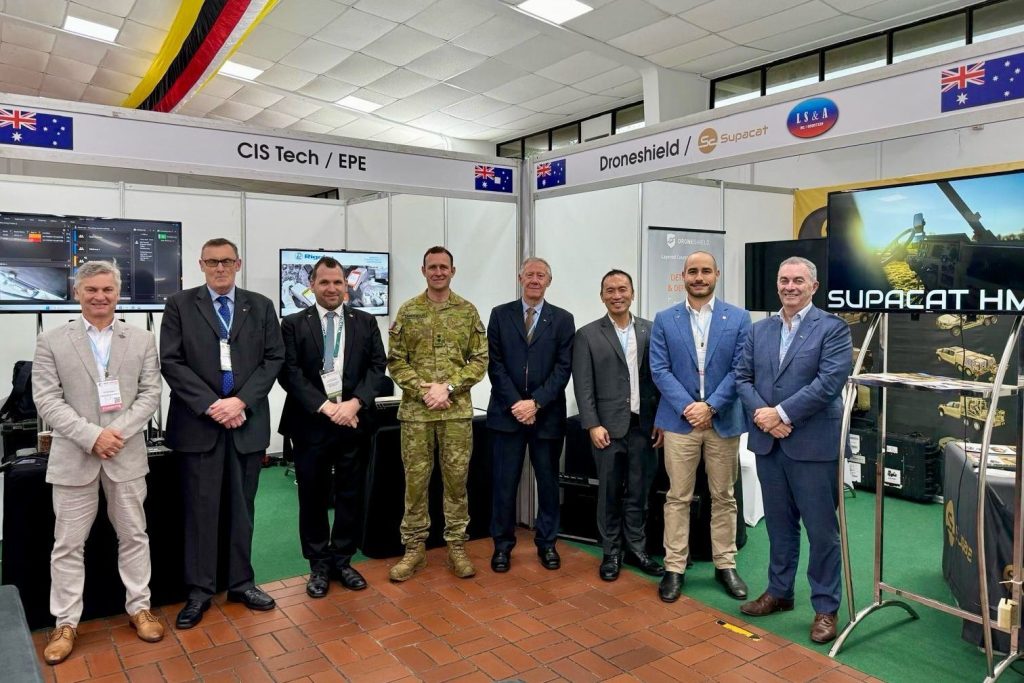
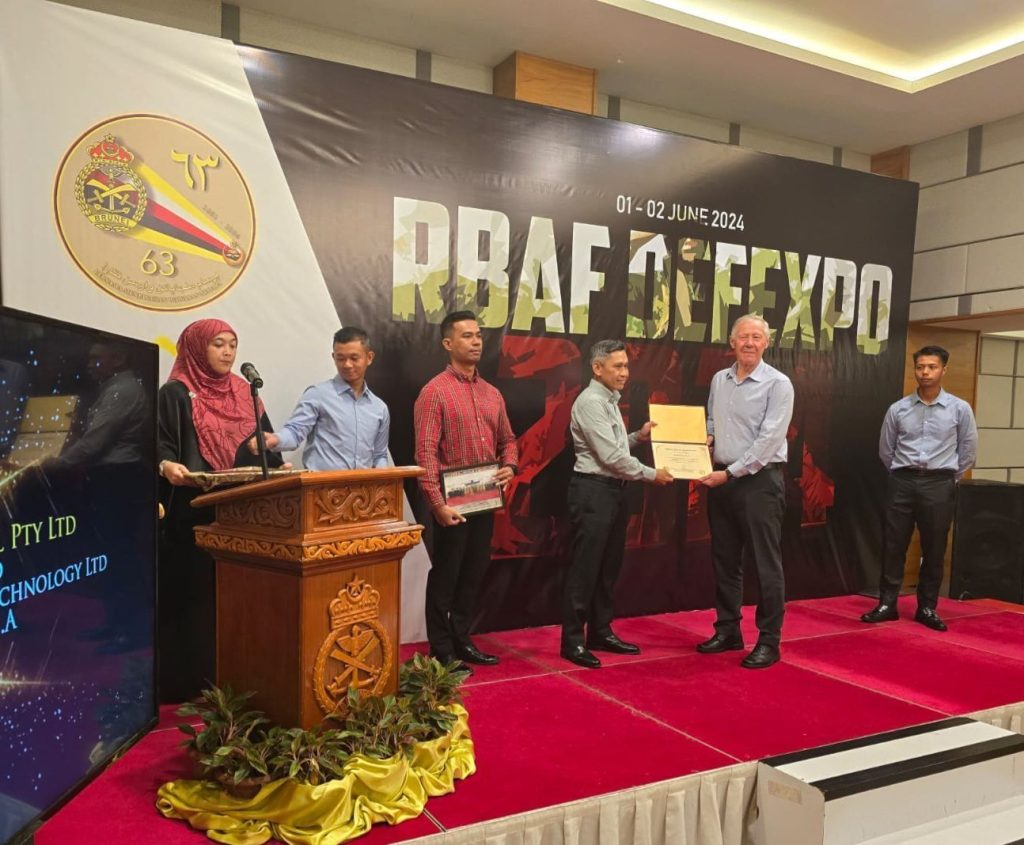
We’re honoured that EPE was invited by Australian Trade and Investment Commission (Austrade) to be one of four companies representing Australia at the Royal Brunei Armed Forces (RBAF)‘s Defence Industry Exhibition. It was a privilege to showcase Australia’s advanced defence technology alongside esteemed companies CISTECH Solutions, DroneShield, and Supacat Asia Pacific. Our team, represented by Seamus O’Brien, Senior Account Manager for EPE International and Andy Cross, General Manager of EPE New Zealand, had the distinct honour of presenting to His Majesty, The Sultan, and members of the Royal Family. This opportunity underscores our commitment to advancing Australia’s defence industry on the global stage.
Thank you to our global Austrade support team Mick Summers, Jordan Spencer, Anthony Weymouth, Michael Crossman, David McCue and Mathew Cantagallo who continue to support EPE on our journey into the global market.

Posted on

Exercise Wallaby Walk: A Landmark in International Collaboration!

Exercise Wallaby Walk: A Landmark in International Collaboration!_01

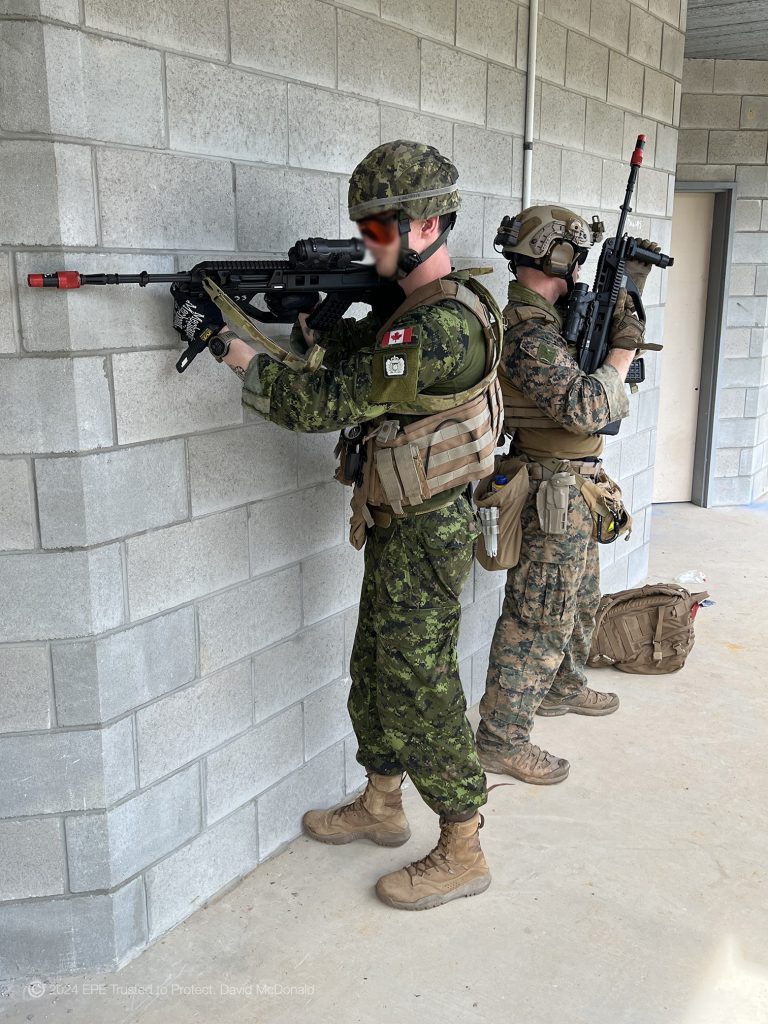
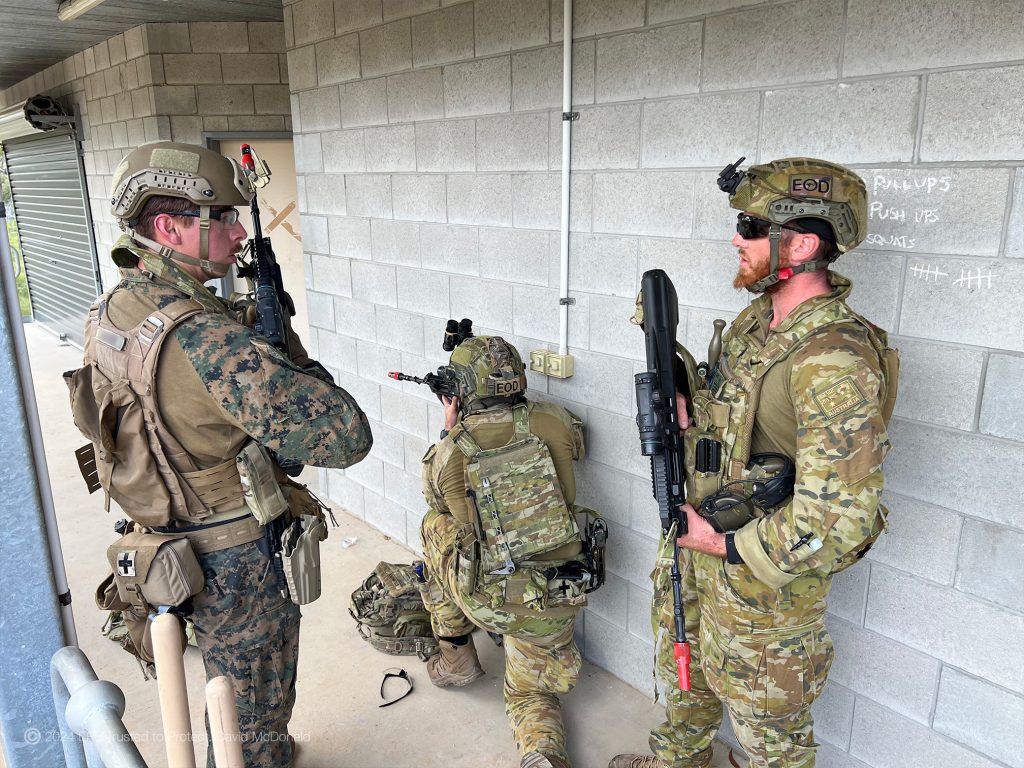
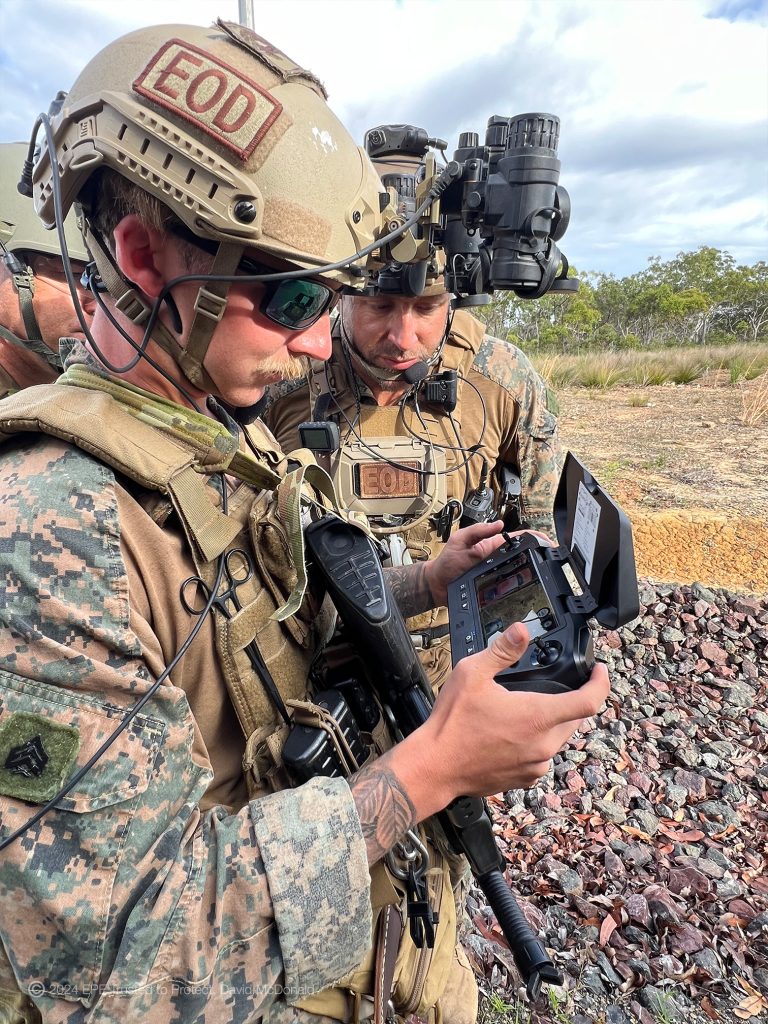
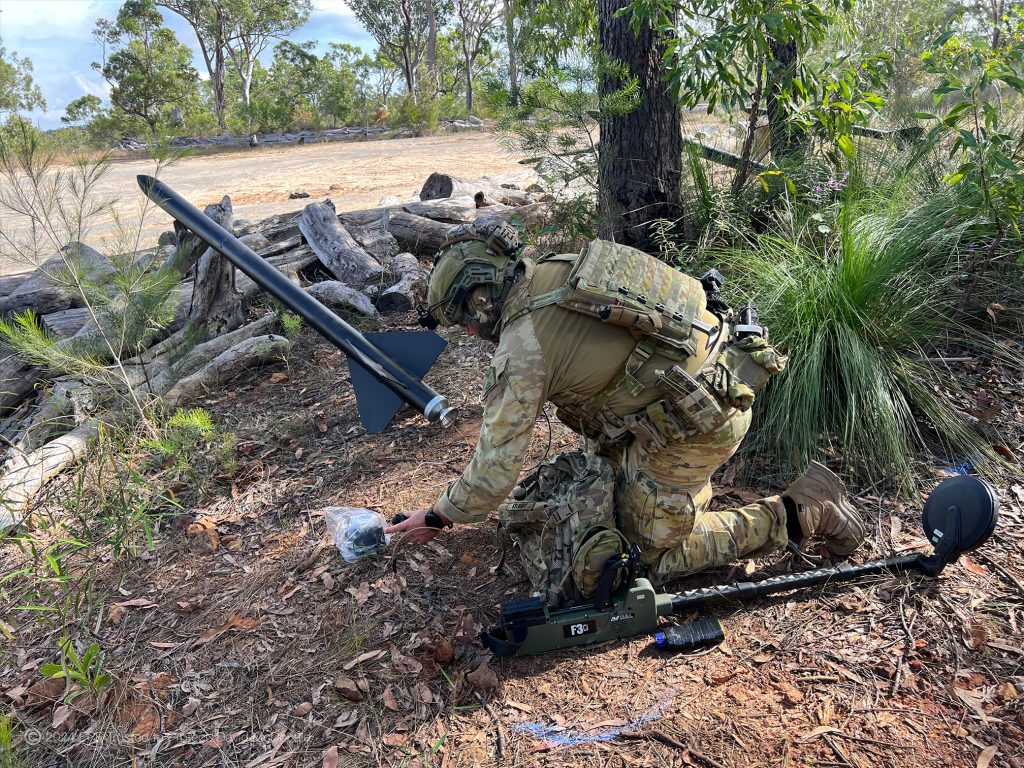
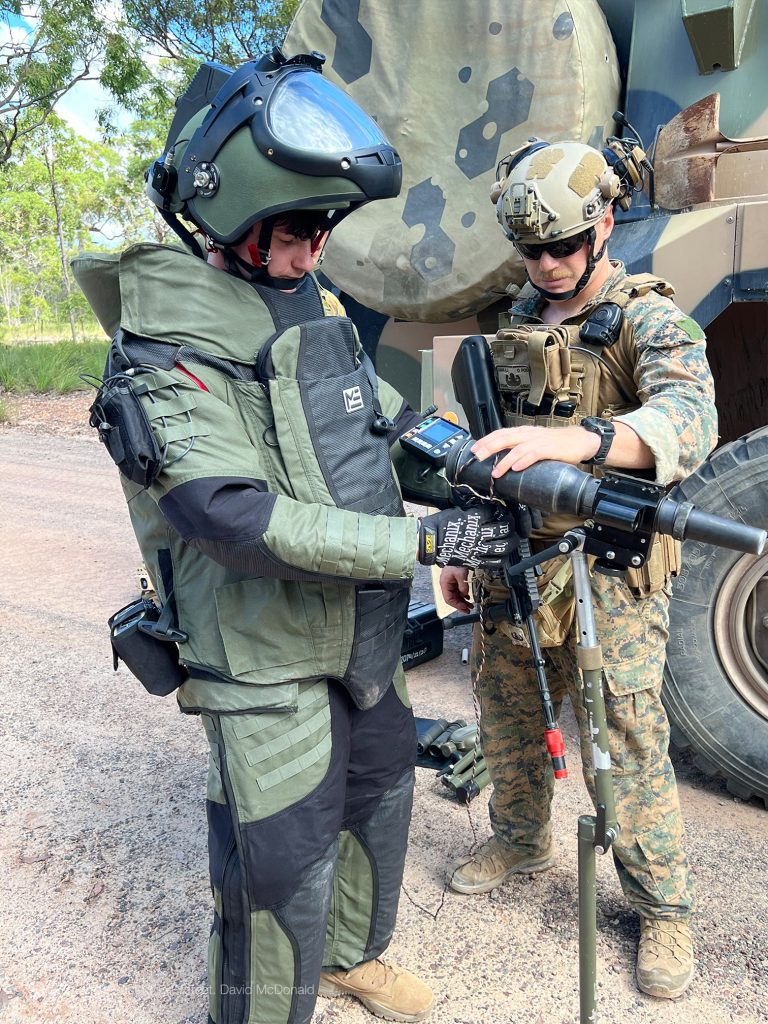
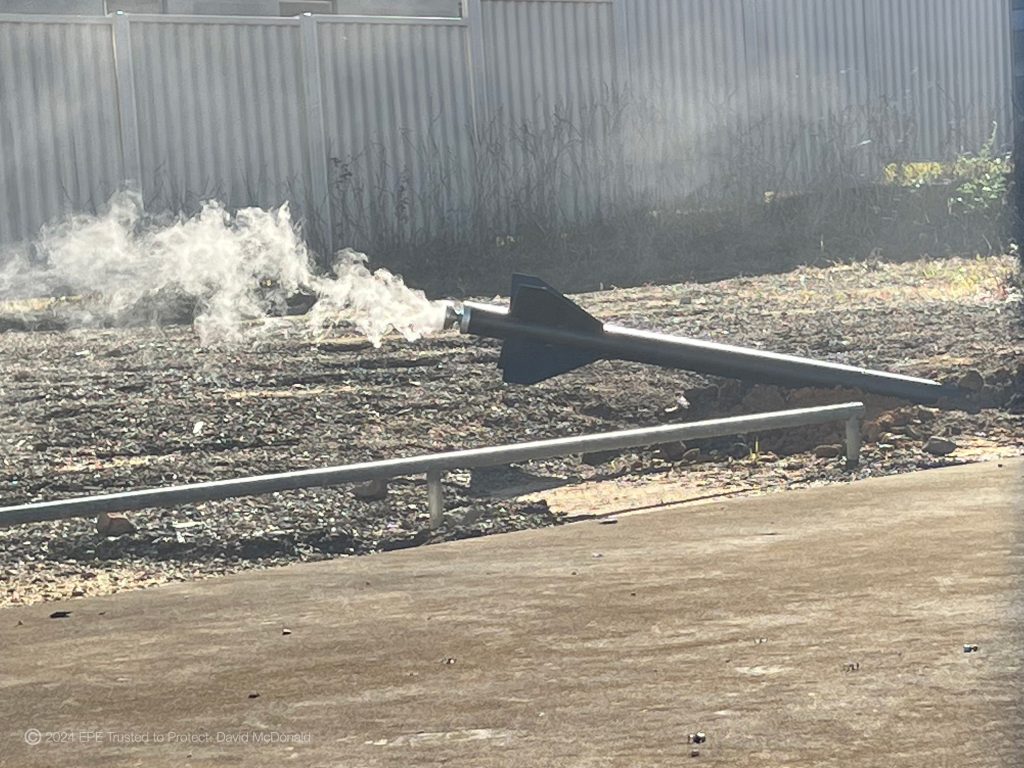
6ESR and 20 EOD Squadron’s Exercise Wallaby Walk 2024 showcased the collaboration between the FiveEyes nations. Members from the Australian Army, the US Army, US Marines, Canadian Armed Forces, NZ army and UK Army came together for an unparalleled display of cooperation and skill-sharing, showcasing the strength of international teamwork and knowledge exchange. EPE’s role was pivotal, with our training manager David McDonald designing the mission profile and crafting and delivering realistic, customised scenarios and devices.

The photos show some highlights: Seamless integration of forces from five nations. Advanced, realistic training scenarios involving active devices. Unique, tailored experiences that push the boundaries of training.

A big thank you to all participants and facilitators for making EXWW24 a resounding success!

Posted on

Lunar Rovers on a roll for Australian Made Week

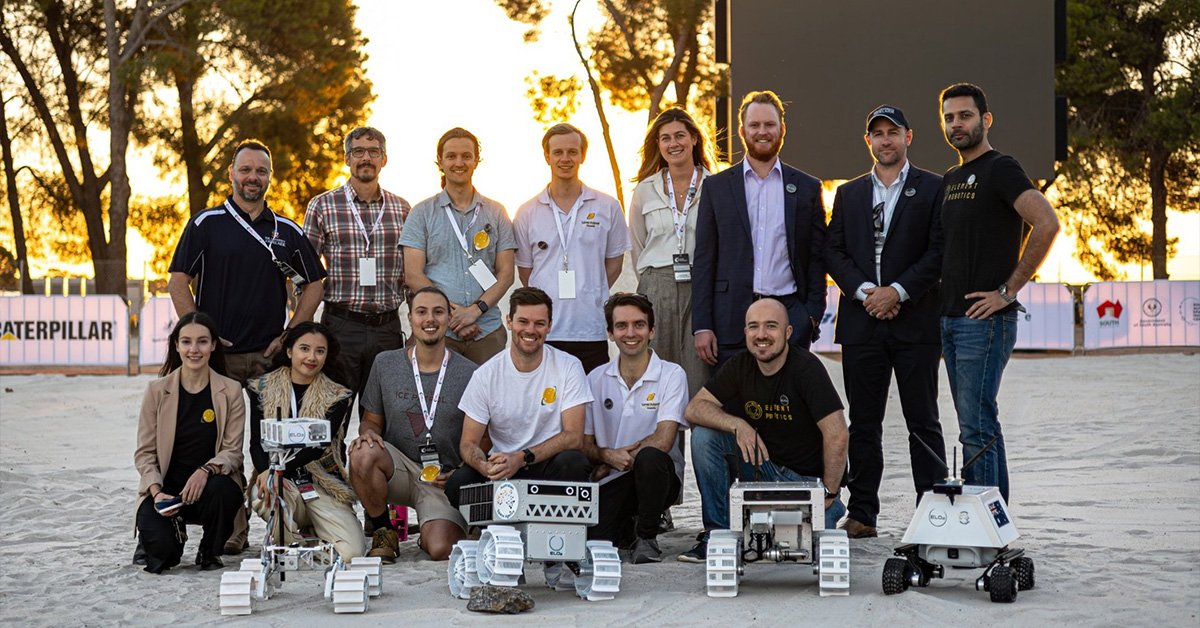
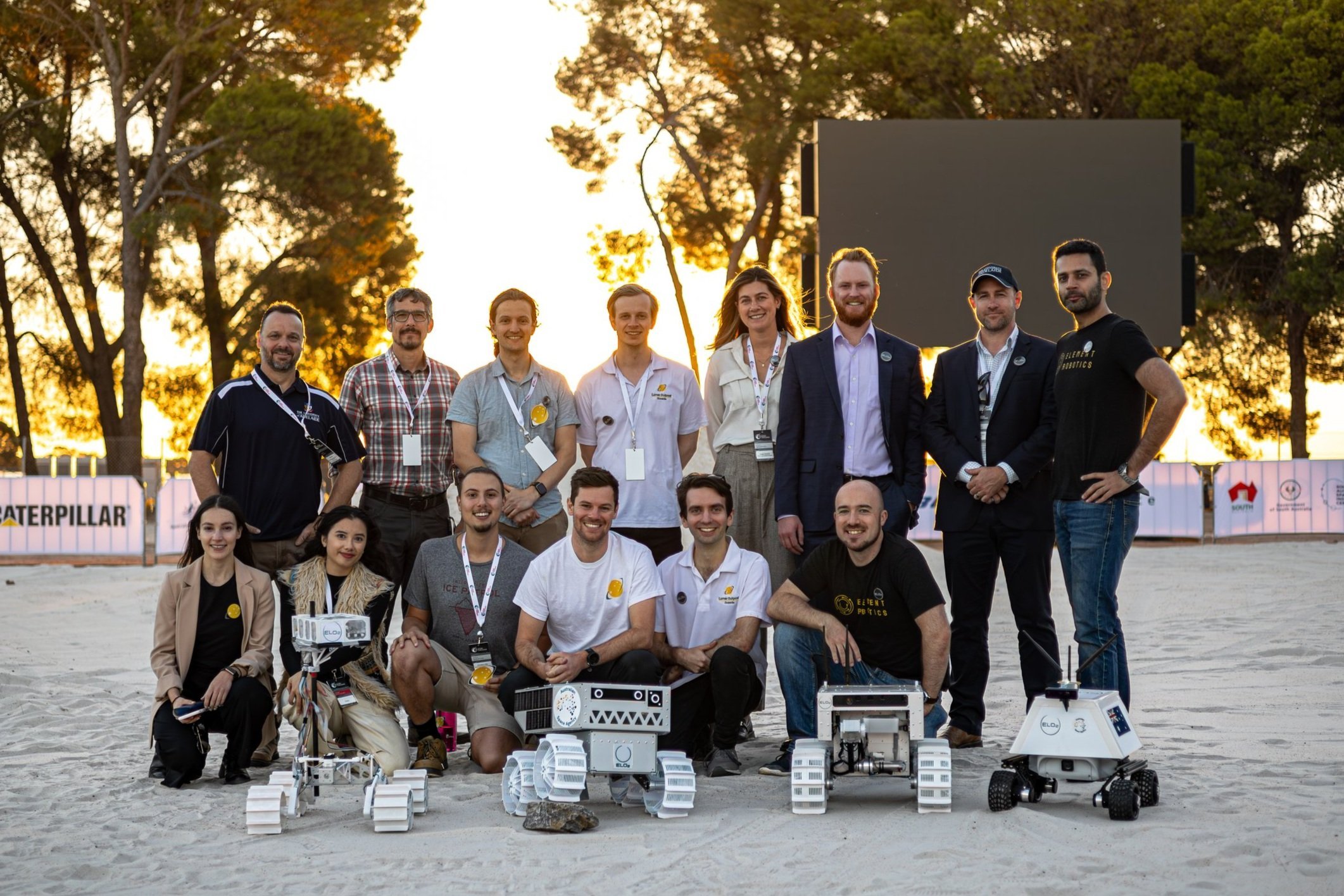
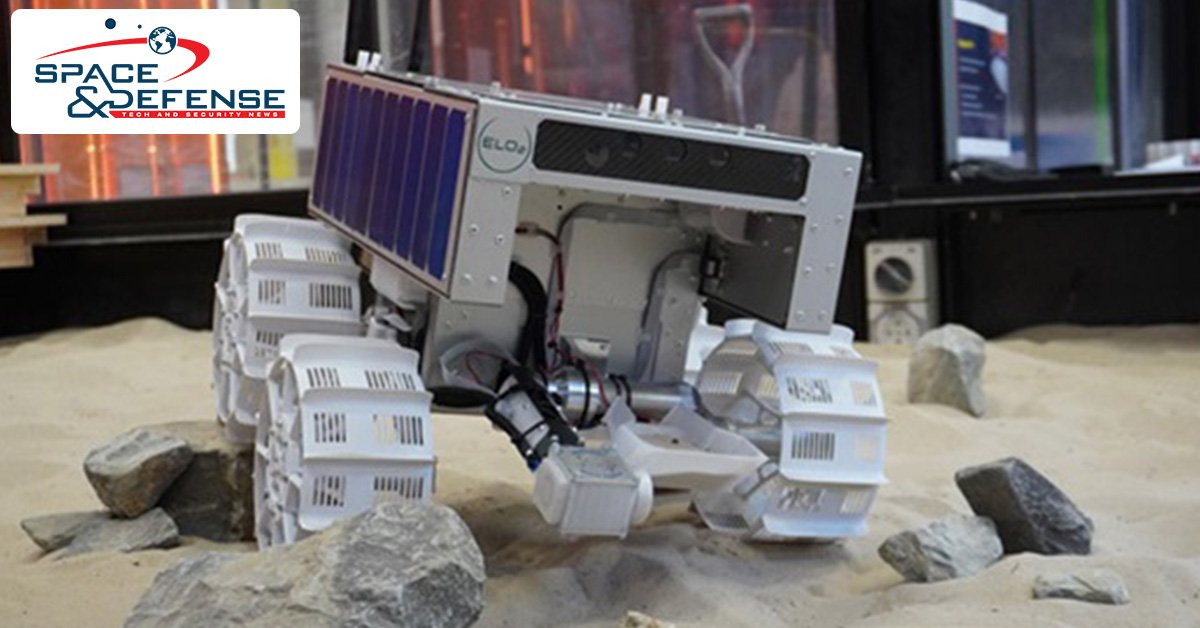
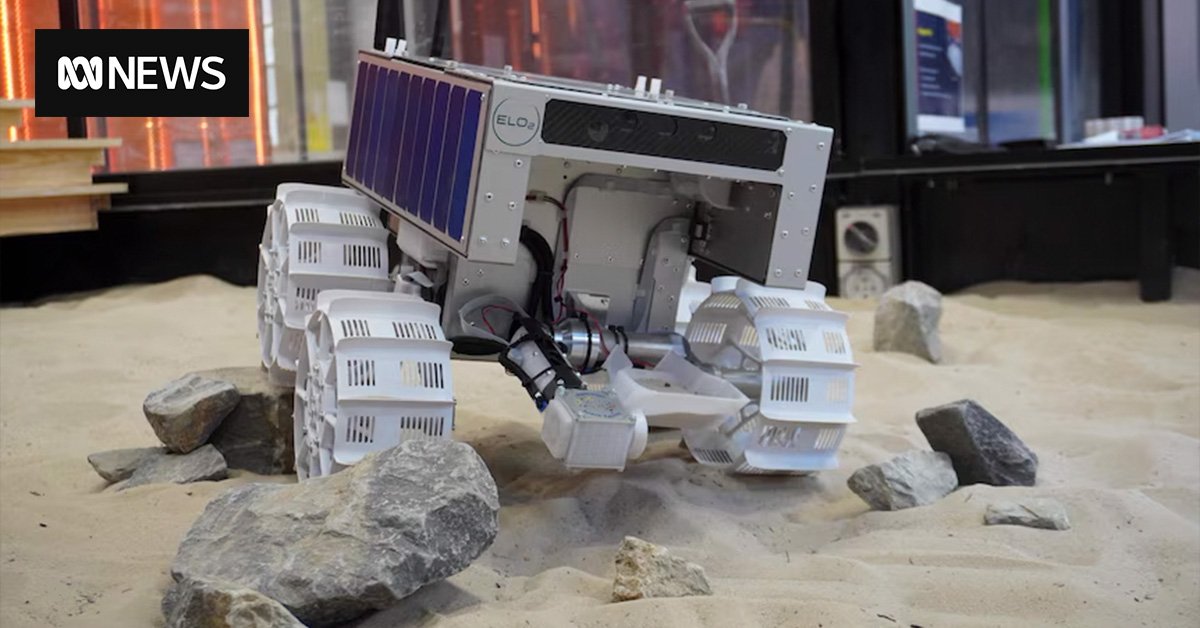
Lunar rover prototypes built by the ELO2 Consortium – led by EPE and Lunar Outpost Oceania – are on a tour of the nation, following the March unveiling in Adelaide of three vehicles built by the team.

ELO2 is one of two teams vying to build the nation’s first lunar rover, along with the AROSE consortium, under Stage 1 of the Australian Space Agency’s Moon to Mars Initiative.

The prototype ELO2 rovers have been officially accredited with Australian Made certification, and are currently featuring as part of Australian Made Week celebrations.

“Australian Made Week is a perfect opportunity to showcase the ingenuity, tradecraft, and cutting-edge technology that our local industries offer. It’s not just about celebrating the products; it’s about recognising the skill and dedication that go into producing them,” Joseph Kenrick, Program Manager at Lunar Outpost Oceania, in a statement.

“Supporting Australian-made products – even space robots that we can send to the Moon – ensures that we maintain control over quality, invest in our communities, and secure a robust future for Australian industries and the Australian supply chain.”

This month the rovers visited EPE’s MILTECS test facility in Brisbane, Lone Pine Wildlife Sanctuary (pictured), and St Joseph’s Primary School at Kangaroo Point.

Australian Made Chief Executive Ben Lazzaro added that Australian Made Week is a time to celebrate everything made here “from products you buy on your weekly shop, to the incredible creations happening in robotics.

“Aussie products are made to some of the highest standards in the world, are trusted, and are known for their safety and quality.”

Later in May the rovers will visit Sydney for public engagement events at schools and public landmarks, then head back to Melbourne for further development.

If successful in winning Stage 2 of the Trailblazer, an ELO2 rover will be christened “Roo-ver”, and then head to the moon as the nation’s first ever lunar rover.

Picture: Pluto the roo and an emu taking a closer look at ELO2 Aussie Made rover at Lone Pine Koala Sanctuary (supplied)

Posted on

Australian Space Awards 2024 finalists congratulated by ELO2

finalists in Australian space awards 2024 EPE News

The ELO2 Consortium will be represented by 34 finalists across 18 categories at the event

The AusSpace24 Australian Space Awards celebrate the achievements of individuals and businesses who have been instrumental in driving the development of Australia’s space sector.

The finalist list announced on Friday, 5 April 2024, features over 160 high-achieving professionals and businesses across 25 categories.

The AusSpace24 Australian Space Awards acknowledges all space industry stakeholders, from the major listed organisations and corporates servicing Australia’s space sector to SMEs, start-ups, academic institutions and associations driving innovation and taking the industry to new heights.

Adam Thorn, editor of Space Connect, said:

“Now in its fifth year, the standard of entries for our awards has never been higher. Our shortlisted finalists show why Australia has become one of the most innovative space nations and is punching so far above its weight.”

Ben Sorensen, Director Innovation & Commercialisation at EPE Oceania, said he was humbled to be recognised personally as a finalist in the AusSpace24 Australian Space Awards but that what he was most proud of is that 34 of the finalists were representatives from the ELO2 Consortium.

“These nominations highlight the extraordinary breadth of talent that the ELO2 Consortium is bringing together to deliver the Australian Space Agency’s Moon to Mars Trailblazer program. Stage 1 of the Trailblazer program is a competitive process and the ELO2 Consortium’s recognition in these Awards shows we have the best team to deliver Australia’s first rover to the Moon.”

As Technical Director for the ELO2 Consortium, Joseph Kenrick from Lunar Outpost Oceania was shortlisted for the Executive of the Year Award, alongside Ben, and is also a Finalist in the Mentor of the Year category. Joseph noted that ELO2’s representation across 18 of the Awards’ categories was remarkable and commented that three Consortium companies are being recognised for Business of the Year – SME, and that two are vying for Start-up of the Year.

“We have a strong team of high performing businesses and individuals within the ELO2 Consortium, and it is great to see these companies and individuals being recognised for their work across various space sector initiatives, including the Trailblazer rover project. I am especially pleased to see that two of our consortium members have been shortlisted for the Diversity Initiative Program of the Year – this demonstrates commitment to ensuring Australia’s space sector is open to all, and building a space workforce that draws on diverse skills and backgrounds,” he said.

ELO2 Consortium members shortlisted as finalists are:

Academic of the Year:

Akram Al-Hourani (RMIT University)

Rowena Christiansen (The University of Melbourne)

David William Kim (Australian National University)

Engineer of the Year:

Daniel Wardle (Inovor Technologies)

Executive of the Year:

Joseph Kenrick (Lunar Outpost Oceania)

Anna Moore (Australian National University)

Ben Sorensen (EPE Oceania)

Matthew Tetlow (Inovor Technologies)

Female Space Leader of the Year – Enterprise:

Rowena Christiansen (The University of Melbourne)

Gail Iles (RMIT University)

Female Space Leader of the Year – SME:

Lauren Fell (Lunar Outpost Oceania)

Graduate of the Year:

Jory Braun (Lunar Outpost Oceania)

William De La Rue (Lunar Outpost Oceania)

Reilly Heijkoop-Logan (Inovor Technologies)

Siena Zubcic (Lunar Outpost Oceania)

Mentor of the Year:

Rowena Christiansen (The University of Melbourne)

Joseph Kenrick (Lunar Outpost Oceania)

Rising Star of the Year – SME:

Katie Doyle (Lunar Outpost Oceania)

Jenna McCarthy (One Giant Leap Australia Foundation)

Scientist of the Year:

Abolfazl Abdollahi (Australian National University)

Academic Research Team of the Year:

Australian National University

Business of the Year – SME:

One Giant Leap Australia Foundation

Saber Astronautics

Titomic

Company Research Team of the Year:

Lunar Outpost Oceania

Diversity Initiative Program of the Year:

Inovor Technologies

One Giant Leap Australia Foundation

Earth Observation Program of the Year:

Inovor Technologies

Engineering Business of the Year:

Lunar Outpost Oceania

Space Situational Awareness Program of the Year:

Inovor Technologies

Saber Astronautics

Start-up of the Year:

Element Robotics

Lunar Outpost Oceania

University of the Year:

Australian National University

Posted on

Successful demonstration of our ELO2 rover prototype at The Australian Rover Challenge

We’re excited to share footage from the successful demonstration of our ELO2 rover prototype at The Australian Rover Challenge at University of Adelaide. Witness our prototype in action, masterfully executing the collection and deposit of simulated lunar regolith, all under remote operation from Lunar Outpost‘s US base in Colorado.

This demonstration not only highlights our rover’s cutting-edge capabilities but also Australia’s contribution to advancing space exploration technology. Join us in celebrating this milestone as we pave the way for future lunar missions.

Posted on

Bertin Exensor welcomes the New Zealand’s Ambassador to Sweden in Lund.

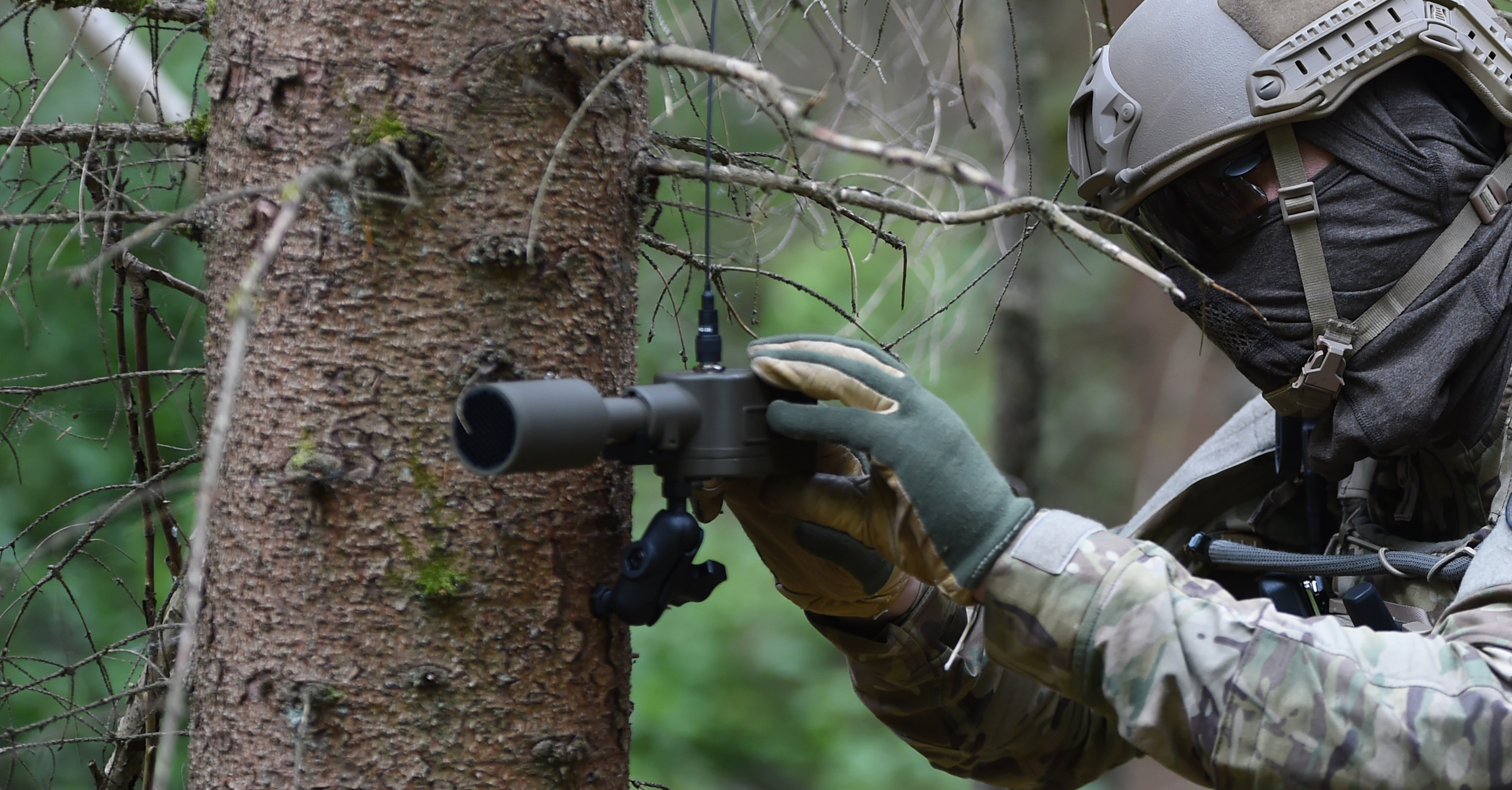
On April 16th, Bertin Exensor had the privilege to host Mr. David Taylor, New Zealand’s Ambassador to Sweden, at our Headquarters in Lund. The Bertin Exensor team was given the opportunity to present the activities in the field of Unattended Ground Sensors (UGS), as well as informing the Ambassador on the ongoing work with the New Zealand Defence Force (NZDF) and the Ministry of Defence.

EPE New Zealand Limited (EPE), in collaboration with Bertin Exensor, has recently been awarded a contract by the New Zealand Ministry of Defence to provide the NZDF with the Flexnet Unattended Ground Sensor (UGS) system, a scalable and modular sensing platform providing real-time situational awareness, early warning and identification of potential threats on the ground.

In connection with this new and important contract between EPE, Bertin Exensor and NZDF, Bertin Exensor had the privilege to host Mr. David Taylor, New Zealand’s Ambassador to Sweden, for a visit at the company’s headquarters in Lund. During the visit the Ambassador was briefed on the Company and the work that is currently done to support the NZDF. A demonstration of the Flexnet UGS platform was also given.

Live demonstration of the Flexnet UGS system.

Bertin Exensor VP Marcus Rosenqvist thanks the Ambassador for the visit and the great interest shown in the Company’s work with EPE and NZDF: ”It was an honour to host the Ambassador and we are grateful for the opportunity that further strengthens the relationship between our two nations.

Posted on

Invictus Games Foundation’s Sandakan Death March “In the Footsteps of the Brave”

Invictus Games Foundation's Sandakan Death March “In the Footsteps of the Brave”_01

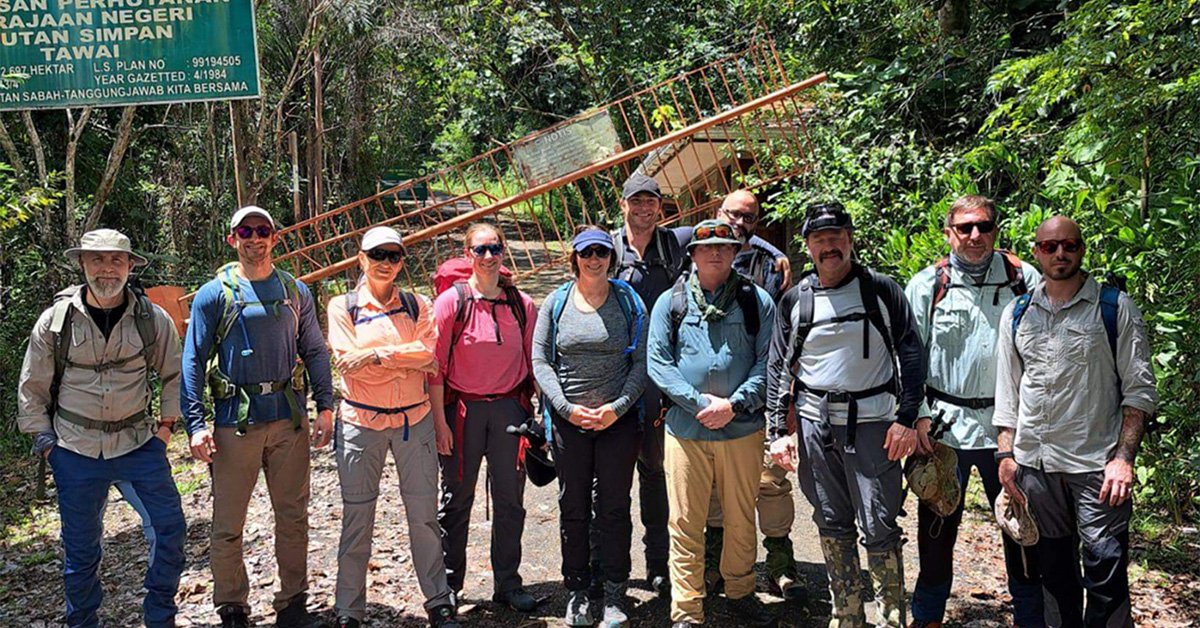
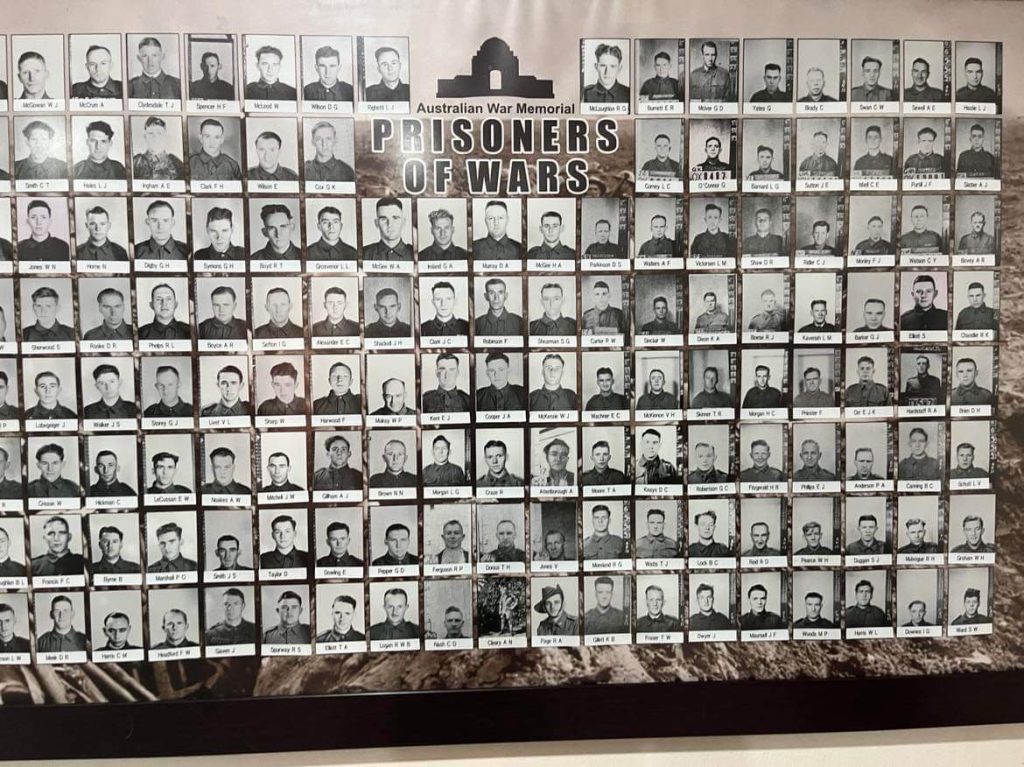
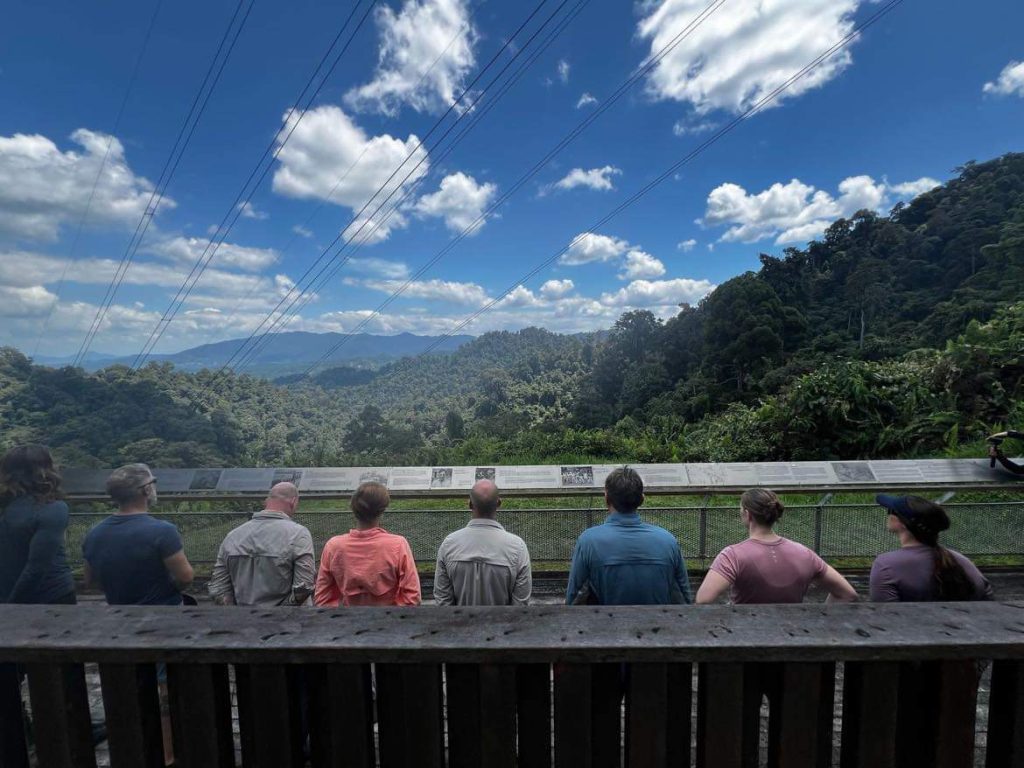
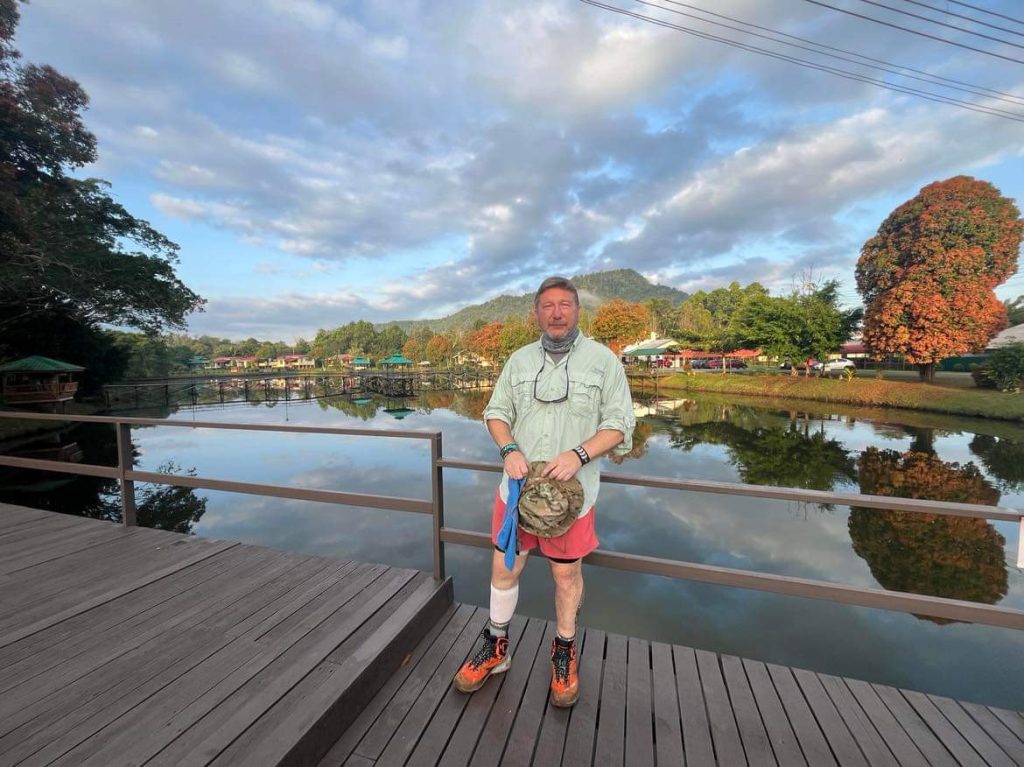
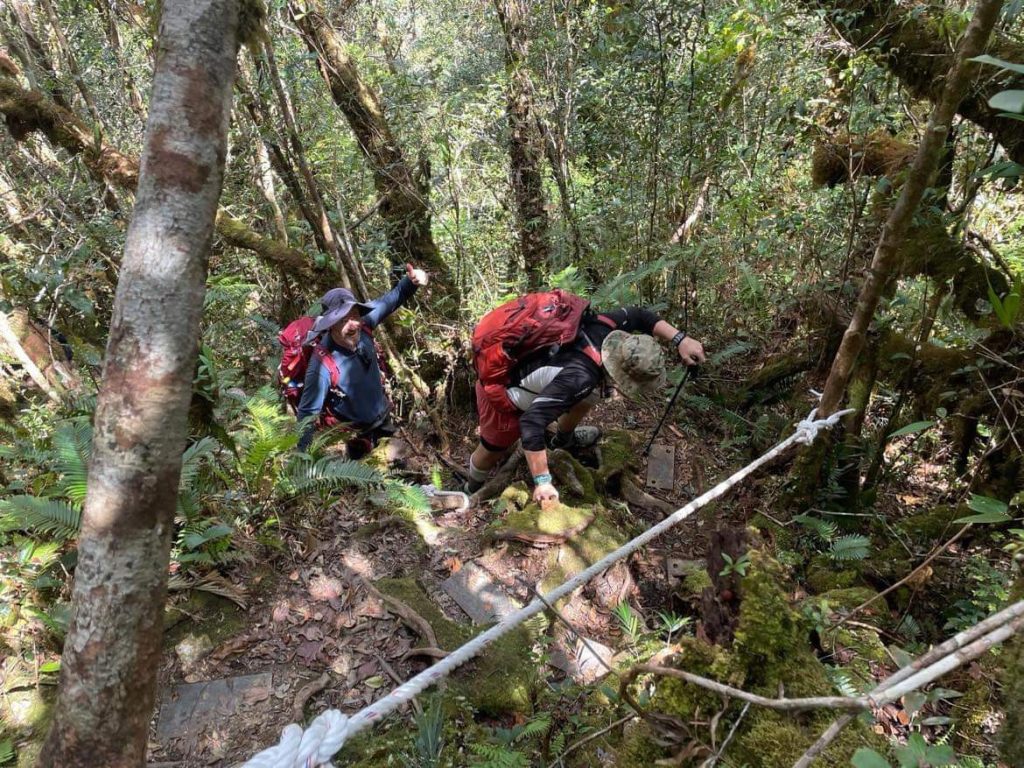
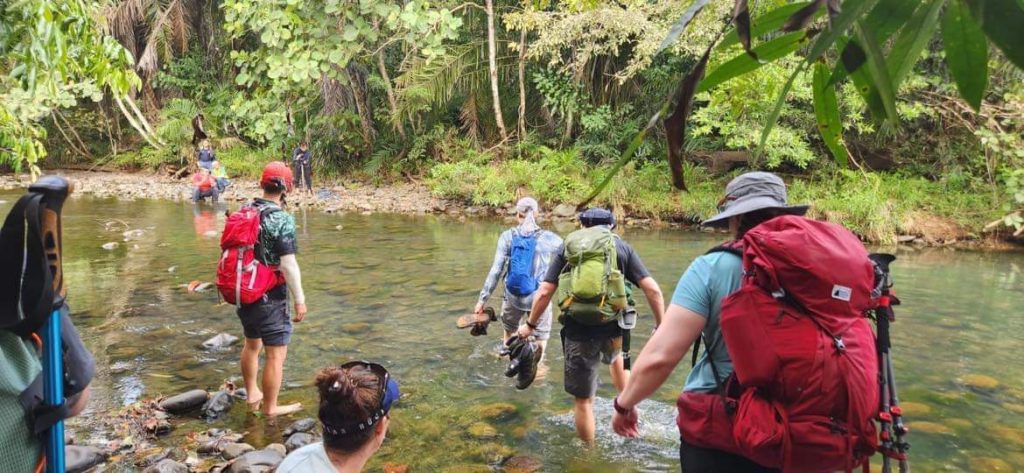
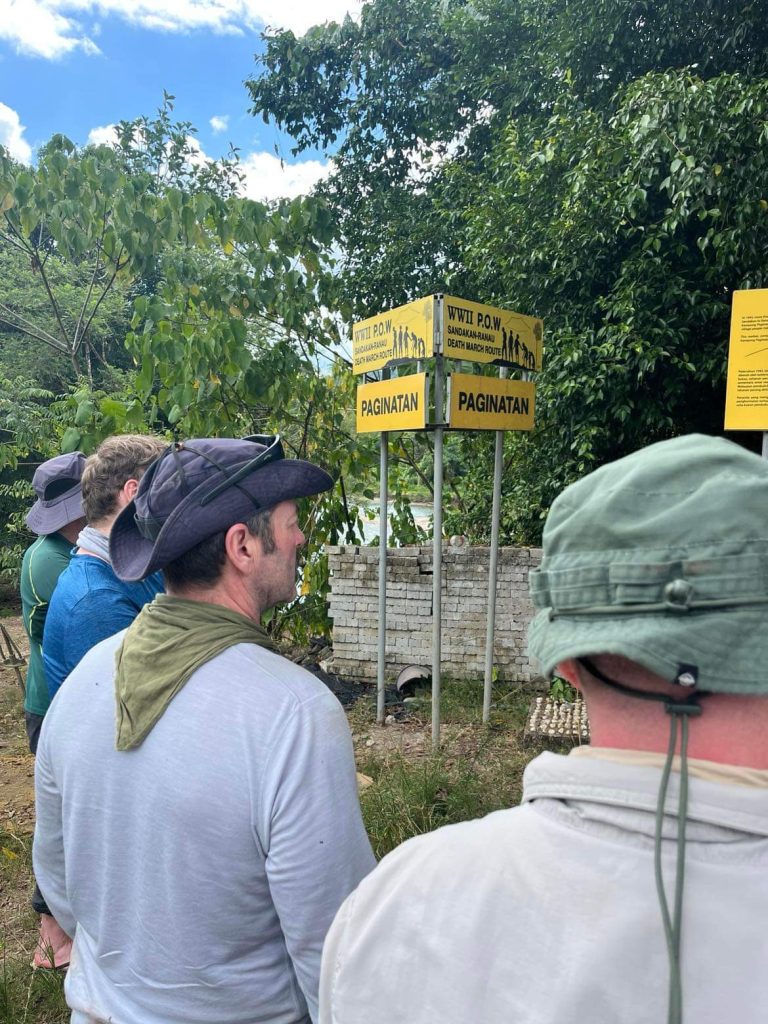
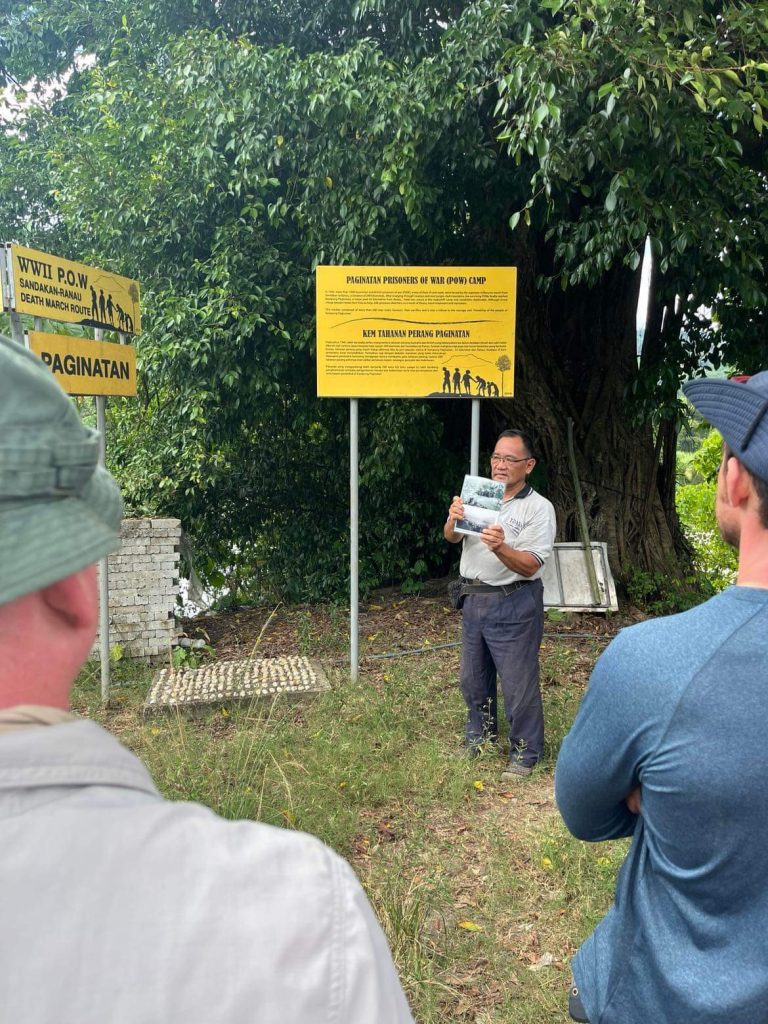
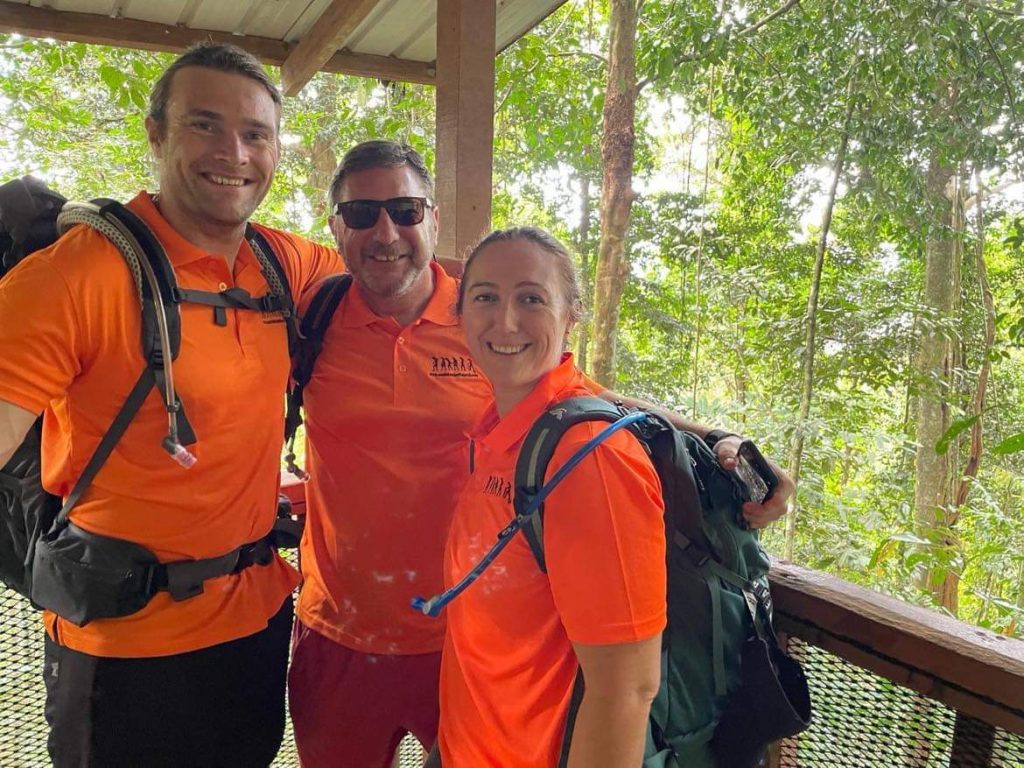
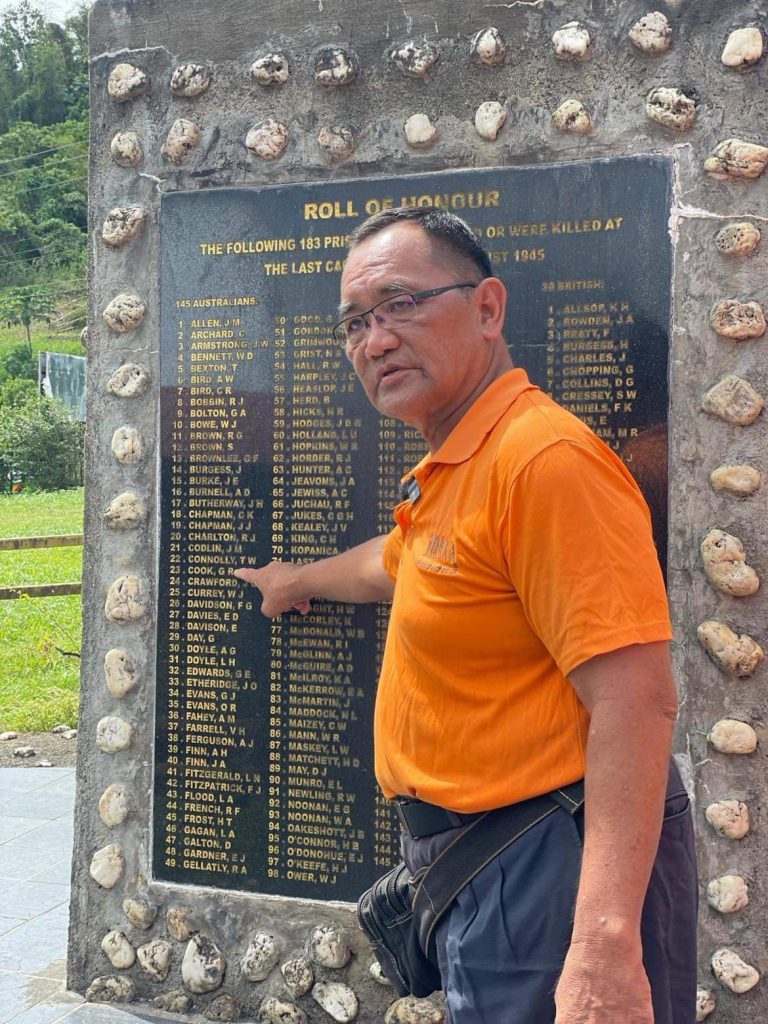
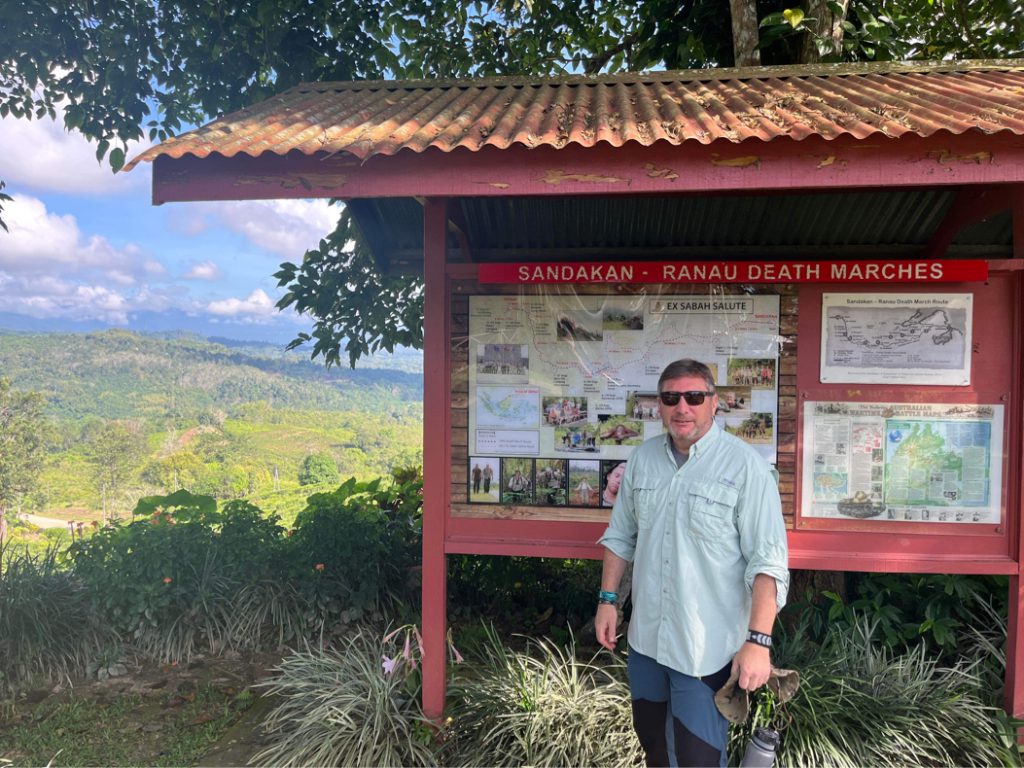
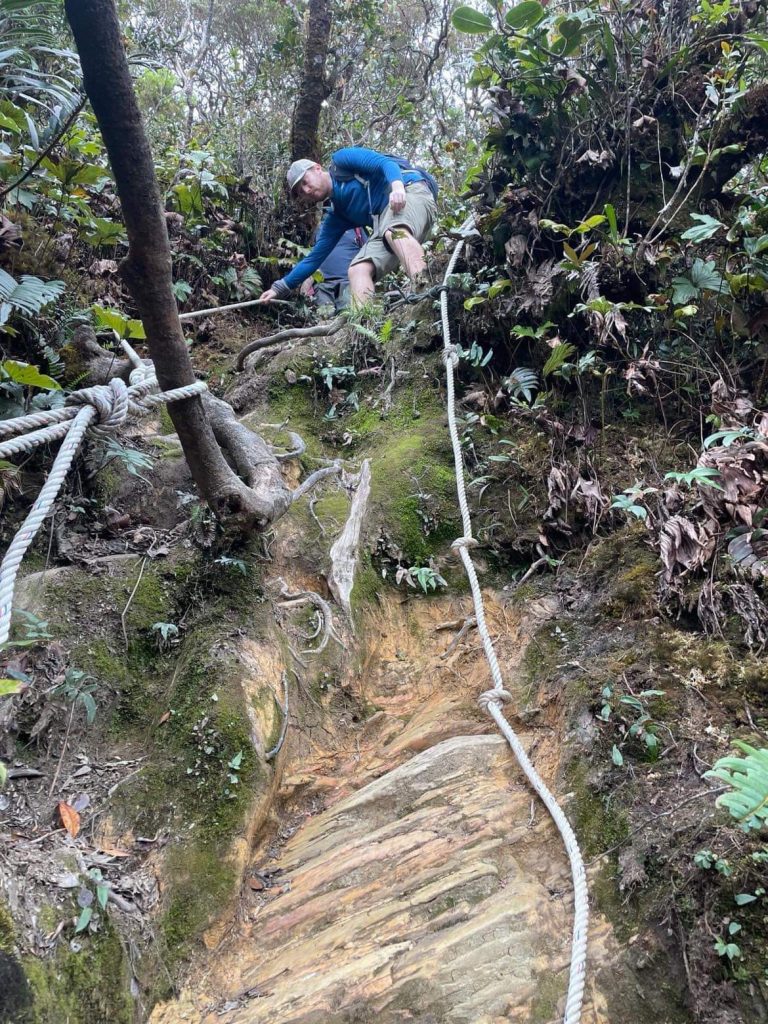
The Invictus Games Foundation team followed in the footsteps of the heroic Australian and British Prisoners of War who were captured in World War II, and paid the ultimate sacrifice.

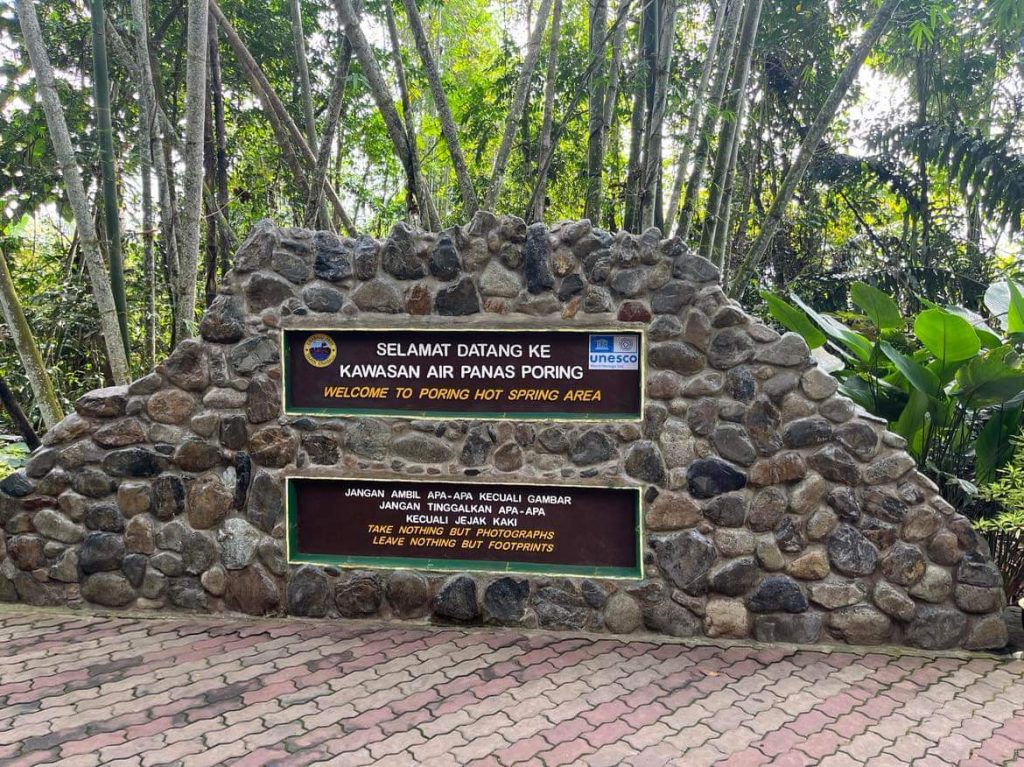
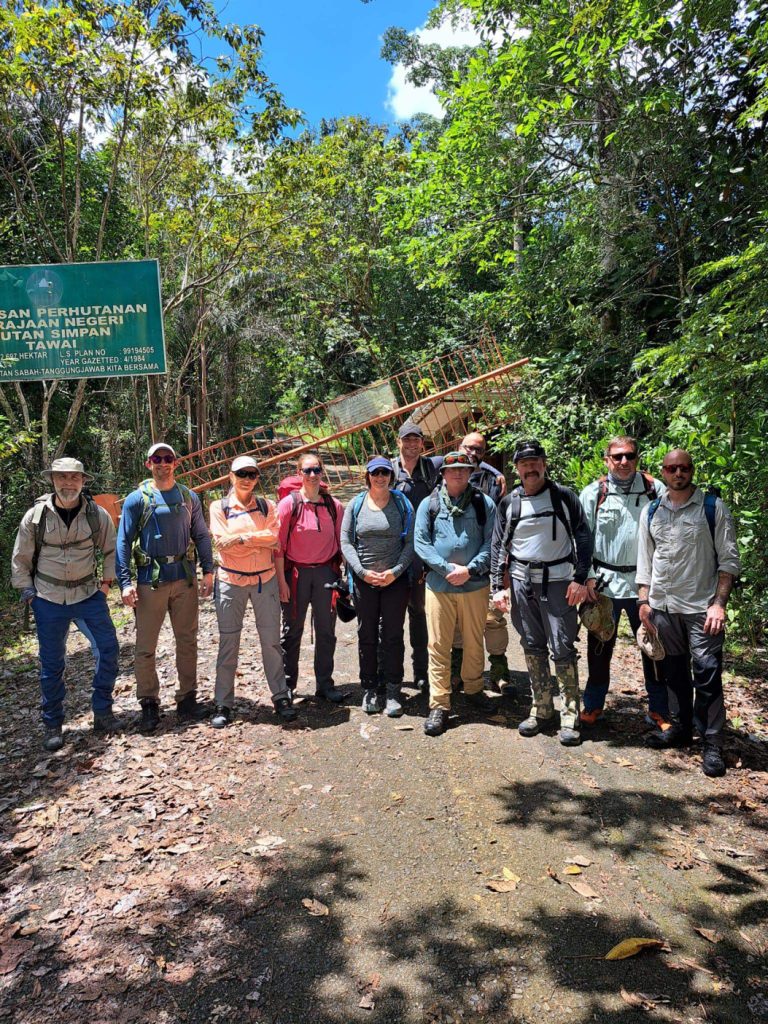
This group of international wounded service personnel and veterans retraced the path taken by British and Australian WWII POW’s in honour of their memory. This physically and mentally challenging expedition was all about coming together in support of their recovery and rehabilitation.  And the photos say it all!

We’re very proud of Lt Col Adam Modd GM, DSD on his selection in the Invictus Games Düsseldorf 2023 and his subsequent selection to be part of the Invictus Sandakan Death March, a Borneo Trek called “In the Footsteps of the Brave”.

Invictus service personnel from different countries around the world joined together to demonstrate that despite their personal mental and physical challenges, they are still unconquered.

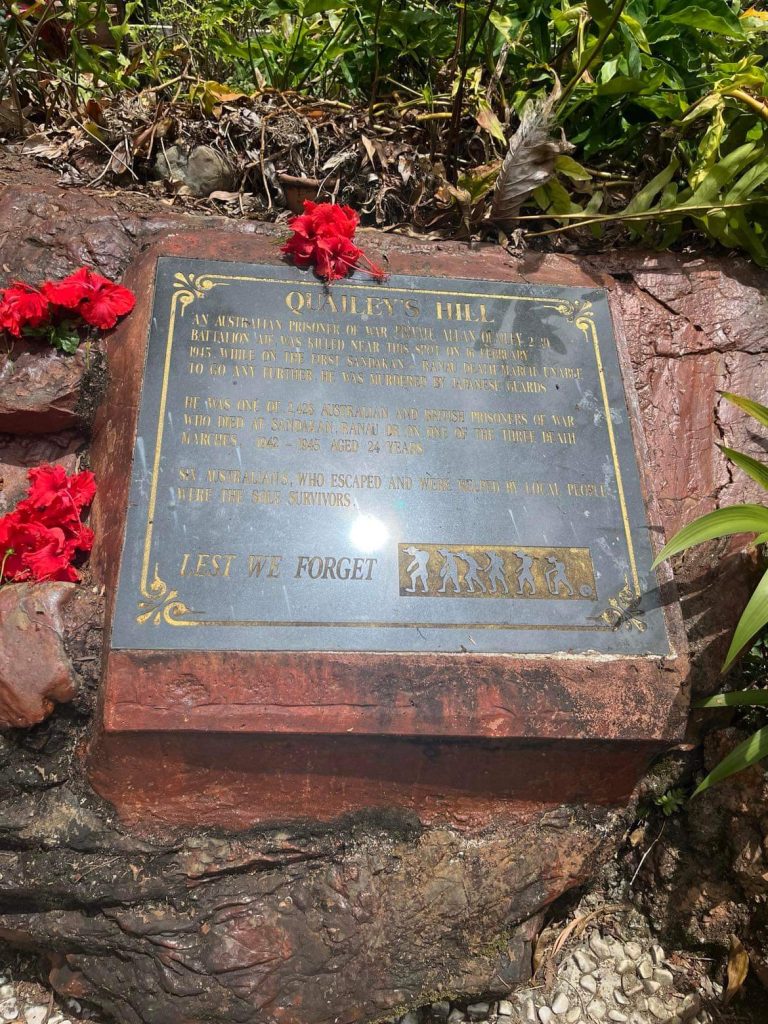
The Sandakan Death Marches were a series of forced marches in Borneo from Sandakan to Ranau which resulted in the deaths of 2,434 allied prisoners of war held captive by the Empire of Japan during the Pacific campaign of World War II at the Sandakan POW Camp, North Borneo.  By the end of the war, of all the prisoners who had been incarcerated at Sandakan and Ranau, only six Australians survived, all of whom had escaped.

As an Australian Veteran Owned company, EPE is honoured to support Adam on this admirable trek, paying respect to the Sandakan prisoners of war. We provide ongoing support to our many staff who have bravely served in both military and police.
We continue to support #veterans charities to raise awareness in all areas where we can help make a positive difference.

Posted on

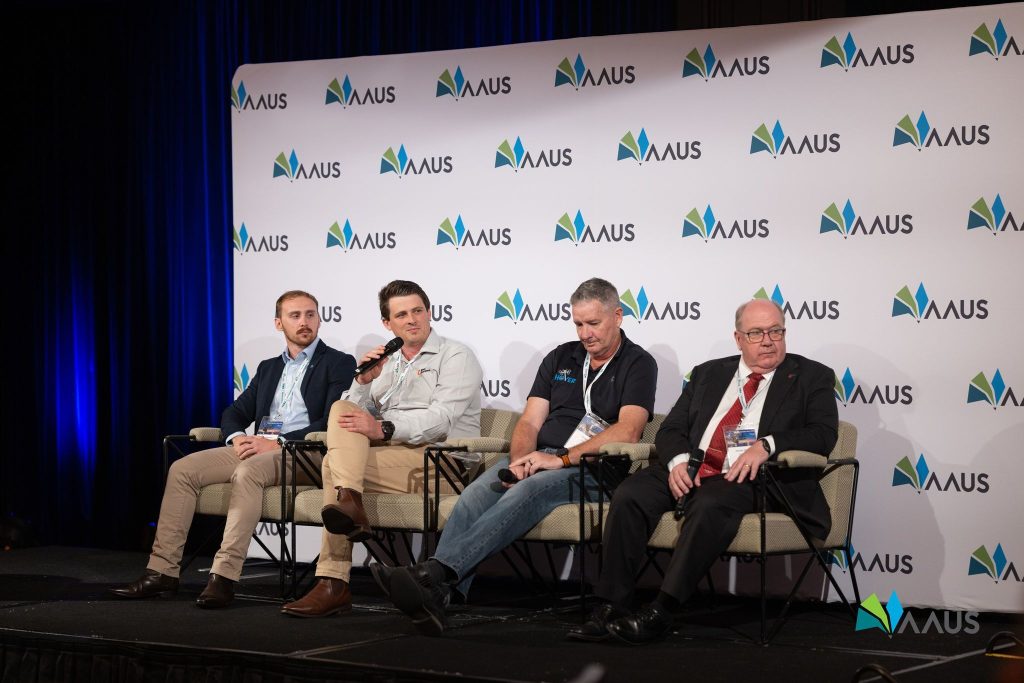
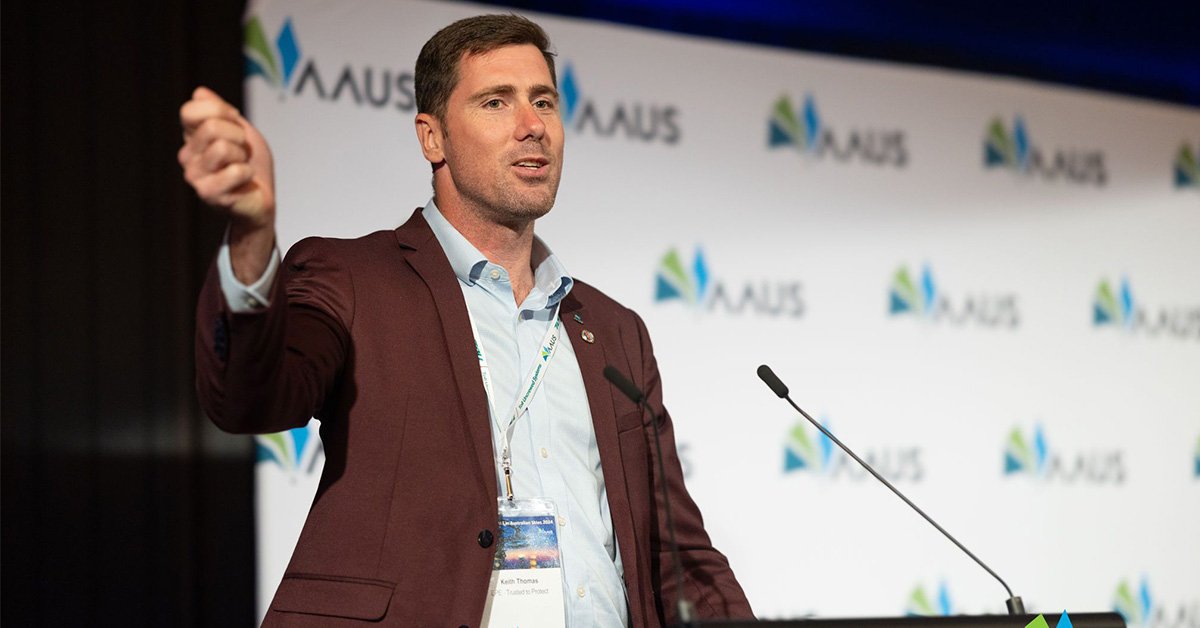
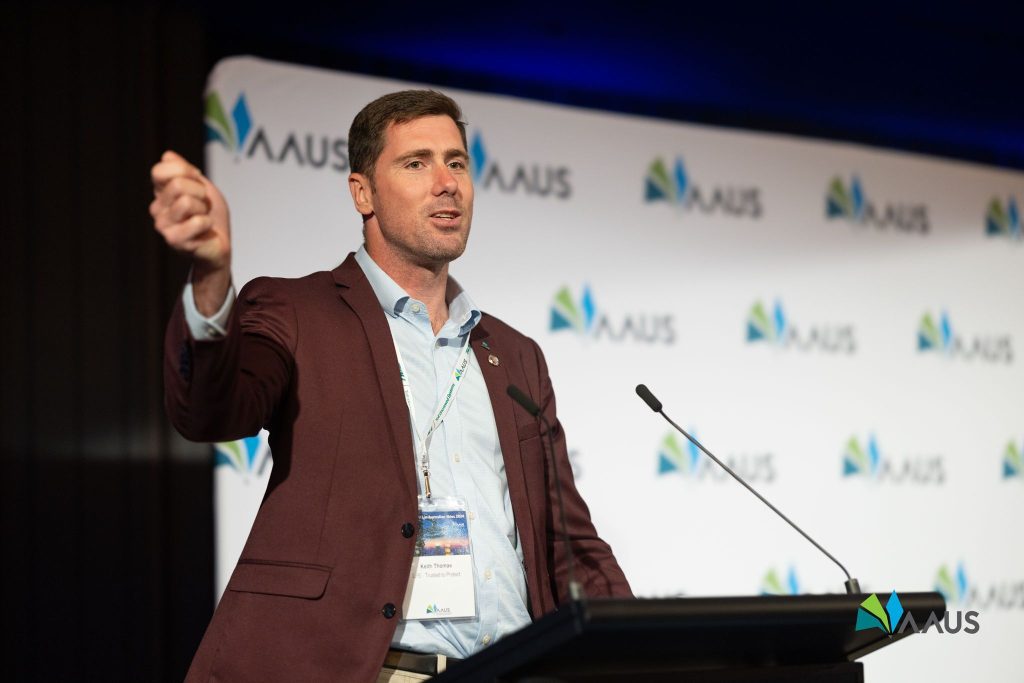
RPAS 2024: Keith Thomas presenting on Blue UAS v NDAA Compliant

RPAS 2024: Keith Thomas showcases UAS compliancy standards

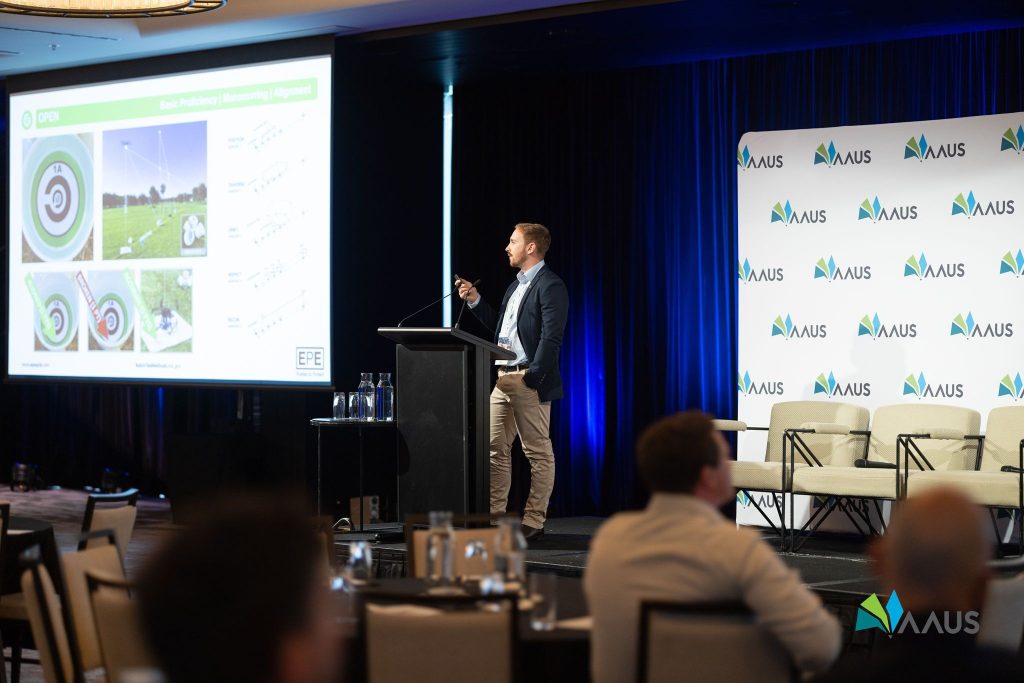
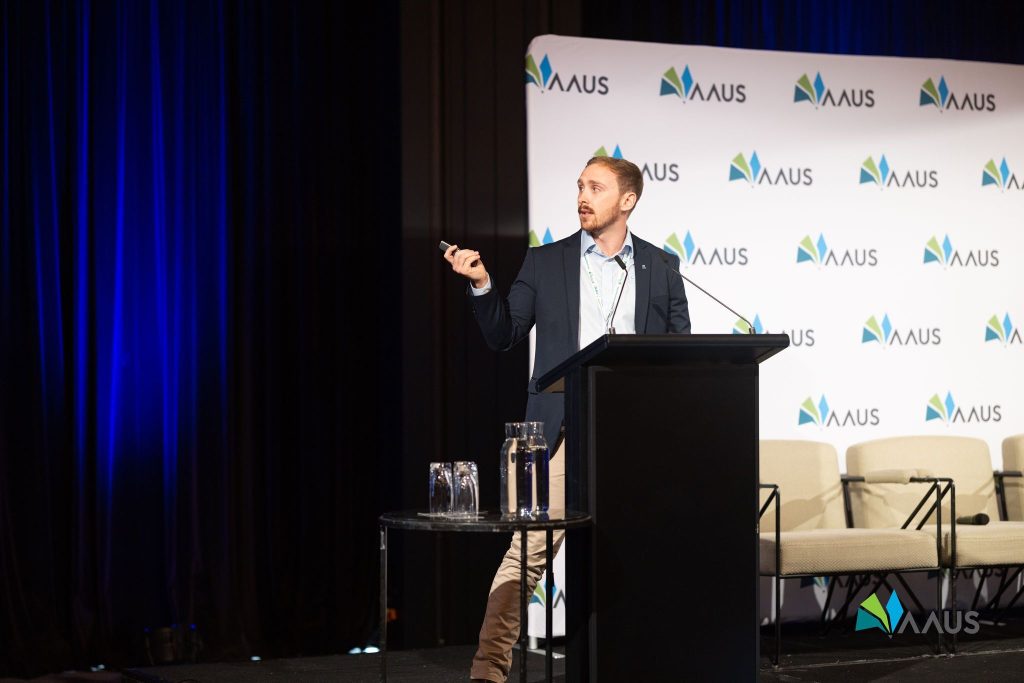
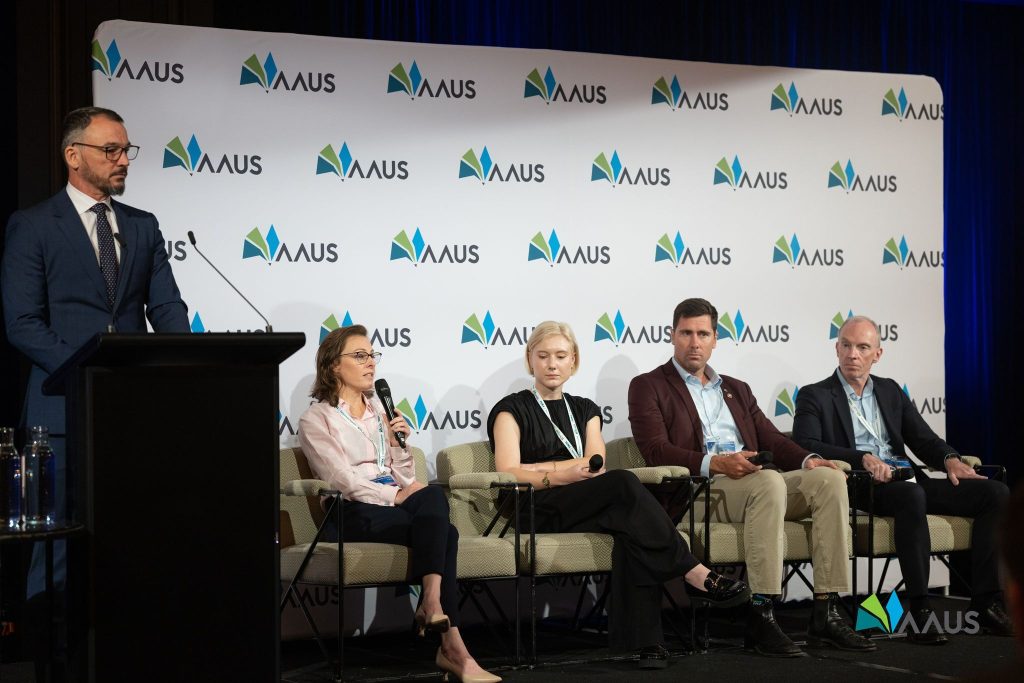
To assist the Australian RPAS community to learn from the experience of the US regarding the uncertainty around cyber and supply chain security, Keith Thomas, EPE’s UAS Capability Manager presented “A simple guide to understanding Blue UAS vs NDAA Compliant vs Made in America drone requirements” at RPAS 2024.

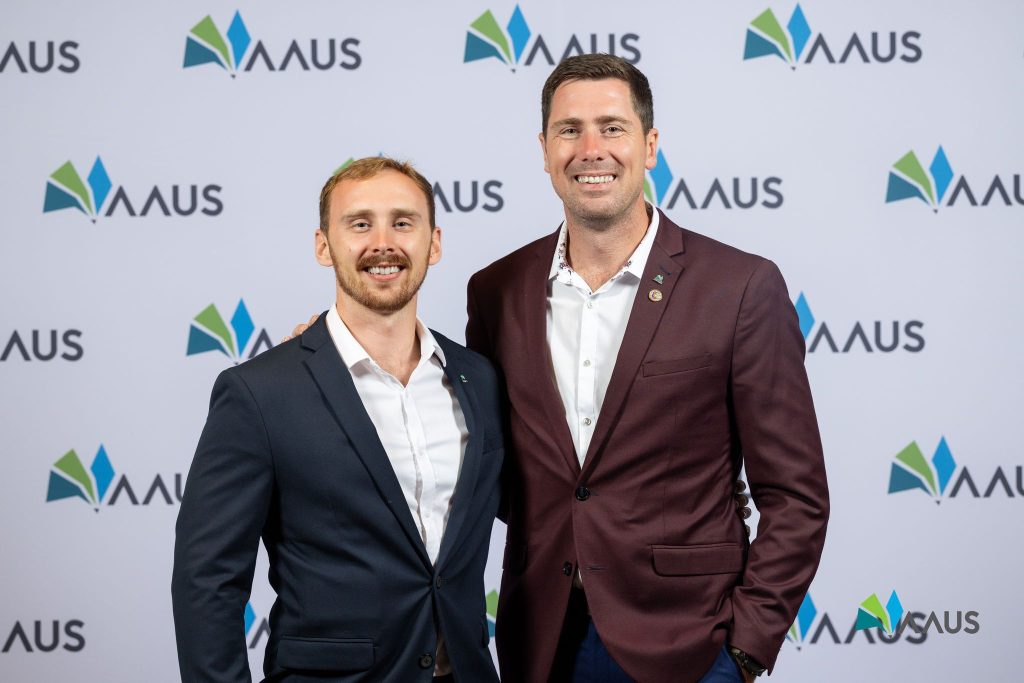
Thank you AAUS – Australian Association for Uncrewed Systems for the opportunity to present!!

Posted on

@AuManufacturing Conversations Episode 78 — Ben Sorensen from EPE

Aumanufacturing_conversation_with_Ben_Sorenson_EPE_News

In the last episode for 2023, we hear from Ben Sorensen, Director of Innovation & Commercialisation at EPE.

He tells us about the importance of collaborating with Australian researchers, EPE’s role co-leading the ELO2 consortium hoping to build Australia’s very first lunar rover, and more.

Episode guide

0:22 – EPE’s focus: protecting people in hazardous environments, typically defence personnel. Supplying and sustaining hundreds of robots and thousands of sensors for customers.

1:20 – Leading EPE’s innovation company. Work includes commercialising new products with CSIRO.

2:50 – Joining the company via Data61 and the role of R&D in strategy.

5:26 – Collaborations with CSIRO.

7:23 – Moon to Mars Trailblazer Stage 1.

9:40 – The on-earth value of building technology for the moon.

11:14 – Why the space industry is important in general.

12:10 – The Big Dipper and Little Dipper challenges.

13:28 – Capital – and how we feel about capital – is an issue to address. We also need to be bolder and better able to partner with researchers.

Posted on

EPE New Zealand Limited secures contract to enhance the New Zealand Defence Force’s Reconnaissance and Surveillance capabilities with Exensor Flexnet Remote Ground Sensor capabilities.

EPE_NZ_secures_NZDF_NEA_Programme_News

EPE_NZ_secures_NZDF_NEA_Programme_News


EPE New Zealand Limited secures contract to enhance the New Zealand Defence Force’s Reconnaissance and Surveillance capabilities with Exensor Flexnet Remote Ground Sensor capabilities.

EPE New Zealand Limited (EPE) in collaboration with Bertin Exensor, has been awarded a contract by the New Zealand Ministry of Defence to provide the New Zealand Defence Force (NZDF) with Reconnaissance and Surveillance (R & S) capabilities as part of the Networked Enabled Army (NEA) Programme.

EPE will deliver the Exensor Flexnet Remote Ground Sensor (RGS) system to enhance New Zealand Army situational awareness and support deployed command decision-making across all echelons of command. Through a Master Supply Agreement, specialist training and ongoing associated Through Life Support (TLS) will be delivered locally in New Zealand as part of the contract by EPE.

The contract will provide personnel with a scalable and modular sensing platform that provides real-time situational awareness and early warning, and identification of potential threats, enhancing commanders’ abilities to make quick, fact-based decisions and take necessary action.

A proven capability, Exensor sensors are in-service or trial with a number of countries including the UK, Australia, USA and several NATO countries.

Andy Cross, General Manager of EPE New Zealand Limited said ‘An essential requirement for NZDF is the demonstrated capacity and capability to deliver the equipment and training, and commit to ongoing maintenance and support. As a team, EPE and Exensor have the unique ability to achieve this. We also aim to equip soldiers with technology that not only provides strategic advantage, but also enhances decision-making while safeguarding them from threats.’

Marcus Rosenqvist, VP Sales & Marketing of Bertin Exensor AB said, ‘In recent years, the use and need for the Flexnet RGS technology among forces worldwide has increased. Exensor is proud to be selected together with EPE for the supply of the latest generation of Flexnet RGS’.


About Bertin Exensor
Bertin Exensor is a world-leading supplier of Remote Ground Sensors (UGS) systems. Designed by Bertin Exensor, the Flexnet RGS system combines intelligence collected by seismic, acoustic, and TI sensors to detect and identify threats and targets. Flexnet is perfectly suited to military and civilian applications such as force protection, Intelligence, Surveillance, Reconnaissance (ISR), and monitoring of critical assets and sensitive areas. Bertin Exensor now counts over 70 employees, with facilities located both in Sweden and the United-Kingdom. Since 2017, the company is part of the French group Bertin Technologies, a well-known actor in the European Defense and Security market.

Posted on

New surveillance drones for NZDF

The New Zealand Army will take delivery of three new sets of small Uncrewed Aerial Systems (sUAS) and remote ground sensor (RGS) systems in 2024.

In an announcement on 14 December 2023, the NZ Ministry of Defence announced that it had awarded three contracts for sUAS under Tranche 2 of the Networked Enabled Army (NEA) program.

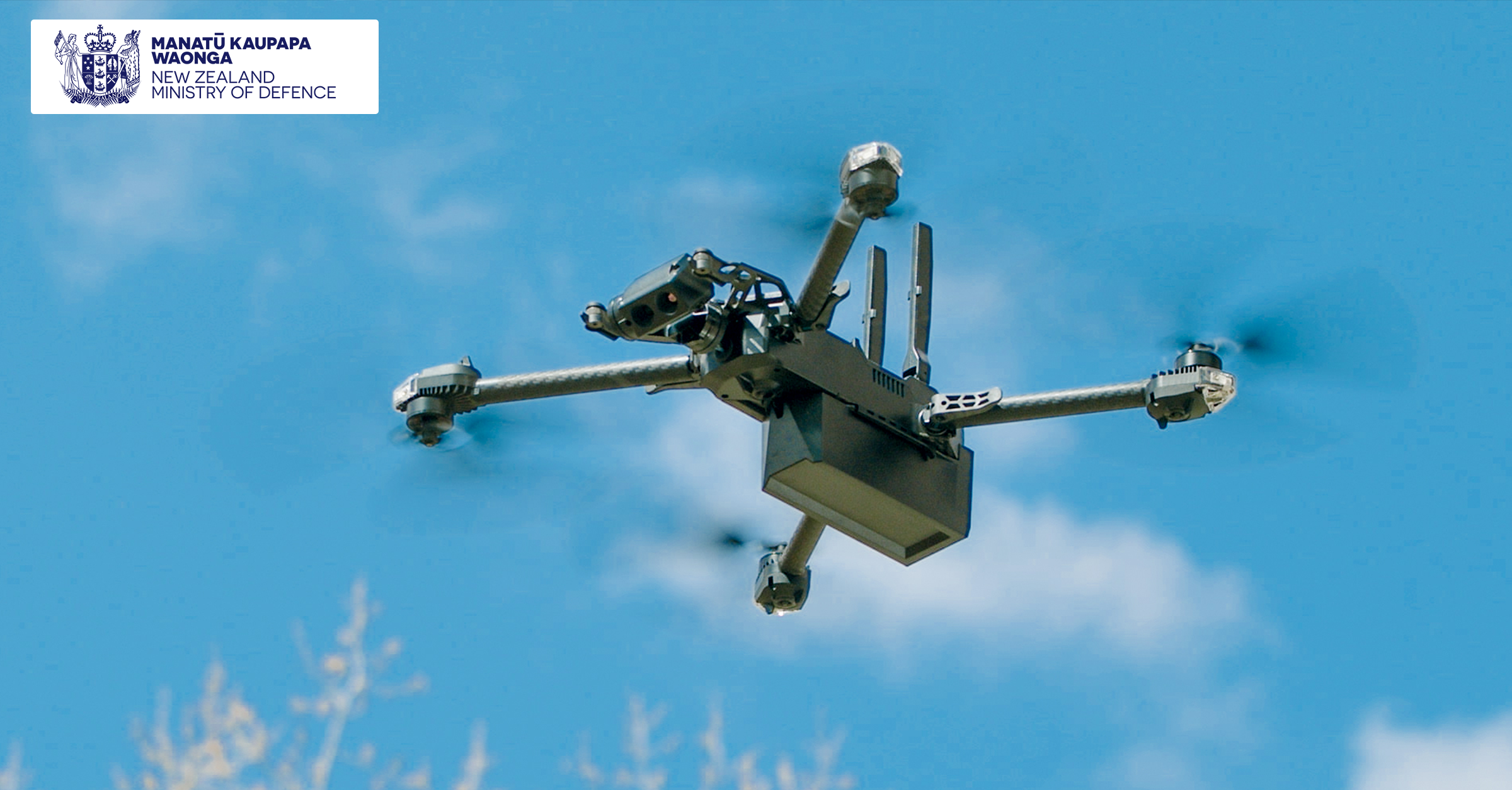
EPE New Zealand Limited is providing the Skydio X2D quadcopter micro-UAS and the Flexnet RGS from Bertin Exensor. Criterion Solutions will deliver the Black Hornet nano UAS from Teledyne-FLIR and Quantum Systems will provide the Vector fixed-wing electric vertical take-off and landing (eVTOL) remotely piloted aerial system (RPAS).

The contracts were awarded in September and October but values and total number of systems being delivered could not be disclosed. However, the RFP for the sUAS, which was released in May 2022, stated a requirement for 2-4 fixed-wing UAS, 18-30 micro RPAS and 30-40 nano UAS.

“These systems will be utilised by New Zealand Army for humanitarian assistance and disaster relief, combat, and search and rescue operations,” Sarah Minson, Deputy Secretary Capability Delivery for the NZ Ministry of Defence, told ADM.

“The systems will improve the ability of New Zealand Army to undertake reconnaissance and surveillance operations in areas that may otherwise be dangerous to access, such as flood effected regions or combat zones.

“They will provide timely and accurate information for New Zealand Army activities planning and risk assessments. They will also reduce the risk to personnel.”

There is a slight delay as the intention was for contracts to have been signed by July 2023 with deliveries to soldiers by December.

According to the MoD the Army’s 2/1 Royal New Zealand Infantry Regiment will operate the Skydio X2D, Flexnet RGS, and Black Hornet nano-UAS, whilst 16 Field Artillery will use the Vector eVTOL RPAS.

The Skydio X2D weighs 1.3kg and has a ruggedised airframe suited for military operations. It has a flight time of 35 minutes and is fitted with six 4k navigation cameras providing 360° obstacle avoidance. The X2D is also fitted with a 12MP colour camera and FLIR 320×256 thermal sensor and can be made ready for operations within 75 seconds.

The Flexnet RGS uses sensors and camera that can be monitored using a tablet or ruggedised personal digital assistant. Flexnet is scalable to it can be used to protect personnel or small assets or expanded to protect larger formation, sites or borders. The NZ MoD said Flexnet would “combine seismic, acoustic and infrared sensors to detect and identify moving objects.”

Weighing just 70g the Black Hornet 4 PRS G3 is used as a squad-level beyond line-of-sight surveillance asset to provide enhanced situational awareness using a thermal imager and tv camera. An advanced battery system means the Black Hornet has an endurance of 30 minutes operating at speeds up to 10m/s. The total transportable weight of the system and supporting equipment is 1.3kg

Meanwhile the Vector eVTOL RPAS has a take-off weight of 8.5kg and has a 2.8m-wide wingspan. The system can be prepared for operations in less than three minutes and provides surveillance out to a range of 35km with a flight time of 180 minutes. 16 Field Regiment uses the 105mm L119A1 howitzer and 81mm L16A2 and M8 mortar systems and using a RPAS will provide the Army with faster target acquisition and a more accurate fire support capability.

The MoD has also signed 10-year non-exclusive Master Supply Agreement for the through life support of the sUAS and RGS systems that covers the supply of software and hardware, spares and training.

The New Zealand Defence Force has undertaken trials and testing of numerous UAS over the years to assess capabilities and utility.

“The NZDF has an ongoing programme of experimentation, which informs the development of concepts of operation and user requirements. Experimentation with UAS over the preceding years contributed to this project,” Minson said.

“The New Zealand Army has a complete system of UAS regulation and training which includes both formal “in school” courses such as Civil Aviation Authority (CAA) Part 101 & Part 102 RP; as well as unit training and compliance.”

Posted on

Defence to receive Remote Ground Sensors and Uncrewed Aircraft Systems

New_Zealand_Network_Enabled_Army_contracted_EPE_NZ_EPE_news

EPE New Zealand Limited will supply a number of quadcopter Micro UAS, which are backpack portable and can be operational in less than 75 seconds. The company will also supply Remote Ground Sensor systems, which combine seismic, acoustic and infrared sensors to detect and identify moving objects. Both systems will be used by 2/1 Royal New Zealand Infantry Regiment.

United States based Quantum-Systems Inc. will deliver a number of Small UAS for 16 Field Regiment, which are backpack portable, have a wingspan of three metres when assembled, and can be operational within three minutes.

Australian company Criterion Solutions PTY will deliver a number of Nano UAS, which can be operational in less than 20 seconds and will be used by 2/1 Royal New Zealand Infantry Regiment. These UAS have a single rotor air frame and fit into a pouch.

The systems will reduce risk to personnel by providing timely and accurate information for operations planning, as well as risk assessment activities.

Sarah Minson, Ministry of Defence Deputy Secretary Capability Delivery, says the systems will be deployed by New Zealand Army during humanitarian assistance and disaster relief, combat, and search and rescue operations.

“The systems will improve the ability of the New Zealand Army to undertake reconnaissance and surveillance operations, in areas that may otherwise be inaccessible, such as cyclone damaged regions or combat zones.”

These new systems will not be armed as their primary purpose is to extend situational awareness beyond-line-of-sight.

For more information about the project visit the Network Enabled Army page.

Posted on

AIDN National Policy Symposium & Sovereign Showcase

AIDN National Policy Symposium & Sovereign Showcase_01

EPE was honoured to stand among the best Aussie companies representing the Australian Industry & Defence Network (AIDN National) at the Sovereign Capability Showcase at Australian Parliament House, Canberra!

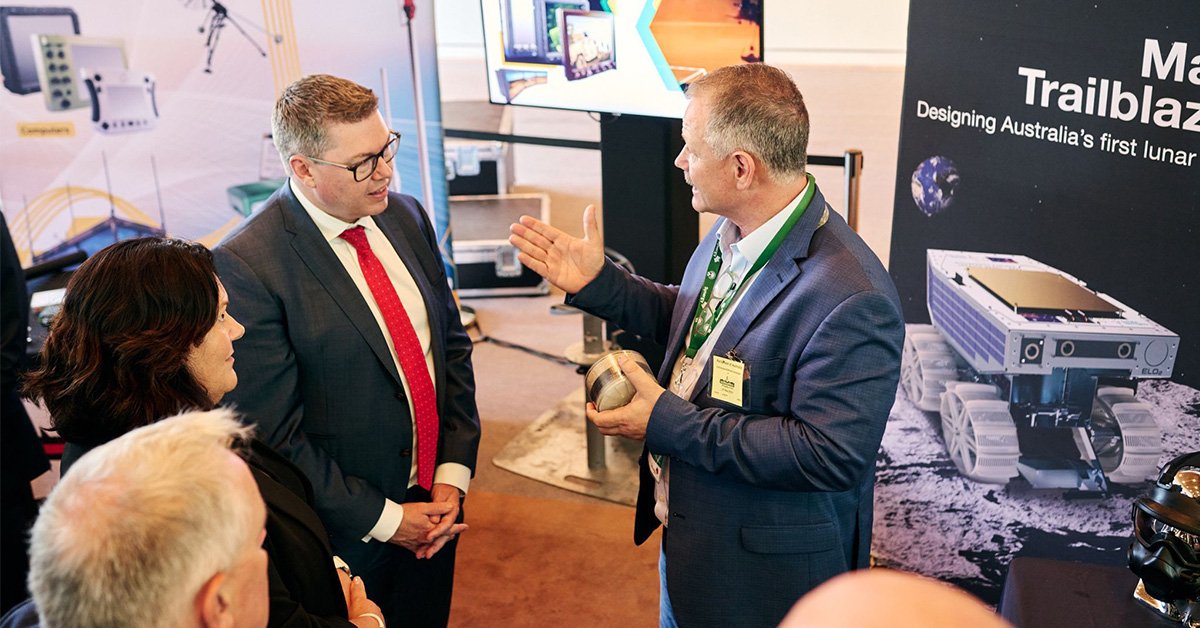
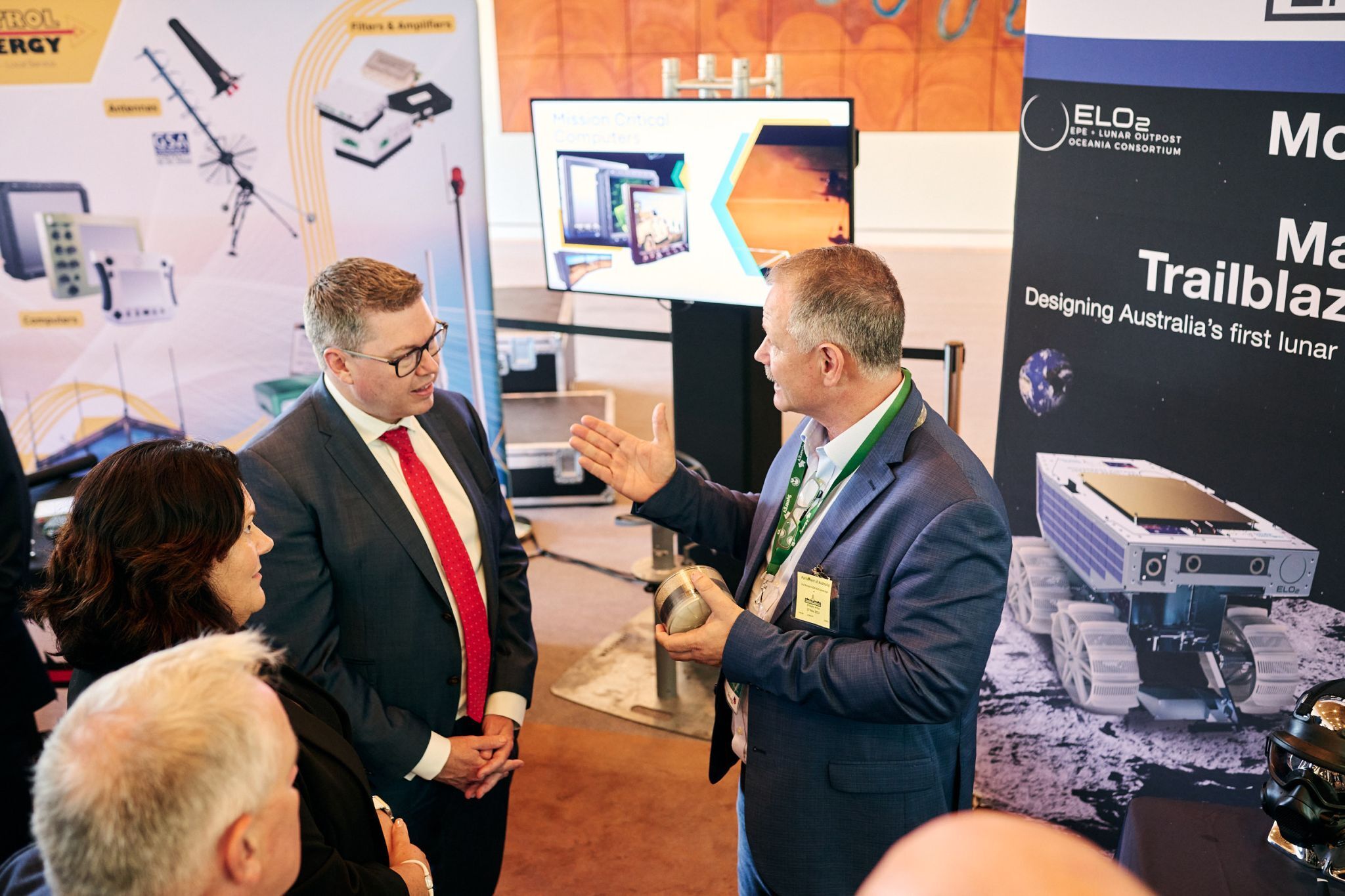
EPE emphasised the importance of the development of novel sovereign capabilities to not only protect Australian and allied soldiers and first responders in high threat environments but also to strengthen our industrial base though domestic commercialisation. EPE Group CEO Warwick Penrose had the opportunity to share ground-breaking CBRN protection technology at AIDN National with Minister for Defence Industry Pat Conroy MP and Meryl Swanson MP. The members of parliament were also given a sneak preview of the lunar rover which the ELO2 Consortium co-led by EPE and Lunar Outpost Oceania, is developing. The project for the Australian Space Agency aims to land a rover on the Moon as part of a future NASA – National Aeronautics and Space Administration Artemis mission

The 2023 event showcased over 30 Australian SME’s and Primes, and highlighted the critical role our 60,000-person-strong defence industry plays in equipping and sustaining your ADF.

Posted on

ICOR Technology Mini-CALIBER

Equipment_UnmannedSystems_UnmannedGroundVehicle_ICOR_Technology_Mini_CALIBER_01

MAN PORTABLE ROBOT

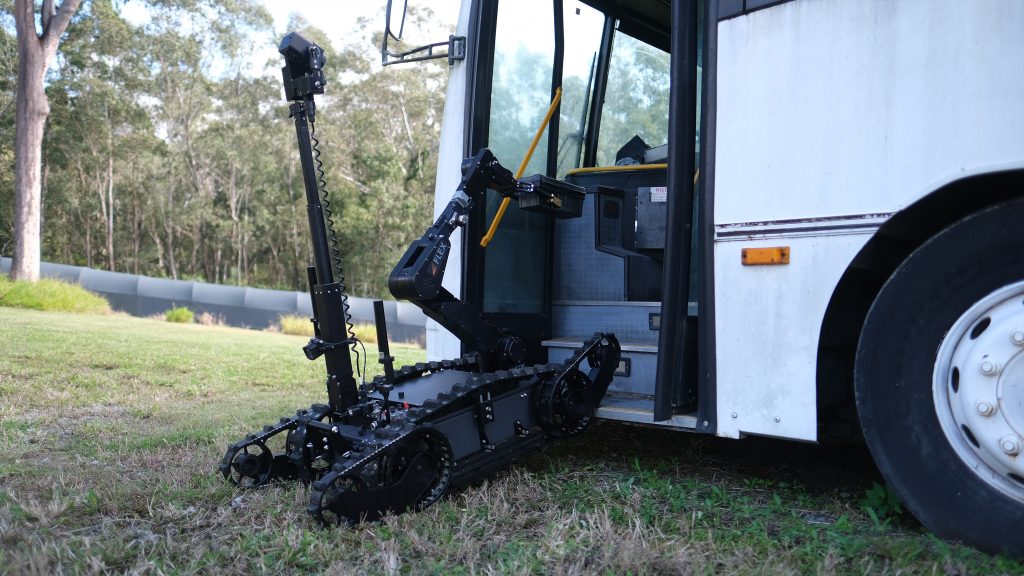
The lightweight, Mini-CALIBER® is a one man portable robot for SWAT and EOD operators. Developed for tactical missions, the robot is simple to operate and quick to deploy, providing fast action to search rooms, stairwells, and confined spaces.

MISSION CONFIGURABLE

The Mini-CALIBER® includes a manipulator arm on a rotating turret with a 10X zoom camera on the claw. The arm will lift objects up to 15 lbs (6.8 kg), deliver packages and open doors. The zoom camera will reach up to 64” (163 cm), high enough to look into car windows.

The horizontal reach of 53” (135 cm) allows for under vehicle searches. Movement of the turret and wrist enables the claw mounted 10X zoom camera to pan and tilt.

PAYLOADS

CBRNE detectors and sensors can be mounted onto the deck of the robot chassis, assisting first responders in identifying hazardous items.

Various types of recoilless disrupters can be mounted using disrupter mounts specially designed for the Robot.

MOBILITY

The compact platform measures less than 16” (41 cm) wide, allowing it to drive down aisles of planes, buses, and trains.

Powerful 24V DC variable drive motors achieve speeds up to 2 mph (3.2 km/h) and handle rough terrain, rocks, and snow with ease.

The rubber tracks and articulating front and rear flippers allow the robot to effortlessly climb stairs and inclines between 40° and 45°.

COMMAND & CONTROL UNIT (CCU)V

Weighing only 5.3 lbs (2.4 kg) the handheld CCU is truly portable and intuitive to use. The robot is controlled through a variable speed joystick and incorporates 2-way audio for crisis negotiation.

Clear images are transmitted to the 5.8” (14.7 cm) LCD daylight readable screen over a wireless RF system.

MULTIPLE MISSIONS

  • Surveillance and reconnaissance
  • Inspection of planes, trains, and buses
  • Barricaded suspect and crisis negotiation
  • Deliver and retrieve packages
  • Open doors and move objects
  • Under-vehicle inspection
  • IEDD identification and disposal
  • Intelligence gathering
Posted on

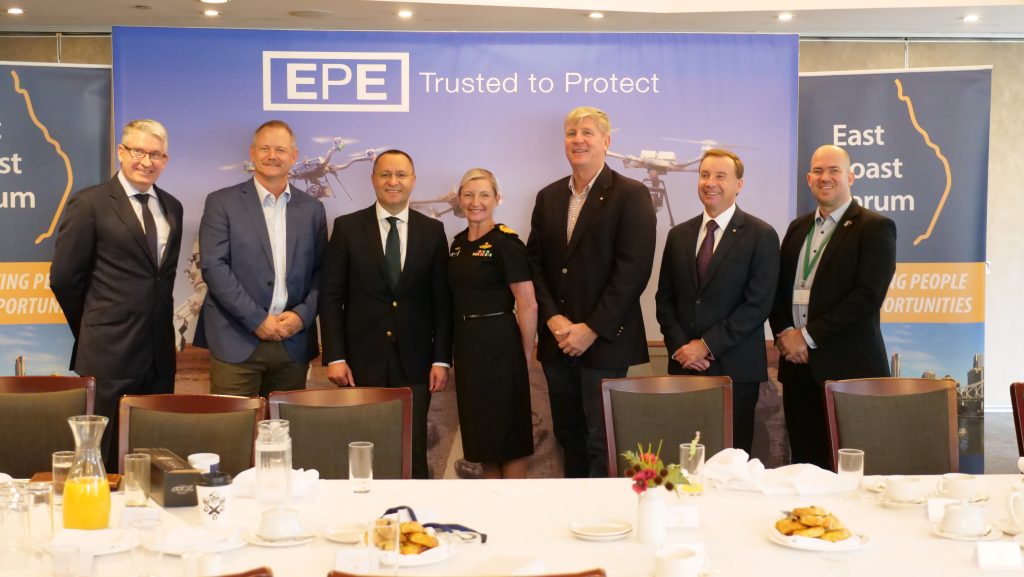
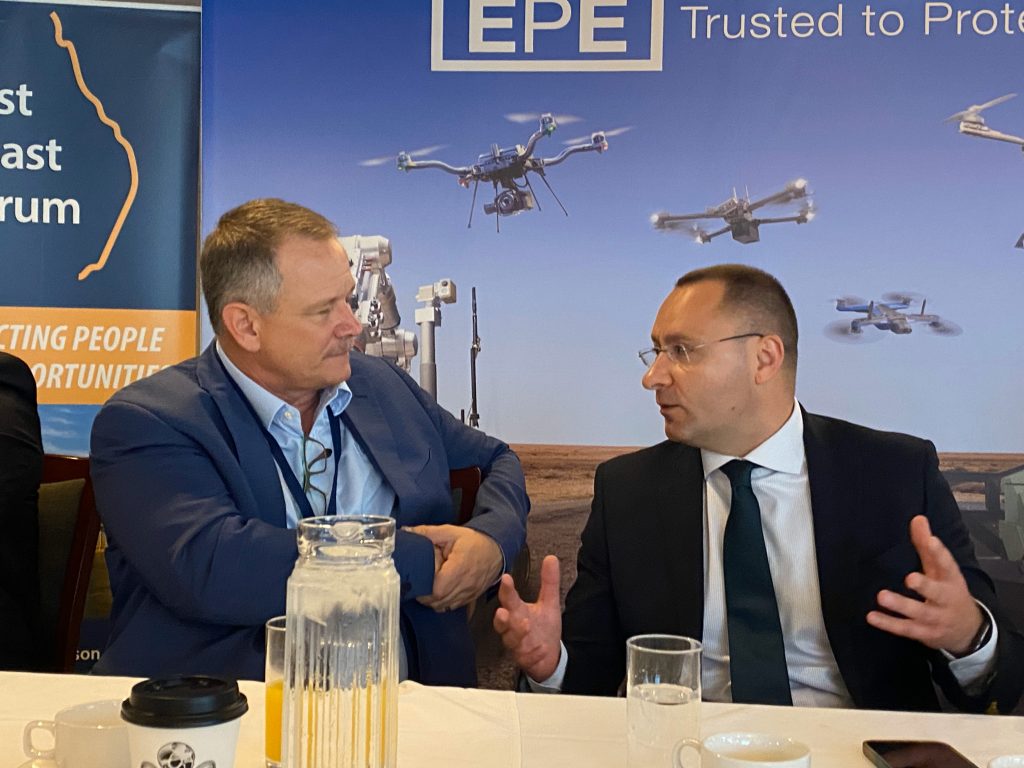
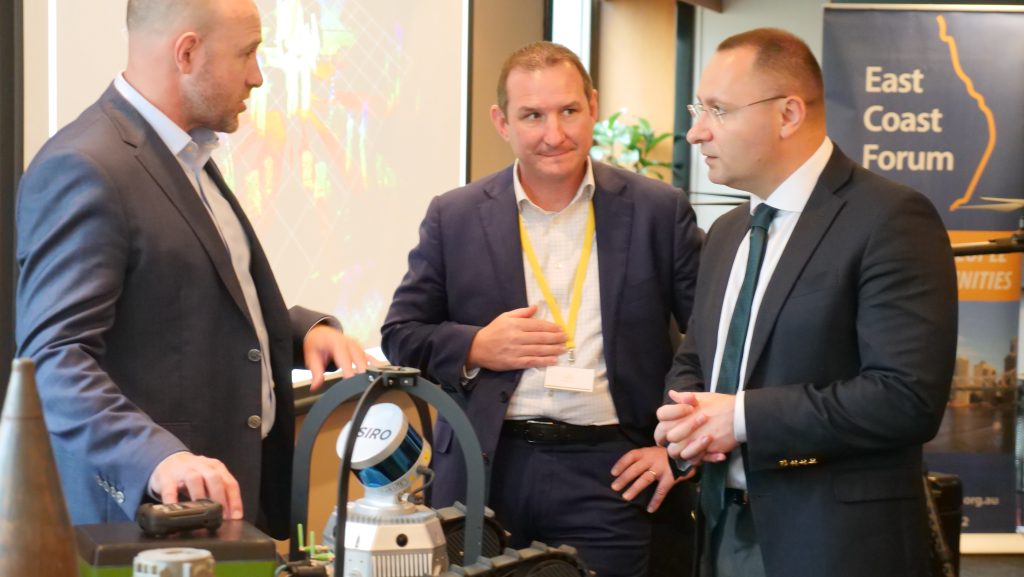
EPE co-host East Coast Forum Boardroom Breakfast with Ambassador of Ukraine

Very pleased to host His Excellency Vasyl Myroshnychenko – Ambassador of Ukraine, at another excellent East Coast Forum Boardroom Breakfast. Great insights on the resilience of the Ukrainian people as they prepare to face another long hard winter. MAJ Gen Mick Ryan, AM (Rtd) fresh from his most recent trip to Ukraine, provided his thoughts on the current military situation. Ukraine must prevail in this conflict. It will shape the face of the International World Order for the next 50 to 60 years.

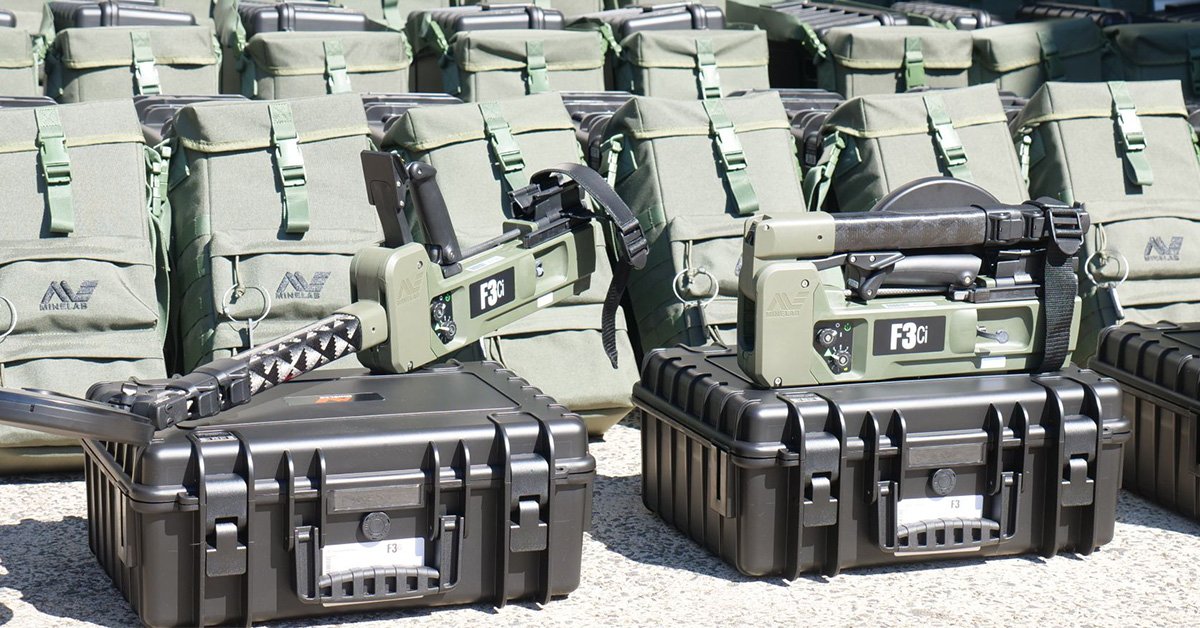
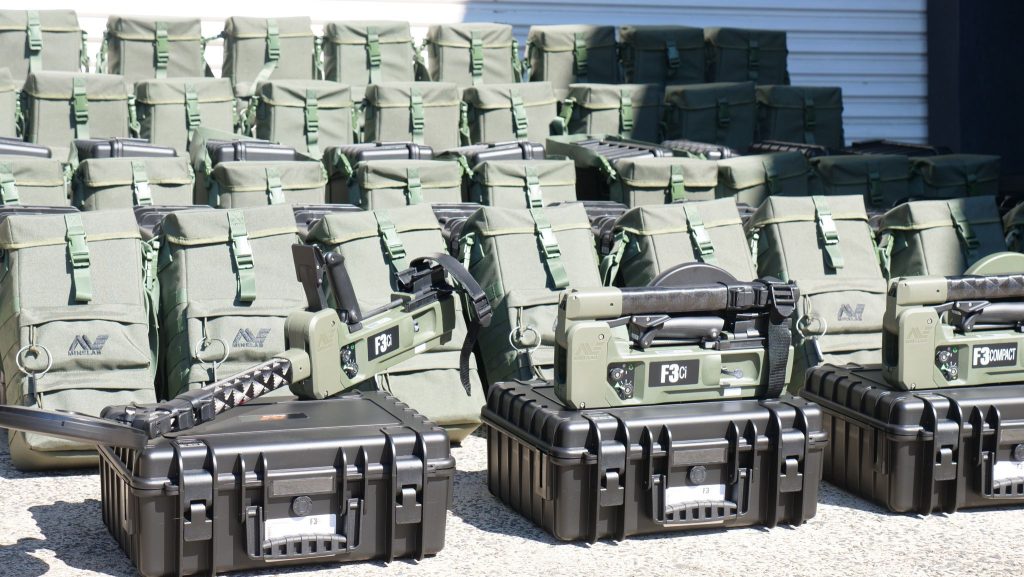
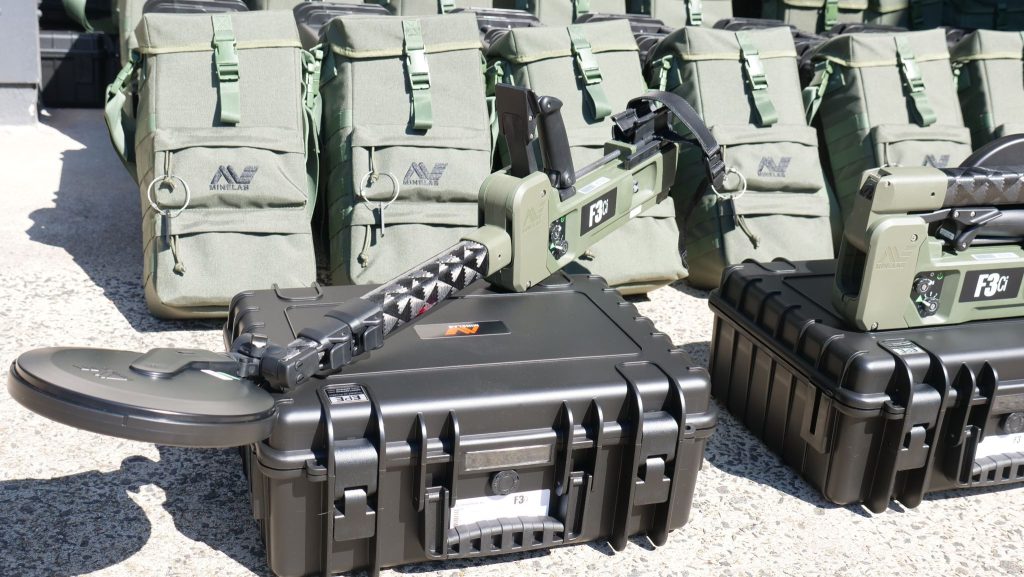
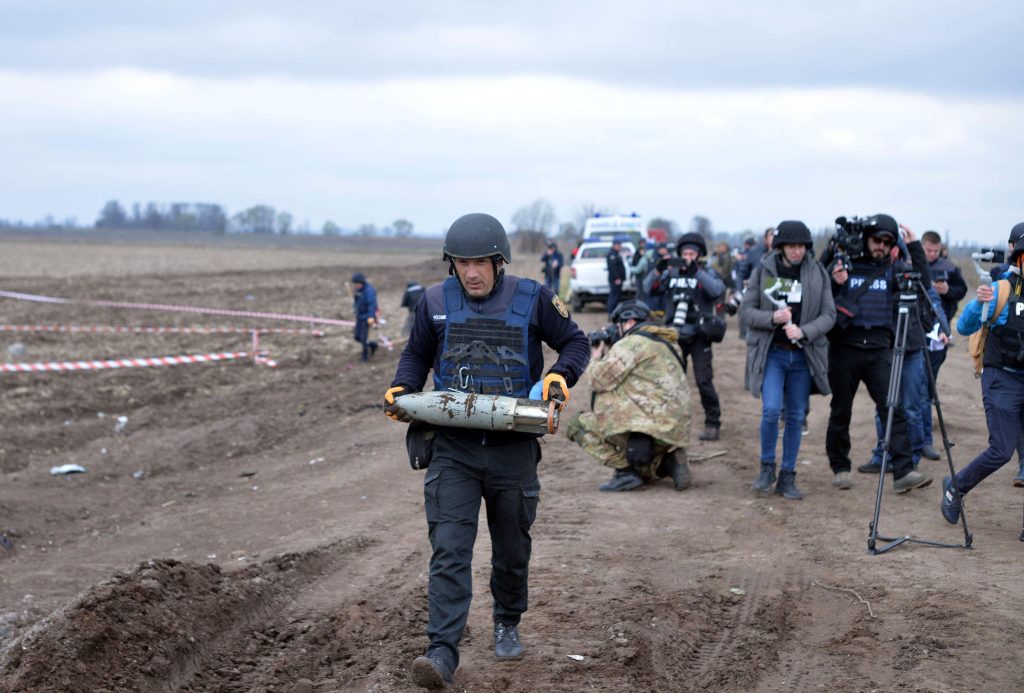
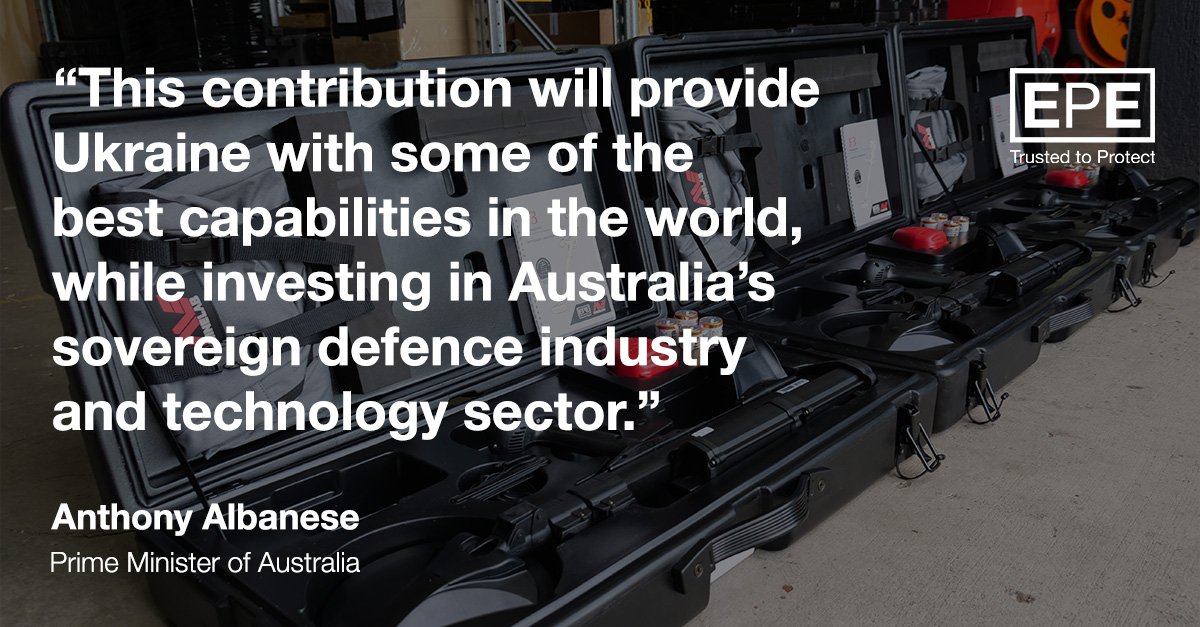
EPE. Trusted To Protect, through our partnership with Minelab Metal Detectors was included in the most recently announced aid package supplied by Australian Defence to Ukraine. These land mine detectors are now in country, and helping to reduce the explosive threats faced by the Ukrainian Armed Forces in the current counter offensive. They are also an essential tool to help people reclaim their land and homes. So much more needs to be done to help Ukraine fight and win this war.

Posted on

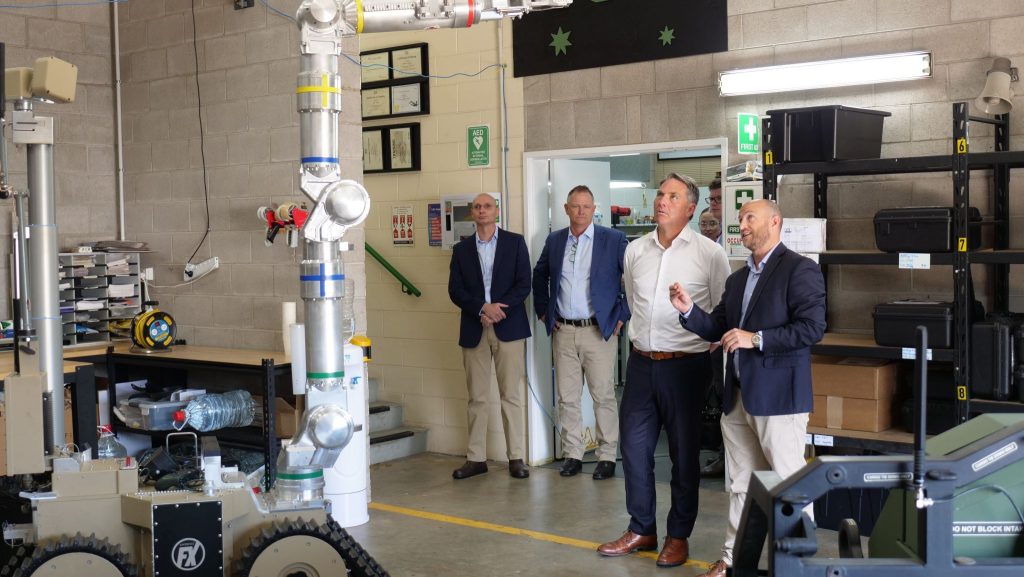
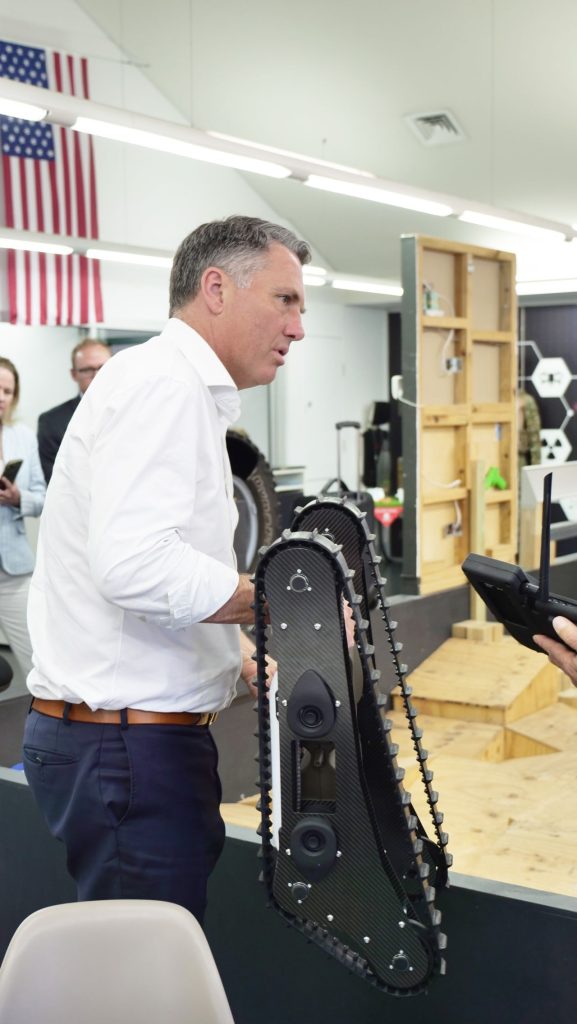
Richard Marles MP, Deputy Prime Minister of Australia visits EPE

EPE_NEWS_Hosting_2023_06

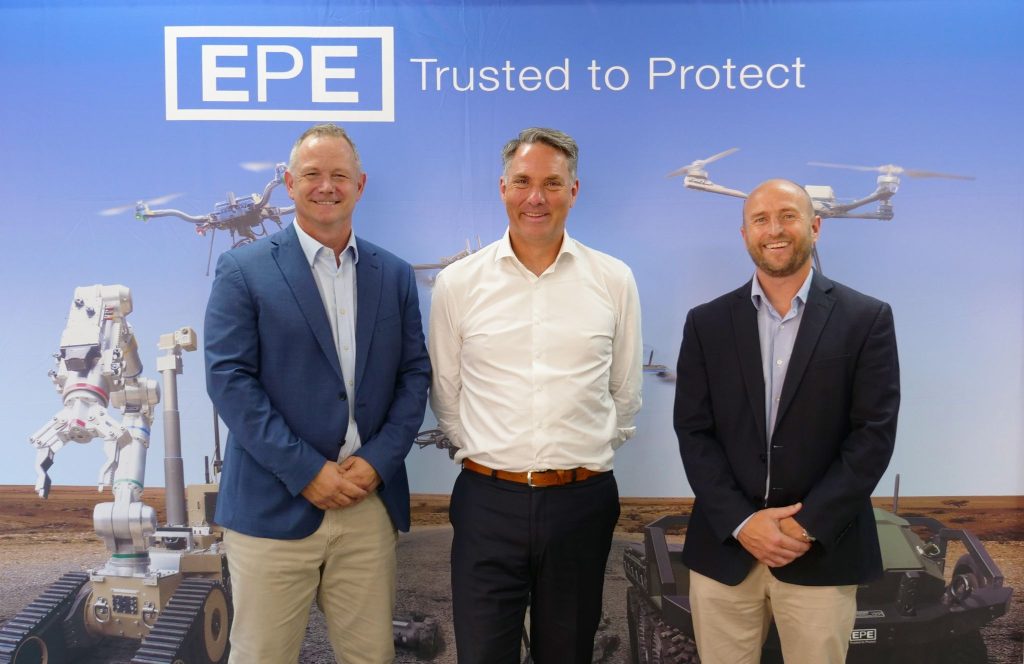
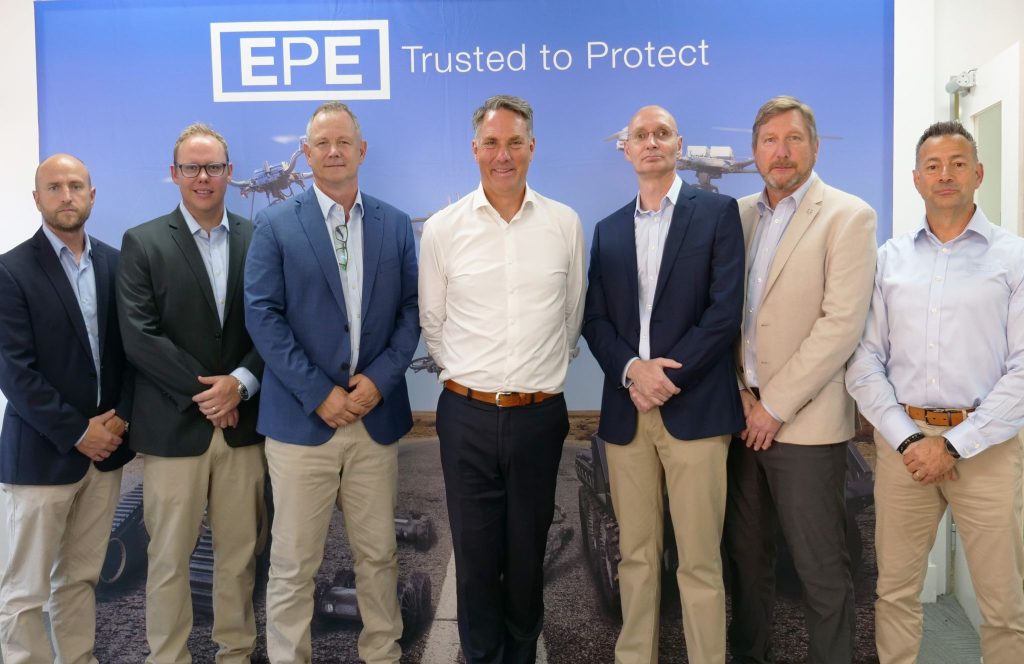
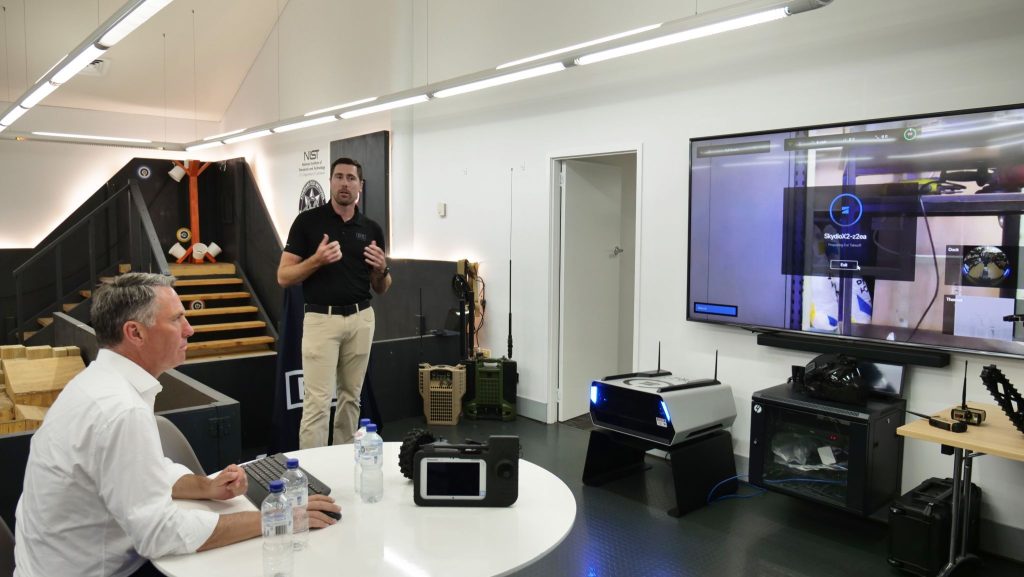
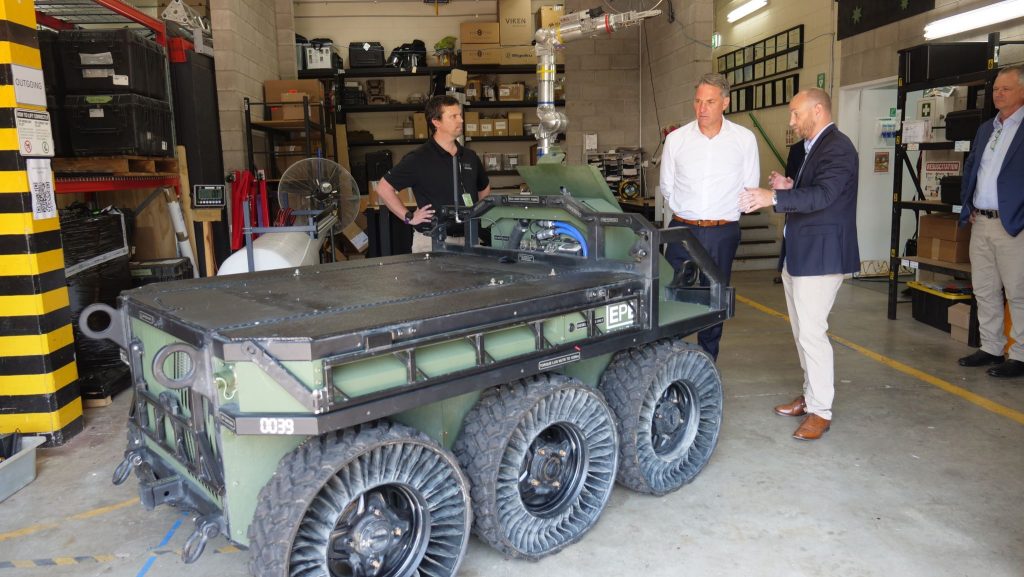
Blast of a morning at EPE hosting The Hon Richard Marles MP, Deputy Prime Minister of Australia and Minister for Defence. The Minister was keen to interact with our team learning about our ELO2 Consortium for the Australian Space Agency Moon to Mars initiative and the Weapons Technical Intelligence Project EPE is priming for Australian Army. Displaying skill Minister Richard Marles drove the KNDS France Nerva LG and HDT Global WOLF uncrewed vehicles and remotely piloted a Skydio hashtagdrone. Thanks to the Minister and your team for your enthusiasm to learn about your key industry partners providing capability to Defence Australia.

Posted on

Field Robotics Webinar by Robotics Australia Group

Last week Robotics Australia Group hosted an industry webinar exploring the topic.

Together with EPE Innovation Director Ben Sorenson, Dr Joe CroninKate D.Andrew BateDr. John Vial and Nicci Rossouw.

Discussion focused on:

  • The growing Australian robotics industry and how it enables other industries
  • Collaboration between research organisations and industry to develop new capability
  • Competing on the global scale
  • Funding, government support and picking winners
  • How robotics creates new jobs, improve Australia’s productivity and worker safety
  • Standards, assurance, cybersecurity
  • Designing lunar rovers for the moon and using this tech to solve problems here on earth
  • Getting to robotic ubiquity (more, cheaper, faster, and how we can do it here!)


Posted on

The Australian Space Agency wants to bring everyone on our nation’s journey to the Moon.

Acknowledgement to Channel 7 Sunrise – 5 September 2023

Earlier today, Enrico Palermo, head of the Australian Space Agency announced a naming competition for the lunar rover that will go to the Moon in 2026.

The ELO2 Consortium lead by EPE and Lunar Outpost Oceania is one of two teams that has spent the last few months designing and developing that rover!

The Australian Space Agency, in partnership with NASA, is working with Australia’s space industry to design and build an Australian-made rover. It’s part of the Trailblazer program under the Moon to Mars initiative.

Drawing on Australia’s world-leading remote operations expertise, the rover will collect lunar soil, known as regolith. NASA will attempt to extract oxygen from the sample. This is a key step towards a sustainable human presence on the Moon.

The rover will go to the Moon as part of a future Artemis mission by as early as 2026.


The competition

Australians can enter a name that will be in the running to be selected for the rover.

Individuals and schools across Australia can enter a rover name, along with a brief explanation for choosing it.

How to enter

The competition is now open. We will select a shortlist of 4 names from your entries and put them to a public vote. We’ll announce the winner in December.

https://consult.industry.gov.au/name-australias-lunar-rover

Posted on

ARX 2023: Showcasing our RAS Technologies to The Chief of Army Symposium

ARX 2023: RAS Technologies at Army Symposium_01

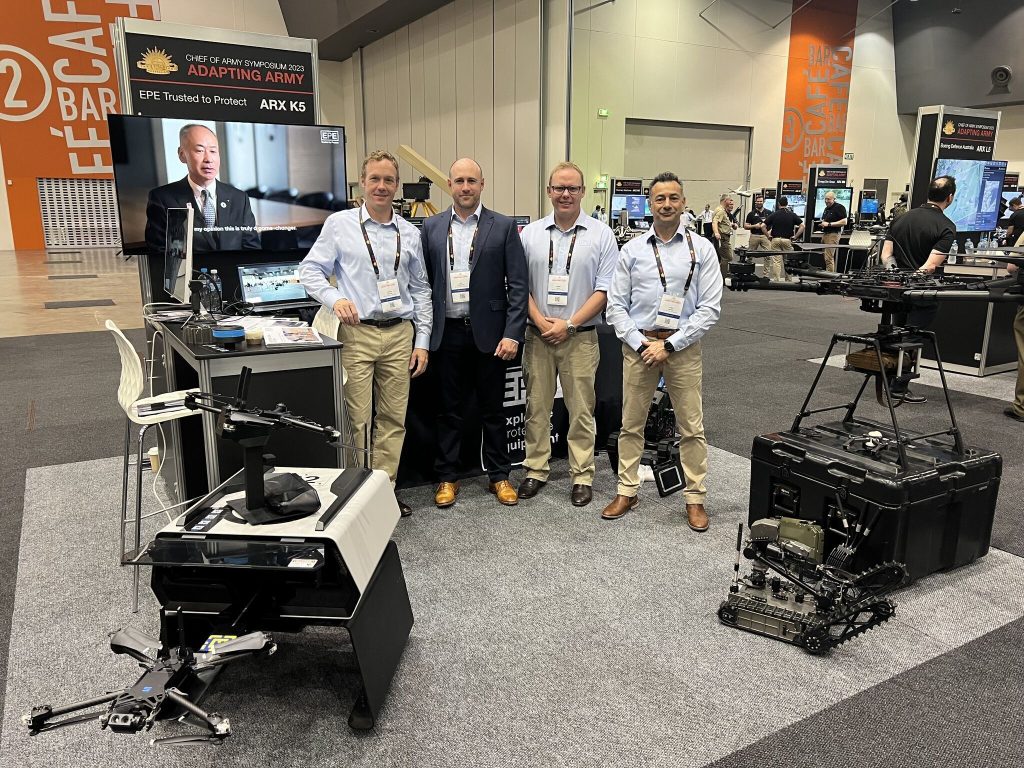
EPE. Trusted To Protect was honoured to showcase our innovation and integration in the field of Robotics and Autonomous Systems (RAS) to Tentara Nasional Indonesia (TNI) at ARX 2023, during The Chief of Army Symposium 2023. Thank you to RICO, CAS 2023 and ARX 2023 for the opportunity to present innovative RAS technologies that would support the future Joint Land Force.

Posted on

Defence invests in the next generation of CBRN scientists

DSTG_CBRN_StarShoT_EPE_News

A Defence postgraduate training initiative will boost the pool of STEM professionals capable of developing solutions that will enable Defence, national security and first responders to operate safely and effectively in chemical, biological, radiological and nuclear (CBRN) environments.

DEFENCE INVESTS IN THE NEXT GENERATION OF CBRN SCIENTISTS

Pictured: PROCESS Academy students and representatives from DSTG and PROCESS partner organisations at the EPE facilities in Brisbane.

The Postgraduate Research for OCE STaR Shot (PROCESS) Academy was recently launched in Brisbane, in the headquarters of Defence industry partner EPE.

Dr Nick FitzGerald is Science, Technology and Innovation Lead for Defence’s Operating in CBRN Environments (OCE) STaR Shot. According to Dr FitzGerald, the PROCESS Academy investment will have multiple benefits. ‘Beyond the cool science that we can explore, PROCESS helps us understand the OCE ecosystem,’ he says. ‘At the same time we’ll be creating the next generation of CBRN STEM specialists. Like Defence, our industry and agency partners are looking for smart people to fill positions in the future, so they appreciate the forward-looking element of this initiative.’

Seven PhD students in the PROCESS pilot cohort participated in the orientation, which was delivered by industry partners EPE and Leidos with the support of ANSTO, Queensland Fire and Emergency Services (QFES), CASG and the Australian Army.

Imbuing context, connections and community

‘Our aim with the orientation was to give the students context, connections and community,’ says Dr FitzGerald, who developed the innovative Black Canary wearable, autonomous chemical exposure detection tool at DSTG. ‘We wanted to help the students hit the ground running by giving them an understanding of the CBRN problem space they’ll be working in. We did this through practical, experiential learning and targeted, classroom-based activities. We also introduced them, over several days, into a new network of professionals and experts in the CBRN defence and national security space, thereby building a sense of community.’

Dr FitzGerald believes imbuing students and academic supervisors with an understanding of the problem space will improve the quality of the research, and will lead to chance and coordinated interactions with potential employers beyond Defence.

Army supported the event by providing access to real CBRN protection, detection and hazard management equipment and by delivering an in-person introductory presentation on the first day of the “O” Week (delivered by the CBRN cell of Army Headquarters Combat Support Directorate).

Leidos, which holds the Land 2110 Phase 1B contract for the provision of CBRN materiel and associated training, provided members of its training team to explain the military equipment (including examples of newly acquired Defence materiel) and to outline how it is being used in threat detection, identification, monitoring, warning and protection tasks.

At the EPE proving grounds the students donned the MOPP-4 CBRN protective suit and carried out representative operations to experience for themselves the difficulties experienced by first responders and warfighters.

Students learned about CBRN equipment, and had a chance to personally experience the difficult nature of working in full-body CBRN protective gear.

Students learned about CBRN equipment, and had a chance to personally experience the difficult nature of working in full-body CBRN protective gear.

Experiencing difficulties first-hand

The PROCESS orientation was both enjoyable and valuable says student Lize Coetzee. She was grateful for the chance to hear from many industry partners and experts about various aspects of CBRN environments. ‘This deepened my understanding, particularly about the reality of being out in the field and what a soldier or first-responder might value in their equipment,’ Coetzee reflects. ‘One highlight was the opportunity to complete a variety of activities while wearing full CBRN kit which gave me first-hand experience in how difficult it is to perform activities requiring dexterity, communication, and physical effort. These are practical considerations that I had not thought of previously, but which will help guide my own research to better meet the needs of end users.’

Coetzee is developing a laser sensor which can be operated at a distance of 10 metres to identify a variety of chemical and biological hazards.

Industry partners see benefits

EPE Managing Director Warwick Penrose says his company’s support of PROCESS has an emphasis on practical immersion to build an awareness of the current Defence CBRN baseline capability. ‘This is in order to build the student’s understanding of the challenges that operators face when working in CBRN environments,’ he says. ‘At the completion of this training the PhD students had a better understanding of how Defence will apply the research being funded via the OCE STaR Shot, so that the benefits of their research can be applied more quickly.’

Looking to learn more about the Operating in CBRN Environments (OCE) STaR Shot?

The threat of CBRN attacks against military forces and civilian populations is growing which means our forces must be able to respond faster and more flexibly to CBRN events.


Originally published on the Australian Government Department of Defence News

Posted on

Factory Acceptance Testing robots at ICP Newtech for an international customer

ICP_NewTech_Avenger_lt_EPE_news

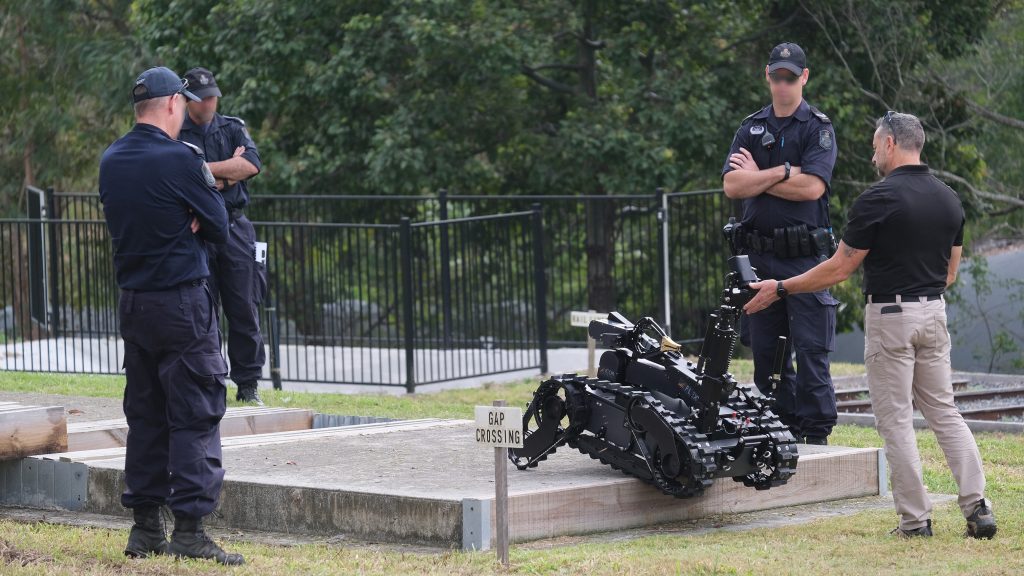
EPE has been in Ireland at the ICP Newtech robotics manufacturing and test and evaluation facility. Seamus O’Brien and Jack Batty from the EPE team spent time at ICP completing Factory Acceptance Testing on a fleet of Uncrewed Ground Vehicles including six Avenger 2.0 and four Vanguard ST. The fleet has undergone complete inspection, test and evaluation, including range testing, prior to delivery to our government agency customer in the Indo Pacific region.  The fleet will provide enhanced capabilities for bomb disposal and tactical response groups to remove operators from hazards.  Seamus O’Brien has extensive experience as an EOD technician and specialist Counter IED trainer bringing an operational perspective to the test and evaluation process.  Jack Batty is one of the leading robotics technicians in the Australasian region, one of the only technicians to be accredited by multiple leading Original Equipment Manufacturers (OEMs) to repair and upgrade their platforms outside the manufacturing facilities.  Once delivered to our customer EPE will provide specialist operator training and Through Life Support to optimise the capability.


We thank Kieran Nolan and the ICP Newtech team for the ongoing partnership and trust with EPE that has spanned over a decade.

Posted on

Adam Modd’s Story : NZDF Invictus Games Team 2023


Adam Modd GM, DSD our Senior Solutions Architect is representing New Zealand Defence Force at the up-and-coming Invictus Games Düsseldorf 2023 in September this year.

Adam has experienced some significant injuries and traumatic exposures throughout his long and distinguished military career in Bomb Disposal and Special Operations. In the spirit of the games and for awareness, Adam has shared some of his own personal challenges that he has overcome. EPE. Trusted To Protect proudly supports veterans and promotes mental health awareness for everyone.


Posted on

A simple guide to understanding Blue UAS vs NDAA Compliant vs American-Made drone requirements in 2023

Blue sUAS Skydio Casestudy Feature image

Blue sUAS Skydio

JUNE 12, 2023

This article from the US has important implications and transferability to Australia.

As government policies and rules on drones proliferate, drone buyers confront a sea of security focused phrases, from “NDAA compliance” to “Blue UAS” and beyond. This blog answers the key questions we hear the most:

  • What type of secure drone do I need?
  • What is the Blue UAS list and is it the same as NDAA compliance?
  • I was told to get a drone from the Blue List – what does that mean?
  • What if it is an American made drone?
  • If the drone has some parts from China, or says “Made in China”, can it still be compliant?

Before we go further, a couple of caveats. 1) This isn’t meant to be legal advice, and 2) it only covers developments in the U.S.

Every federal and state security policy revolves around the same core concern: our geopolitical adversaries are using untrustworthy technology to gain a strategic advantage. In response, policy makers are increasingly taking action by issuing requirements to curb potential threats among drones used within their jurisdiction.

NDAA Compliance: What is it and what does it mean for Unmanned Aerial Systems?

In the drone industry, “NDAA compliance” is shorthand for “supply chain security.” NDAA compliance refers to a federal law prohibiting the U.S. Department of Defense (DoD) from buying drones:

  1. manufactured in a covered foreign country, or by a company based in a covered foreign country; or
  2. that use flight controllers, radios, data transmission devices, cameras, gimbals, ground control systems, or operating software manufactured in a covered foreign country or by a company based in a covered foreign country.

That law, Section 848 of the Fiscal Year 2020 National Defense Authorization Act (NDAA), defined a “covered foreign country” to mean China. In 2022, Congress updated the law to include Russia, Iran and North Korea. Recently, Congress extended the law even further to apply to the private sector. Beginning in October 2024, private companies can not use DJI to perform contracts for the Department of Defense.

NDAA compliance is primarily focused on the supply chain–where the drone and its key components are made, and where the manufacturer is based. Importantly, it is not a rule that the drone must be 100% free of all parts from a covered foreign country, only those specifically listed in #2 above.

How does a drone become NDAA compliant?  There is no single formal certifying body for NDAA compliant UAS. Companies can self-certify. But one organization has stepped up to make this easier, at least for the DoD.

Beyond NDAA: What it Means to be Blue UAS or on the “Blue List”

To make it easier for military services to buy secure commercial drones, DoD’s Defense Innovation Unit created a program known as Blue UAS. Selection as a Blue UAS drone verifies NDAA compliance. But it doesn’t stop there. In addition to evaluating supply chain security, the Blue UAS program conducts demanding cybersecurity assessments, ensuring approved drones can protect sensitive military information. The result of these extensive assessments yielded the Blue sUAS list, colloquially called the “Blue List.”

NDAA Compliance vs. BlueUAS: Tradeoffs for Takeoff

If you’re a private company or state and local organization, is selecting a drone as easy as reviewing the Blue UAS list, selecting one, and calling it a day? Likely, no.

To meet military-grade security requirements, every Blue UAS must be “offline”, unable to connect to the internet. That requirement makes sense for the military, but for the vast majority of organizations that means an inability to benefit from capabilities that enable live streaming, software updates, and seamless data sharing with systems of record.

Enterprise-grade security is typically enough for most private sector organizations. Skydio’s Security Trust Center can provide examples of the types of enterprise-grade security you should be seeking. Additionally, some organizations have ‘online’ versions of the same drone found on the Blue sUAS list with full NDAA compliance, such as the Skydio X2E.

American-Made Drones: Satisfying Fast-Moving Federal and State Policies

In recent years, federal and state rules on trustworthy drones have multiplied. Those actions began at the federal level. It is federal policy to prevent the use of taxpayer dollars to buy drones made by companies based in China and to “to encourage the use of domestically produced UAS.” Congress has also enacted laws requiring the military and the U.S. Coast Guard to use secure, NDAA-compliant systems. Consistent with overall federal policy, many federal departments have issued their own restrictions on using or funding drones made in China, including the Departments of InteriorJustice and Homeland Security.

States often follow the federal government’s lead on security matters. At least six states have issued their own restrictions on untrustworthy drones by state or local agencies: ArkansasTexasIndianaMississippiCalifornia, and Florida. Florida also passed a $25M grant program to support agencies transitioning to secure systems in 2023-2024. Although some states impose supply chain security requirements, none require the use of a Blue UAS drone. In general, drones produced domestically by U.S. companies will satisfy state laws.

Outside of companies that do business with DoD, private enterprises generally are not required to follow these federal and state policies. Even so, many organizations, particularly in critical infrastructure sectors, are electing to choose American-made drones for added safety and security. Trustworthy technology is good for business, and knowing your drone purchases will not be grounded by future legislation reduces risk.

To Summarize:

Blue sUAS Skydio Summary


Acknowledge to Skydio

Posted on

EPE hosting international government agency at EPE HQ in Brisbane

EPE hosting international government agency at EPE HQ_01

As part of EPE International’s provision of specialist capability and training in the Indo-Pacific region, our team was honoured to host an international government agency at EPE HQ in Brisbane.

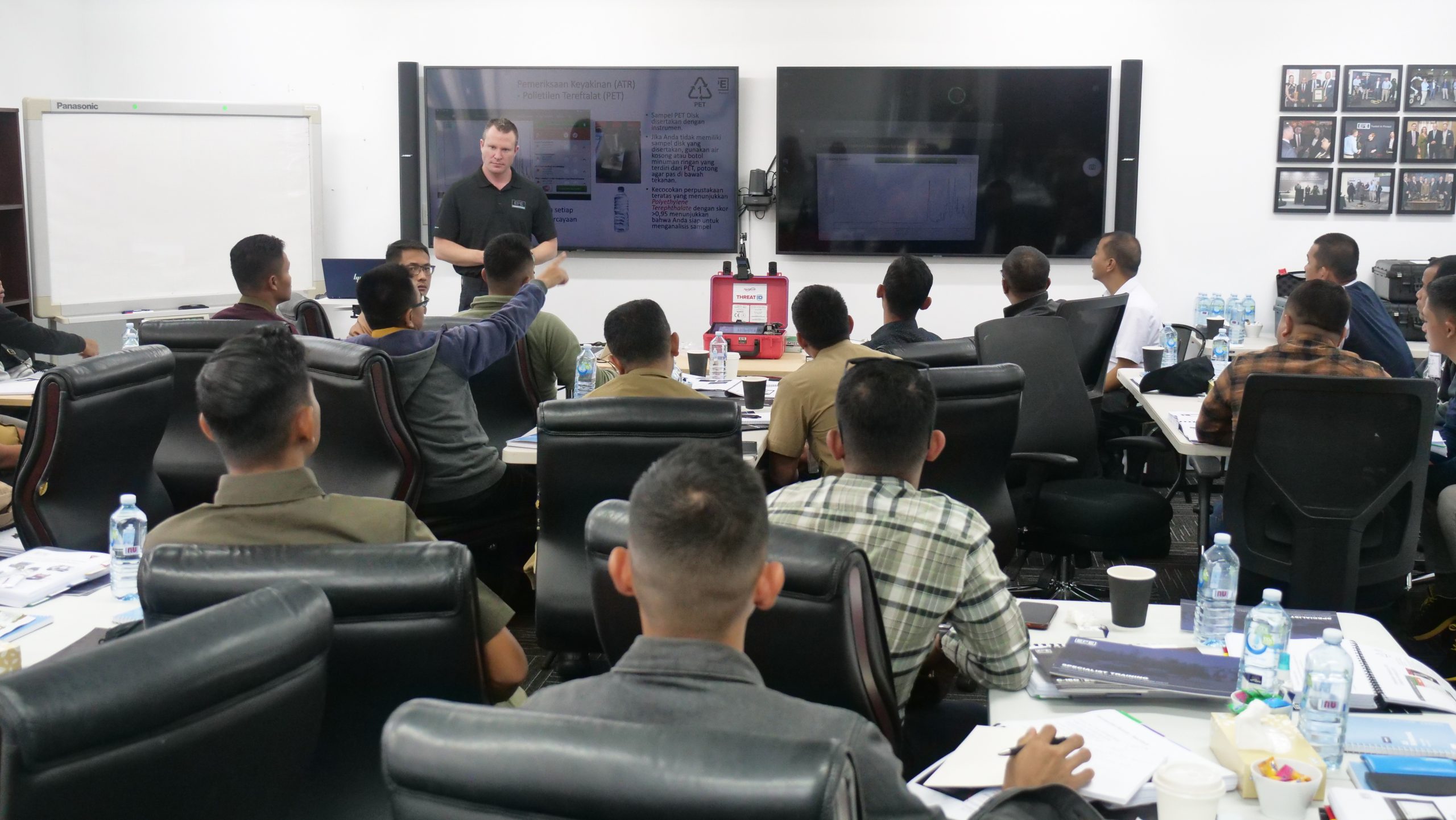
Our team of Police and Military veterans delivered specialist CBRN equipment training and provided a tour of EPE’s MILTECS facility incorporating CBRNe Test Laboratory and Robotics training and testing facility.

Posted on

Skydio 2+ undergoes a comprehensive compliance check in Australia performed by EPE Through Life Support team to meet OEM specifications

EPE Skydio S2 Compliance Check News
EPE has delivered an order of Skydio 2+ drones to an Australian customer. As issues around trust and security are heightened in Australia and New Zealand, Skydio provides a drone manufactured in the USA with the world’s most advanced autonomy technology and the highest standards of cyber and supply chain security. All equipment provided by EPE undergoes a complete compliance check here in Australia to ensure it meets OEM specifications.
Posted on

Australian and veteran owned companies partner on Australian-first deployable forensic labs

Australian and veteran owned companies partner on Australian-first deployable forensic labs news

Nova Systems will play a key role in supporting EPE in the ongoing maintenance and support of two Weapons Technical Intelligence (WTI) labs, as part of the Land 154 Phase 2 sustainment program.

EPE has been awarded the LAND154 Phase 2 contract, a capability program that will improve the Australian Defence Force’s joint counter-improvised explosive device response.

The Weapons Technical Intelligence (WTI) facilities are a series of deployable containers, consisting predominantly of specialist scientific laboratory equipment.

Being deployable means they can be transported and utilised on-scene, allowing for rapid assessment of weapons effects and explosive devices.

Similar facilities developed overseas have enabled the rapid deployment of counter-measures during operations to protect Australian Defence Force (ADF) and allied forces.

EPE’s LAND 154-2 Project Director, Keith Mollison, said: “Nova Systems is a true Australian success story. The partnership between EPE and Nova Systems creates an all-Australian team to optimise this capability, while further building specialist scientific, engineering and weapons technical intelligence expertise here in Australia.”

Nova Systems Chief Operating Officer, Steven Robinson, said: “This capability gives Australia a seat on the world stage, aligning with AUKUS and NATO partners to have a deployable WTI capability that improves interoperability and will save lives.

“As part of our partnership with EPE, Nova Systems will ensure the WTI labs are sustained and ready for deployment at a moment’s notice.

“EPE’s expertise in level 2 exploitation and specialist project management is complemented by Nova Systems’ world-leading engineering capability.

“Both companies are Australian-owned and veteran founded, together building enduring sovereign skills and capability, which makes for the perfect partnership to support the ADF.”

The five-year contract includes a long-term sustainment opportunity, with the labs based in Brisbane, Queensland and Edinburgh, South Australia.

Credit to Nova Systems News 

Posted on

Bombs, deployments, explosions and scars

34-year Army veteran Lieutenant Colonel (Rtd) Adam Modd GM, DSD, has dedicated his professional life to Bomb Disposal which has seen him committed to domestic duties, frequent overseas deployments to combat zones, and humanitarian aid missions.

Risk, danger and destruction have all been part of a day-to-day existence where he strove to save lives and restore normality.    

LTCOL Modd will compete alongside 21 others as part of the New Zealand Defence Force (NZDF) Invictus Games team in Düsseldorf, Germany in September 2023.

In 2007 after spending 22-years in the British Army, LTCOL Modd and his family moved to New Zealand when he approached and asked to join the NZDF to be part of a project that would develop and introduce new Bomb Disposal Capabilities.

LTCOL Modd has defused thousands of Improvised Explosive Devices (IED’s), Unexploded Ordnance (UXO’S), and mines in all over the world, in over 20 different countries. His commitment to Bomb Disposal has seen him shot, blown up, broken bones, amongst many other injuries.

In 2002 he was awarded the George Medal for Gallantry by Her Majesty the Late Queen Elizabeth II, in 2021 he was awarded the New Zealand Distinguished Service Decoration (DSD) in the Queen’s Birthday Honours, he has also been awarded two United States of America Bravery awards, and three FBI commendations.

Adam Modd Invitcus Games 2

In 2009 he broke his neck, resulting in the need for multiple surgeries and a permanent fusion with titanium cervical implant. In 2011 he was severely injured in Afghanistan whilst serving with 1st New Zealand Special Air Service Regiment (1NZSAS). This incident required hospital treatments in Afghanistan, Germany, and Auckland before he was able to return to Wellington hospital and finally home.

“I was pretty banged up, fracturing my skull, rupturing my liver and breaking my back in three places, amongst other injuries, but all part of the job” he said.

He required a range of complex surgeries starting in 2011 and continuing through to 2018, with degeneration likely to continue as he ages. His accumulated injuries were assessed to have left him 42% disabled, he has also been challenged with depression and was diagnosed with Post Traumatic Stress Disorder (PTSD).

“Bomb Disposal is a dangerous, highly committed, relentless, and intensive career choice. I feel it was my calling, it has been an honour to serve, going into harm’s way, putting my life at risk to save others. Despite all the sacrifices and injuries, if I had a choice I would do it all over again.”

Visually LTCOL Modd doesn’t appear to be that badly injured, but the permanent damage, and various surgeries have left him with multiple spinal fusions, titanium/cobalt implants, restricted movements, and other ailments.

“I have a lot of continuous pain. It wears you down physically, mentally, and it’s often incapacitating. I find that the concealed scars, mental trauma, and pain can easily go unrecognised when they aren’t so apparent.

“This goes unnoticed by those who don’t know our stories and Invictus helps promote understanding,” he said.

He said the mental and physical trauma suffered is something that doesn’t go away, you don’t get back the things you missed, the things you have lost, nor regain the things you couldn’t do and still can’t do.

Invictus provides an opportunity for some balance, to achieve goals, and to get something back. I acknowledge that I am one of the lucky people who survived, and I often think of our friends and colleagues who didn’t survive.

“I believe Invictus is for them too, allowing us to remember them, honour them, and pay our respects to one and all,” LTCOL Modd said.

LTCOL Modd’s career has come with many family sacrifices, especially for his wife Suzanne, son Connol, and daughter Farrell. He has completed over 16 operational deployments, which has seen him spend more than 12 calendar years away from his family in combat zones, or dangerous troubled areas.

“Many birthdays, Christmas’s, family celebrations, anniversaries and other special occasions with my family and friends were missed and lost. There are so many photos where my absence is apparent, and we relate them to where I was in the world at the time, or what hospital I was in,” he said.

He said it is important to acknowledge that families and friends suffer too, they worry, cope, they see their loved ones hurt, and they care for them. Their stories and sacrifices go unnoticed and untold too. Invictus provides a way to acknowledge families and offers some healing opportunities for them too.

“My family has been amazing, supporting me in my career, my service away overseas, and helping me convalesce. They have helped me through my struggles, and losses in a way that offered dignity,” LTCOL Modd said.

Adam Modd Invitcus Games

While initially applying for the 2016 team and being accepted, military commitments and surgery requirements meant he could not attend, and he thought that his Invictus goal was lost.

LTCOL Modd said being part of the team and an activity that seeks to promote mutual recognition, mental and physical support, and general wellbeing means more to him than words can portray.

“The whānau aspect of Invictus is also important to me. Like many of the competitors past and present I feel this is a unique opportunity to be part of something quite special.

“It is hard to explain the way we collectively feel, it’s not closure that we seek, we know that it’s not possible to change what happened or the impact it had on our careers and course of our lives.

“Invictus gives a sense of purpose, belonging, and an ability to recover in a way that far exceeds just medical interventions, and helps heal others by sharing and supporting one another.”

He said Invictus is about being part of something, with people you know, people who understand, people who have common feelings, and people focussed on mutual support.

Invictus is about getting together as a group, giving back some dignity, self-worth, and showing that despite being broken we can be in a sporting competitive environment. Even getting together as a team and training together has created amazing positive feelings.

LTCOL Modd said he is most looking forward to walking out at the opening ceremony of the Games as part of team New Zealand.

“I will be feeling so proud, feeling that I belong, and feeling strong standing shoulder to shoulder with my Invictus whānau. It will also be quite special having some of my family there sharing the experience, and knowing those who are not there will be proud that we could contribute to such an amazing event,” he said.

He will compete in Archery, Table Tennis, Rowing, Wheelchair Basketball and Wheelchair Rugby at the Games.

About The Invictus Games

The sixth Invictus Games will take place in Düsseldorf from 9-16 September under the motto “A HOME FOR RESPECT” and together with the German Armed Forces, will welcome around 500 competitors from more than 20 nations, as well as around 1,000 family members and friends, to compete in ten sporting disciplines.

Posted on

Portable chemical analysis for drug investigations promises more reliable and just results

Portable chemical analysis for higher accuracy in drug investigation

Scientists aim to combat false positives and user error by making portable chemical analysis spectrometers smaller and smarter—and educating law enforcement on proper technique

In February 2022, a police department in Texas announced that it had busted a truck driver for hauling some 2,600 L of liquid methamphetamine. Using portable chemical analysis tests that mixed the substance in question with tubes of reagents, officers from the Pharr Police Department and the US Drug Enforcement Administration found that the cargo tested positive for the illicit drug. Accused of transporting about $10 million worth of drugs, the driver, Juan Carlos Toscano Guzman, spent almost 6 weeks in jail, the Fort Worth Star-Telegram reported. But the truck’s load wasn’t meth.

Colorimetric test kits had ensnared another individual. Used since the 1970s, the tests are available for dozens of drugs but don’t always provide reliable results. At least 100,000 people across the US plead guilty to possessing drugs after positive field tests each year, according to a ProPublica estimate, so even a modest error rate—due to officers’ lacking proper training, mixing reagents in the wrong order, or getting a false positive—could mean that thousands of people’s lives are unfairly upended.

In establishing the possibility of a drug’s presence, color tests do what they’re supposed to do, says forensic scientist Brooke Kammrath of the University of New Haven. “But they’re misunderstood by the general population and the people who are using them.”

What ended up exonerating Guzman were laboratory tests. He was transporting a mix of oil and diesel, according to his lawyer. Lab methods such as Raman spectroscopy, infrared (IR) spectroscopy, and mass spectrometry are selective and more reliable methods for identifying drugs, but the delay in analyzing samples in the lab can slow investigations and leave innocent people like Guzman behind bars.

Portable versions of such spectrometers are available for police and other drug enforcement agents to use on-site, but miniaturizing analytical tools can come with trade-offs in resolution and sensitivity. To make up for that, some chemists, forensic scientists, and even data scientists have started working on ways to extract more accurate information from field samples collected by police. Some scientists have played a vital role in encouraging the portable chemical analysis equipment’s availability and adoption and in helping police understand how portable instruments can make law enforcement easier and fairer. “These are sophisticated scientific tools that we’re putting in the hands of potentially nonscientists,” Kammrath says. Scientists need to understand and explain the instruments’ advantages and limitations to ensure the equipment is being used properly, she says.

SHRINKING SPECTROMETERS

Portable spectrometers have long been used by nonscientists. Some of the earliest spectrometers that could be taken into the field appeared in the 1950s, including a portable IR spectrometer the US military developed to detect chemical warfare agents. Such instruments became common in the tool kits of US hazmat and threat response teams in the wake of the 2001 anthrax attacks that started a week after 9/11. Today’s array of portable instruments includes optical spectrometers, such as Raman, near-IR and mid-IR, mass, and ion mobility spectrometers.

Especially in the past 20 years, portable chemical analysis instruments have gotten smaller. Some mass spectrometers have shrunk to the size of a briefcase, while some Raman and IR spectrometers can be a bit larger than a deck of playing cards. “The whole revolution in consumer electronics has helped these enormously,” says Richard A. Crocombe, a spectroscopist who runs his own scientific consulting firm. Diode lasers, such as those developed for CD and Blu-ray players and other advances in telecommunications, have helped optical spectrometers slim down. And mass specs have benefited from smaller ion traps. With smaller components that can run on less power, the devices’ footprints have dwindled.

But generally, “portable instruments are not the same as their benchtop counterparts,” Kammrath says. Portable Raman spectrometers can’t yet achieve the throughput and sensitivity that benchtop systems can, and gas chromatography/mass spectrometry (GC/MS) instruments are limited by the type and length of columns available. Resolution can be an issue, for instance, with high-pressure mass spectrometry, in which mixture components aren’t separated before analysis. For comparison, some benchtop mass specs have resolutions eight times as high as these machines.

When it comes to illicit drugs, people who clean up clandestine labs also use portable chemical analysis instruments to test whether the unidentified substances they encounter are dangerous. Both IR and Raman spectrometers are simple and fast to use, but IR techniques require the sample to be placed in contact with the detector. For Raman, “you can have a plastic baggie of raw materials, and you can shoot right through it and get a spectrum,” says Pauline E. Leary, a spectroscopist at Noble Supply & Logistics, which sells equipment, including spectrometers, for military applications and low-resource environments.

At the same time, each portable chemical analysis device has benefits and limitations: GC/MS can parse complex mixtures but destroys the sample, whereas Raman doesn’t. Fluorescence from a sample can mask a drug’s Raman signal, while water in a sample can overwhelm an IR spectrum. So combining multiple tests to create a tool kit is the best approach, Kammrath says. A recent study formed a tool kit containing handheld or portable Raman, Fourier transform IR (FT-IR), and mass spec devices. Researchers at the US Food and Drug Administration found that, using at least one of the three instruments, they could detect 81 of 88 different active pharmaceutical ingredients. When at least two techniques were used, at least one instrument detected all ingredients. Overall, the tool kit’s results were as reliable as a full-service lab (J. Pharm. Biomed. Anal. 2021, DOI: 10.1016/j.jpba.2021.114183).

According to recommendations for laboratory testing of drugs, users can pair various methods—such as color tests with GC/MS or ion mobility with IR spectroscopy, Kammrath says. Having two orthogonal techniques casts a wide net to identify many types of unknowns.

A spectrum of portable tools

Workhorse methods of portable chemical analysis need to be fast and require little sample preparation. Each comes with trade-offs
in sensitivity and possible application.

Raman spectroscopy

Up-front cost: $12,500–$25,000

Sample handling: Scans through glass and quartz containers and transparent plastics

Data acquisition time: Few seconds to 1 min

Destructive? No

Target applications: Single-component samples, high-concentration mixtures, white powders, liquids and tablets

Problematic samples: Dark, colored, and fluorescent materials, mixtures with trace amounts (e.g., pills with trace fentanyl), plant samples (e.g., marijuana)

Infrared spectroscopy

Up-front cost: $25,000–$50,000

Sample handling: Must be in direct contact with a sample

Data acquisition time: <1 min

Destructive? No

Target applications: Single-component samples, white powders, liquids and tablets

Problematic samples: Mixtures with low-concentration components, samples containing water

High-pressure mass spectrometry

Up-front cost: >$50,000

Sample handling: Analyzes a swab of a surface or packaging

Data acquisition time: 10–30 s

Destructive? Yes

Target applications: Trace amounts of analytes, mixtures

Problematic samples: Samples with concentrated components

Near-infrared spectroscopy

Up-front cost: $2,000–$37,500

Sample handling: Scans through glass and quartz containers and transparent plastics

Data acquisition time: 5 s

Destructive? No

Target applications: Single-component samples, high-concentration mixtures, white powders

Problematic samples: Mixtures with low-concentration components

Ion mobility spectrometry

Up-front cost: $10,000–$37,500

Sample handling: Analyzes a swab of a surface or packaging

Data acquisition time: 10–30 s

Destructive? Yes

Target applications: Trace amounts of analytes, high-concentration mixtures

Problematic samples: Samples with concentrated components (e.g., purified powders) that can overload the detector

Gas chromatography/mass spectrometry

Up-front cost: >$50,000

Sample handling: Analyzes a sample that has been removed from packaging and dissolved in solvent

Data acquisition time: 4–15 min

Destructive? Yes

Target applications: Trace amounts of analytes, separation of mixtures

Problematic samples: Plant samples that are not dissolved, samples with concentrated components

Sources: Forensic Technology Center of Excellence, Landscape Study of Field Portable Devices for Presumptive Drug Testing, 2018; Richard Crocombe, “The Ever-Shrinking Spectrometer: New Technologies and Applications,” in Sense the Real Change: Proceedings of the 20th International Conference on Near Infrared Spectroscopy Forensic Technology Center of Excellence, Landscape Study of Field Portable Devices for Presumptive Drug Testing, 2018; Richard Crocombe, “The Ever-Shrinking Spectrometer: New Technologies and Applications,” in Sense the Real Change: Proceedings of the 20th International Conference on Near Infrared Spectroscopy, ed. Xiaoli Chu et al. (Springer Singapore, 2022), DOI: 10.1007/978-981-19-4884-8_2; “Spectroscopy outside the Laboratory” 2022, DOI: 10.56530/spectroscopy.lz8466z5.

FINDING THE SIGNAL IN THE NOISE

Forensic scientists scanning a crime scene may need to see what’s hardly there—trace powders, residues in a container, dopants that make up a small part of a mixture found in the field. The spectra they get from portable chemical analysis instruments often can’t identify a very small amount of a substance among the noise caused by, say, other ingredients in a drug sample, Leary explains.

US law enforcement agencies have recently seized large amounts of low-dose fentanyl pills. Some of these pills had 1% or less of the synthetic opioid and mostly contained the Tylenol ingredient acetaminophen. According to the US Drug Enforcement Administration, less than 2 mg of fentanyl can be a fatal dose. Instrument manufacturers claimed their equipment could detect fentanyl in such pills, but Leary and Kammrath found that most of the techniques fell short when used in tests.

Acetaminophen and fentanyl have similar IR peaks, and neither IR nor Raman can detect concentrations as low as 1% anyway. With some portable mass spectrometry methods, the acetaminophen would overwhelm the detector. Ion mobility spectrometry could detect 1% fentanyl in the mixture, but the technique isn’t considered the most reliable, because unrelated ions of similar size and weight could have similar mobilities as those of a drug. “A lot of times for these field instruments, we just can’t get the limits of detection we need for a specific problem,” Leary says.

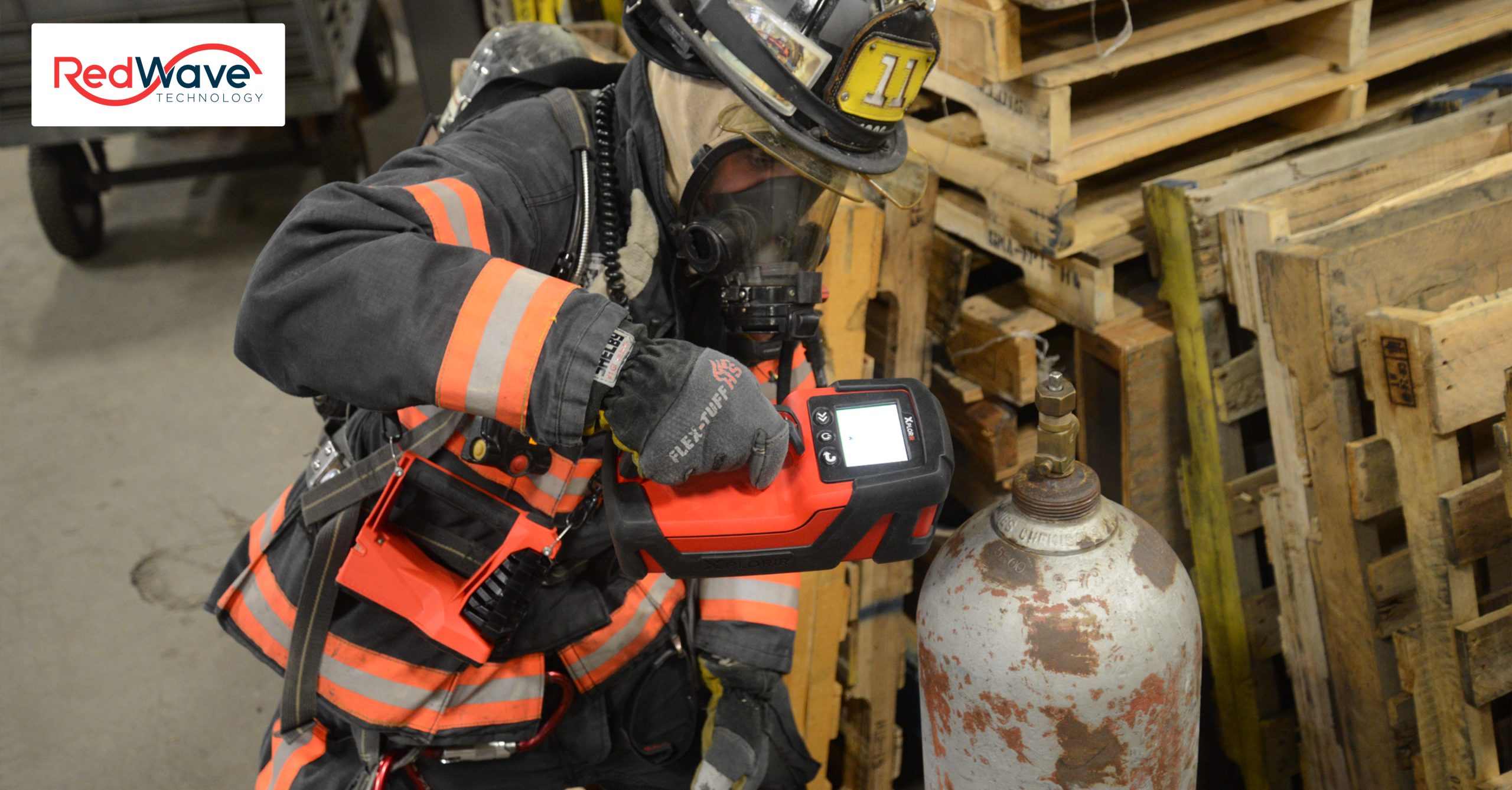
To remedy such problems, Kammrath and her colleagues are trying to come up with new ways to extract trace fentanyl from a mixture so it can be analyzed in the field with a more discriminating technique. Their working prototype is based on an extraction system from RedWave Technology, a company that develops portable FT-IR instruments. It hinges on a portable tool that takes a powder or pill and does a solvent extraction to concentrate any fentanyl present. An officer could then paint the resulting solution onto the IR detector for a scan. Extraction techniques could potentially expand the range of samples that can be analyzed by portable IR spectroscopy, Kammrath says. Of course, extractions aren’t one size fits all, so new tools would have to be developed to extract other trace drugs.

Parallel to efforts to physically concentrate samples, researchers are also finding ways to unmask components hiding in mixtures by digitally parsing their raw spectral data. There was a time when searching for tricky-to-spot spectroscopic features was like “chasing a ghost,” says Igor K. Lednev, a laser spectroscopist at the University at Albany. For instance, peaks from some components in a mixture could be rendered invisible by the spectral contributions of substances present in much higher concentrations, like in the case of pills with trace fentanyl. “Now, if we combine Raman spectroscopy with statistical analysis, we can reliably detect and identify components in a mixture which you don’t see with the naked eye,” Lednev says.

This approach relies on matching spectral data against databases of known compounds. But sometimes a dangerous drug, such as a fentanyl analog, may be missing. “That particular fentanyl analog may be completely new, and it’s not in our set of what’s familiar,” says Phillip Koshute, a data scientist at the Johns Hopkins University Applied Physics Laboratory. He and colleagues have developed machine learning approaches to detect such drugs’ signals lurking in mass spectra and Raman spectra (Forensic Chem. 2022, DOI: 10.1016/j.forc.2021.100379; SSRN 2022, DOI: 10.2139/ssrn.4246466). Working with chemists to zero in on the most important spectral features, the researchers trained machine learning models on pure substances’ spectra to detect fentanyl analogs. “The next step would be repeating the process but with the real-world, messy data,” Koshute says.

The capability to analyze mixtures or identify novel compounds could someday be built into instruments, Lednev says. Portable spectrometers are already equipped to transmit their data wirelessly. Spectra could be sent to a cloud-based tool for machine learning, returning a determination and confidence interval.

IN THE FIELD

Compared with hazmat teams and fire departments, “the forensic community has been very slow to adopt portable instruments,” Kammrath says. But some police departments and crime labs are starting to take to the devices.

Since 2011, dozens of agencies around Alabama have begun using portable Raman spectroscopy for drug testing in the field or the lab. Mark Hopwood was then the director of one of the state’s crime labs, and a backlog of some 30,000 drug cases statewide required testing. “It was taking anywhere from a year to 2 years to get lab results back,” says Hopwood, who is now a forensic scientist at Jacksonville State University (JSU).

In an effort to reduce the backlog, Hopwood’s team tried out portable chemical analysis spectrometers, playing with the devices for a month and doing field trials. Of the systems tested, Thermo Fisher Scientific’s TruNarc handheld analyzer—which is a Raman spectrometer with only three buttons and looks like a chunky handheld gaming console—stood out for its ease of use and durability, Hopwood says. Additionally, “there was no way to manipulate data,” he says. For instance, it wouldn’t be possible for an officer acting in bad faith to scan sugar or salt and falsely name it as cocaine or another drug in the spectral library. If a scanned substance came up as an unknown, the team could use what’s called a reach-back service, getting support within hours or a day from Thermo scientists, who could help identify the compound and add the substance to the spectral library. Such services are already commonly used by hazmat teams that want a trained analyst to verify results or talk through data concerns, Noble’s Leary says.

The spectra of the scanned substance and its library match could be shared with defense attorneys, who could then advise defendants to either go to drug court or take a plea deal, Hopwood says. A plea deal based on a spectrometry result may be preferable to one based on less-reliable color tests. And in a case in which a conviction is likely, after lab-based testing, going to court may drag out the legal process, he adds.

These are sophisticated scientific tools that we’re putting in the hands of potentially nonscientists.
-Brooke Kammrath, forensic scientist, University of New Haven

The TruNarc devices helped cut Alabama’s pending caseload by about 30% within a few months. “It ended up freeing up the jails, saving the sheriffs money—because they’re not having to feed and house people”—and the courts were able to collect fines, Hopwood says.

A 2014 survey of portable Raman for drug testing calls Hopwood a “technology champion” for the instruments. He has helped departments adopt these devices and is training drug task force and narcotics units on how to use them. He has also opened his department at JSU to officers from nearby counties, making a few devices available for their use when they need a quick identification.

Funding can hinder police departments in adopting portable spectrometry, Kammrath says. A bill was introduced in the US Congress in 2019 that would have funded departments looking to buy portable instruments for drug testing, but it didn’t garner enough support to move forward.

Kammrath says scientists could help strengthen the argument for these devices and increase their appeal to lawmakers and police. A cost-benefit analysis targeted at law enforcement that details other tangible benefits, such as cost savings from not purchasing color tests, and intangible ones, such as the cost of life from wrongful arrests and incarcerations, could help change minds. “Portable instruments are rapid, they’re reliable, and they create a reviewable record,” she says. “We haven’t made a good-enough case as a scientific community for our need for these instruments.”

Posted on

Skydio Selected as a Trusted Drone Provider for US Federal Government in Defense Innovation Unit’s Blue sUAS Project
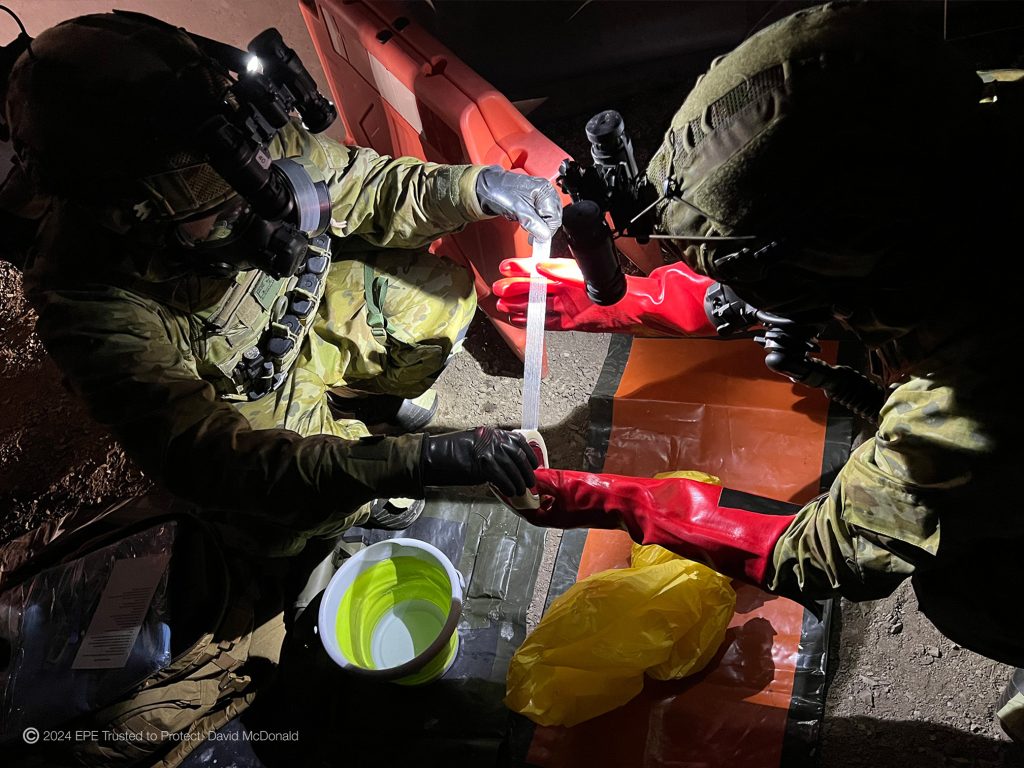
Selected as a Trusted Drone Provider for US Federal Government in Defense Innovation Unit’s Blue sUAS Project

AUGUST 20, 2020

Skydio, the leading U.S. drone manufacturer and world leader in autonomous flight, today announced that the new Skydio X2D has been selected as a trusted drone platform for the Department of Defense and Federal Government as part of DIU’s Blue sUAS Project. This is a major milestone in Skydio’s strategy to bring the power of its world leading autonomy engine to public sector customers. To provide the best possible support to clients, Skydio is also announcing the addition of new executive leadership and strategic partnership with ADS, Inc.
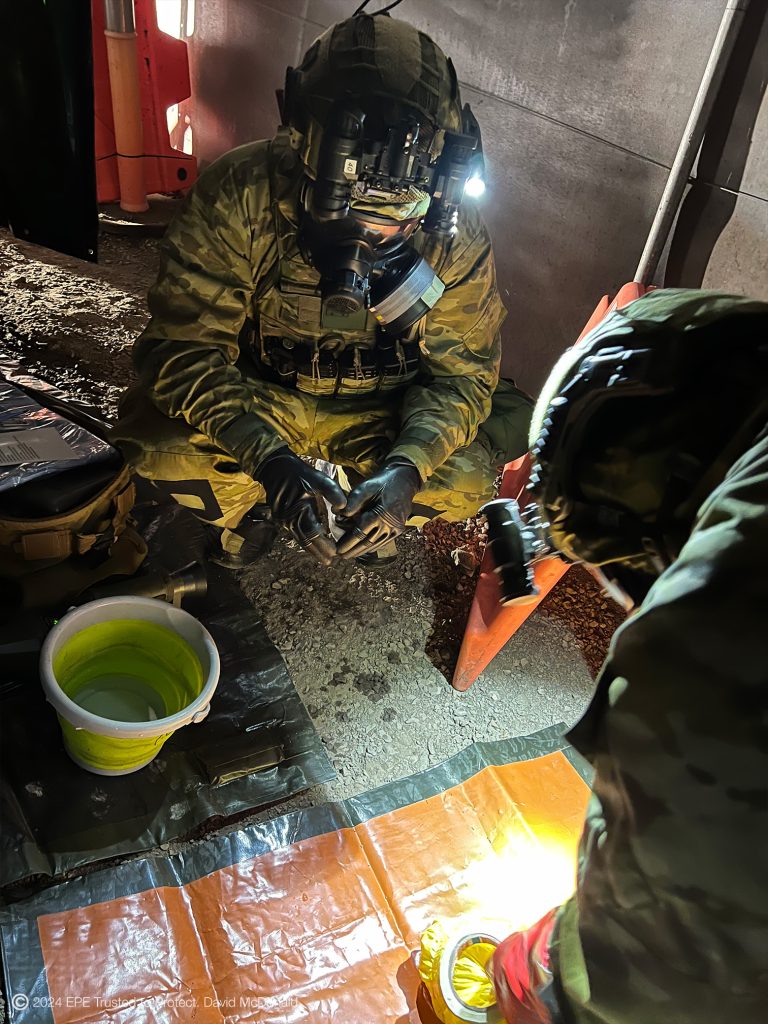
Skydio selected as an approved vendor in DIU’s Blue sUAS Project. DIU’s effort builds upon the U.S. Army’s small Unmanned Aircraft System (sUAS) program of record, the Short Range Reconnaissance (SRR), for an inexpensive, rucksack portable, vertical take-off and landing sUAS. Skydio was selected as one of five Blue sUAS vendors out of dozens of applicants.

“It’s an honor to be selected as one of the few commercial companies asked to develop this technology in service to our country,” said Adam Bry, Skydio CEO. “As concerns around trust and security have grown, Skydio is proud to provide an American drone with the world’s most advanced autonomy technology and the highest standards of cyber and supply chain security. As the only U.S drone company manufacturing at scale, and the only company with a strong commercial and consumer foundation, we are uniquely well-suited to serve the needs of the nation’s warfighters.”

Skydio X2D, announced in July, meets the specifications outlined by DIU for a lightweight, short-range reconnaissance drone and is the only fully autonomous drone in the Blue sUAS group. Skydio drones are designed, assembled and supported in the United States providing the highest level of supply chain security. During its live demonstration at DIU’s Blue sUAS virtual launch on August 19th, Skydio showcased the X2D’s world leading autonomous flight capabilities that make it the ultimate solution for reconnaissance, search and rescue, and security patrol missions. Attending the event were representatives from top US government agencies, including Department of Defense (DoD), Department of Homeland Security (DHS), Department of Interior (DOI), Department of Justice (DOJ), Department of Agriculture (DoA), Department of Commerce (DoC), General Services Administration (GSA), Federal Aviation Administration (FAA), and National Aeronautics and Space Administration (NASA).

Skydio announces new leadership to support public sector customers. Drawing talent from the world’s top national security, public safety, and enterprise drone organizations to provide world-class service to public sector customers. Skydio is announcing the addition of three key executive team members including:

  • Chuck McGraw as Director of Sales for the Public Sector. Prior to joining Skydio, Chuck spent 20 years as an elite SEAL Team leader, holding the positions of Assault Squadron Operations Chief, Basic Training Command Operations Chief, Master Training Specialist, Senior Program Manager and Assault Team Leader. His twenty-year career has included eleven combat deployments. He has worked on multi-million dollar projects developing and transitioning new technologies from the private sector into government in support of mission critical capability requirements.
  • Alden Jones as Senior Director of Customer Success. Alden joins Skydio from American Tower Corporation (ATC), where he founded and led their UAS program to conduct 20,000 automated inspections per year. Alden’s team trained 175 existing employees to become UAS pilots and built a custom back-end automated post-processing system for analysis. Alden started his career as a US Army platoon leader during a combat tour in support of Operation IRAQI FREEDOM. He left the Army as a captain and went on to serve in leadership roles at UTC and Pepsico before joining ATC.
  • Fritz Reber as Head of Public Safety Integration. Fritz is a former Captain of the Chula Vista Police Department, where he served as UAS Commander and developed the agency’s internationally recognized Drone-as-First-Responder (DFR) program in partnership with the FAA’s San Diego Drone Integration Pilot Program (IPP). He co-authored the agency’s first-of-its-kind Beyond Visual Line of Sight (BVLOS) waver for DFR, as well as the recent CVPD Tactical BVLOS waiver enabling Close Proximity, Low Altitude public safety missions. Fritz’s 27-year law enforcement experience provides customer agencies with a knowledgeable resource for effective implementation of UAS into public safety operations.

“We have built a world class direct team and partner ecosystem with unmatched industry expertise to support Public Sector customers as they expand their next generation drone platforms. The combination of Skydio’s US-based leadership in UAS autonomy combined with our team’s experience in building scalable drone programs provides unmatched value to our customers,” added Skydio Chief Operating Officer, Mark Cranney.

Skydio announces new partnership with ADS. Government supplier ADS will serve as a reseller and contracting partner for Skydio’s public sector sales. ADS holds more than 60 Indefinite Delivery, Indefinite Quantity (IDIQ) contracts and Blanket Purchase Agreements (BPAs) and has grown to be the #1 Defense Logistics Agency (DLA) Supplier and a Top 50 Federal Government Contractor. Skydio’s forthcoming X2D drone will be listed on the General Services Administration (GSA) schedule and available for procurement starting in Q4 2020.

“Skydio’s autonomy features are game changing in the small UAS grouping. As the world’s leading distributor of military rated UAS, ADS is pleased to provide Skydio full support as they roll out the X2D autonomous solution to the defense and commercial sectors. Having a US based IP firm and domestic manufacturing allows Skydio to blend the best in technology with home grown production, ADS is really excited to see this benefit our mutual customers,” said Ryan Angold, ADS Senior VP of Sales.

Source: Skydio

Posted on

Defence announces EPE to prime the sustainment of Australia’s first deployable Weapons Technical Intelligence laboratories.

EPE to sustain Australia's first deployable WTI labs for ADF

Canberra, Australia, April 20, 2023. Today, Defence announced Australian veteran owned company, EPE as the prime contractor for the sustainment of Australia’s first deployable Weapons Technical Intelligence (WTI) forensic laboratories.

The LAND 154 Phase 2 Weapons Technical Intelligence capability will improve Defence’s joint CIED response, providing the Australian Defence Force (ADF) with the ability to independently deploy a WTI capability which will provide in-depth and more deliberate exploitation conducted within a deployable, purpose-built processing facility. Providing greater depth and scope of exploitation and analysis will deliver timely, actionable operational intelligence and allow the ADF to rapidly respond to IED blast events and other threats to provide critical analysis of evidence.

Strengthening Australia’s security, the project will support a new sovereign capability – raised, trained, maintained and sustained in Australia, and create new technical jobs, develop local expertise and leverage partnerships with Australian owned subcontractors.

EPE’s WTI Project Director, Keith Mollison, said “The distinct skillsets of our military veteran team allows EPE to bring a unique combination of Weapons Technical Intelligence experts, Project Management expertise and specialist maintenance technicians to support this key capability, ensure its longevity, and boost Australia’s security and its interoperability with our allies.”

About EPE
In its 25th year of operation, EPE’s purpose is to enable and protect Australians and our allies operating in hazardous environments. EPE provides a range of Detection, Diagnostics, Mitigation, Neutralization, and Exploitation capabilities that support First Responders, Defence Forces, Law Enforcement, and other government agencies in the Asia Pacific region. Our personnel have extensive real world operational experience spanning Special Forces, Counter IED, Intelligence and Exploitation. We understand how the specialist equipment is employed and more importantly, the strategic, operational, and tactical demands encountered across the full spectrum of operational environments in which they may be deployed.

Media contacts:
For Australia and Asia Pacific contact Narelle Hoffman, Marketing and Communications Manager, EPE.
Phone: +61 (0)402 486 393 or email:
Find out more at: www.epequip.com. Follow us on LinkedIn and Twitter